Genetic Epidemiology Branch/NCI, Executive Plaza South, Room 7004, 6120 Executive Blvd. MSC 7236, Bethesda, MD 20892, USA.
Cancer Epidemiol Biomarkers Prev. 2013 Apr;22(4):528-32. doi: 10.1158/1055-9965.EPI-12-1346.
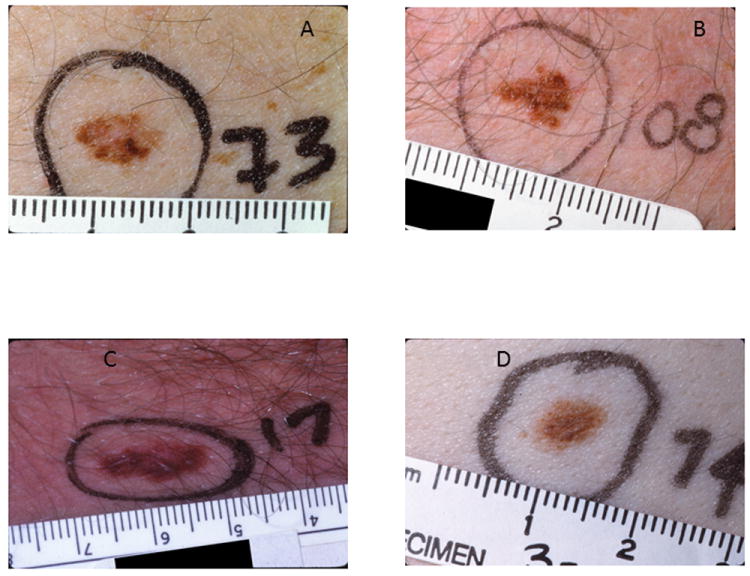
Dysplastic nevi are described as being on a continuum between common acquired nevi and melanoma because they are morphologically and biologically intermediate between these 2 entities. Since initially being reported as histologic lesions observed in melanoma-prone families, there has been considerable debate about the definition of dysplastic nevi, the histologic and clinical criteria used to define them, and their biologic importance. Their role as precursor lesions for melanoma is not their primary role in their relationship to melanoma because of the rarity of transformation of any individual nevus to a melanoma. Although there is still no single, universally agreed upon histologic or clinical definition or even name for these nevi, dysplastic nevi should be considered important because of their association with an increased risk for melanoma.
发育不良性痣被描述为介于常见获得性痣和黑色素瘤之间的连续体,因为它们在形态学和生物学上介于这两种实体之间。自从最初被报道为在易患黑色素瘤的家族中观察到的组织学病变以来,关于发育不良性痣的定义、用于定义它们的组织学和临床标准以及它们的生物学重要性一直存在相当大的争议。它们作为黑色素瘤前体病变的作用并不是它们与黑色素瘤关系中的主要作用,因为任何单个痣向黑色素瘤的转化都非常罕见。尽管对于这些痣,仍然没有一个单一的、普遍同意的组织学或临床定义,甚至没有一个通用的名称,但由于它们与黑色素瘤风险增加有关,发育不良性痣仍应被视为重要。