Jasper Raquel, Locatelli Gabriel Olivo, Pilati Celso, Locatelli Claudriana
Curso de Farmácia, Universidade Alto Vale do Rio do Peixe, Rua Victor Baptista Adami 800, Centro, Caçador, SC, Brazil.
Interdiscip Toxicol. 2012 Sep;5(3):133-40. doi: 10.2478/v10102-012-0022-5.
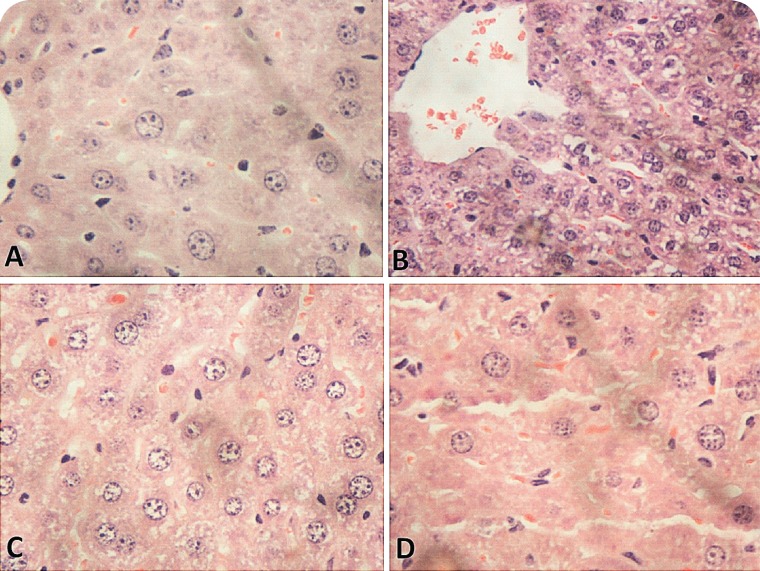
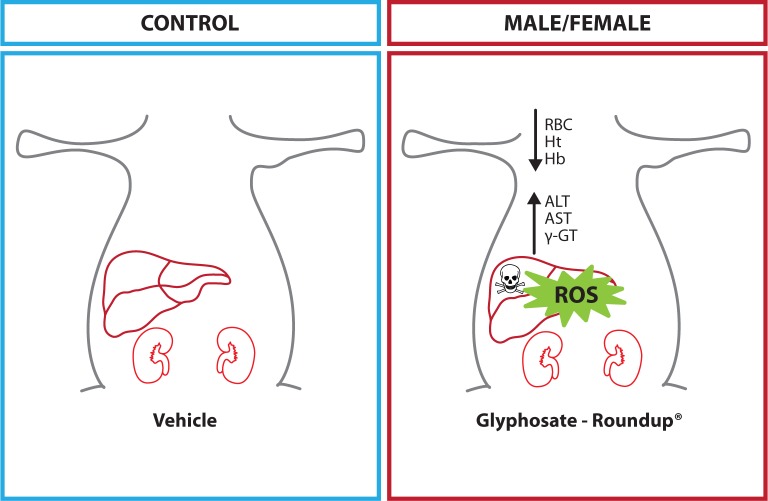
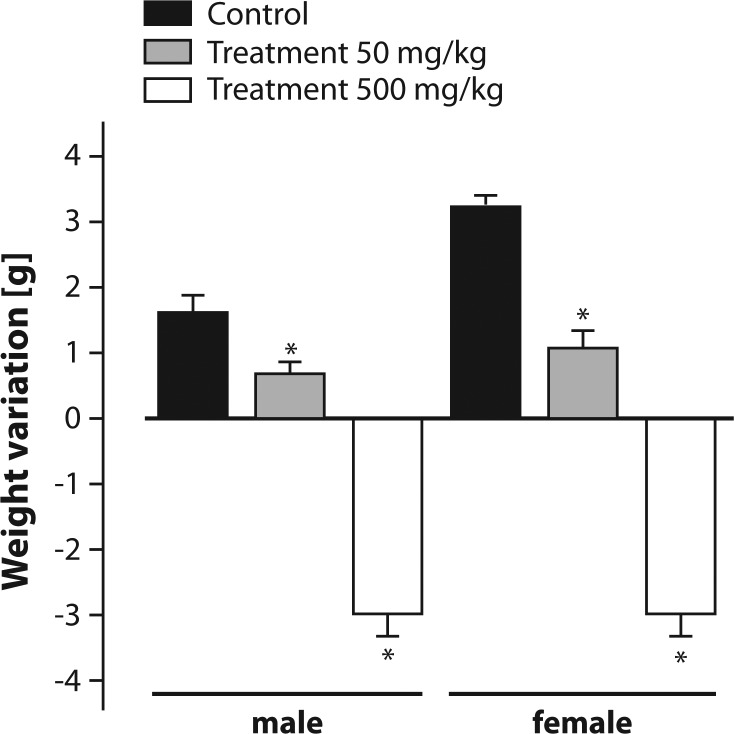
We evaluated the toxicity of hepatic, hematological, and oxidative effects of glyphosate-Roundup(®) on male and female albino Swiss mice. The animals were treated orally with either 50 or 500 mg/kg body weight of the herbicide, on a daily basis for a period of 15 days. Distilled water was used as control treatment. Samples of blood and hepatic tissue were collected at the end of the treatment. Hepatotoxicity was monitored by quantitative analysis of the serum enzymes ALT, AST, and γ-GT and renal toxicity by urea and creatinine. We also investigated liver tissues histopathologically. Alterations of hematological parameters were monitored by RBC, WBC, hemoglobin, hematocrit, MCV, MCH, and MCHC. TBARS (thiobarbituric acid reactive substances) and NPSH (non-protein thiols) were analyzed in the liver to assess oxidative damage. Significant increases in the levels of hepatic enzymes (ALT, AST, and γ-GT) were observed for both herbicide treatments, but no considerable differences were found by histological analysis. The hematological parameters showed significant alterations (500 mg/kg body weight) with reductions of RBC, hematocrit, and hemoglobin, together with a significant increase of MCV, in both sexes of mice. In males, there was an important increase in lipid peroxidation at both dosage levels, together with an NPSH decrease in the hepatic tissue, whereas in females significant changes in these parameters were observed only at the higher dose rate. The results of this study indicate that glyphosate-Roundup(®) can promote hematological and hepatic alterations, even at subacute exposure, which could be related to the induction of reactive oxygen species.
我们评估了草甘膦-农达(®)对雄性和雌性瑞士白化小鼠肝脏、血液学及氧化作用的毒性。动物每天经口给予50或500毫克/千克体重的除草剂,持续15天。蒸馏水用作对照处理。处理结束时采集血液和肝脏组织样本。通过定量分析血清酶ALT、AST和γ-GT监测肝毒性,通过尿素和肌酐监测肾毒性。我们还对肝脏组织进行了组织病理学研究。通过红细胞、白细胞、血红蛋白、血细胞比容、平均红细胞体积、平均红细胞血红蛋白含量和平均红细胞血红蛋白浓度监测血液学参数的变化。分析肝脏中的硫代巴比妥酸反应性物质(TBARS)和非蛋白巯基(NPSH)以评估氧化损伤。两种除草剂处理组的肝酶(ALT、AST和γ-GT)水平均显著升高,但组织学分析未发现明显差异。血液学参数显示出显著变化(500毫克/千克体重),雌雄小鼠的红细胞、血细胞比容和血红蛋白均降低,同时平均红细胞体积显著增加。在雄性小鼠中,两个剂量水平的脂质过氧化均显著增加,肝脏组织中的非蛋白巯基减少,而在雌性小鼠中,仅在较高剂量率下观察到这些参数的显著变化。本研究结果表明,即使在亚急性暴露情况下,草甘膦-农达(®)也可导致血液学和肝脏改变,这可能与活性氧的诱导有关。