Department of Molecular Evolution, Cell and Molecular Biology, Science for Life Laboratory, Biomedical Centre, Uppsala University, Uppsala, Sweden.
PLoS Genet. 2013 Mar;9(3):e1003393. doi: 10.1371/journal.pgen.1003393. Epub 2013 Mar 28.
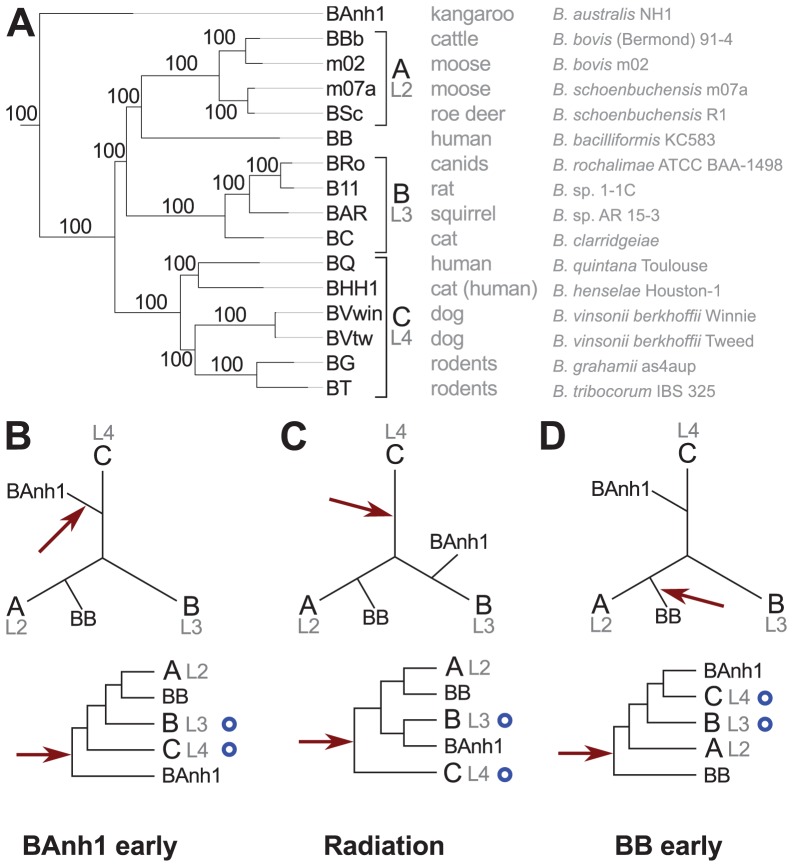
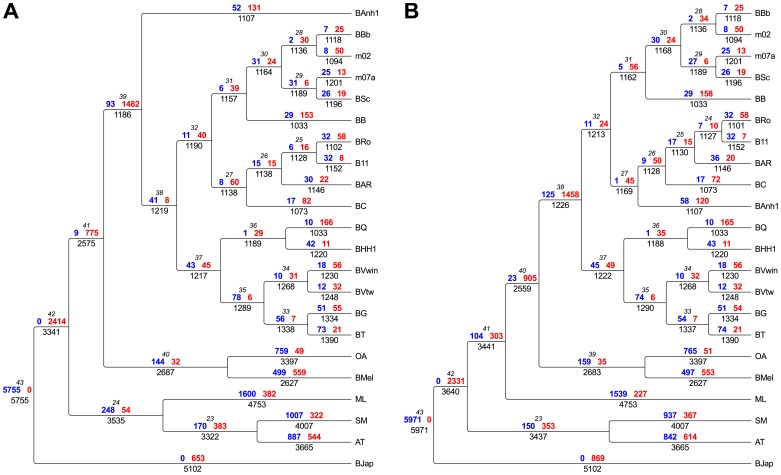
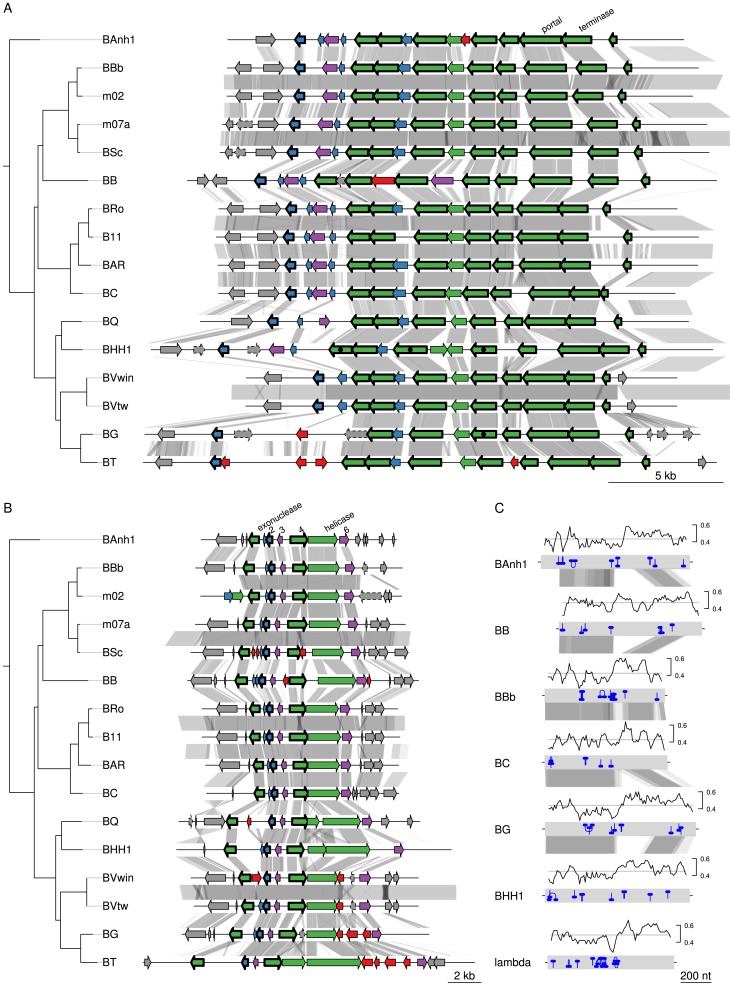
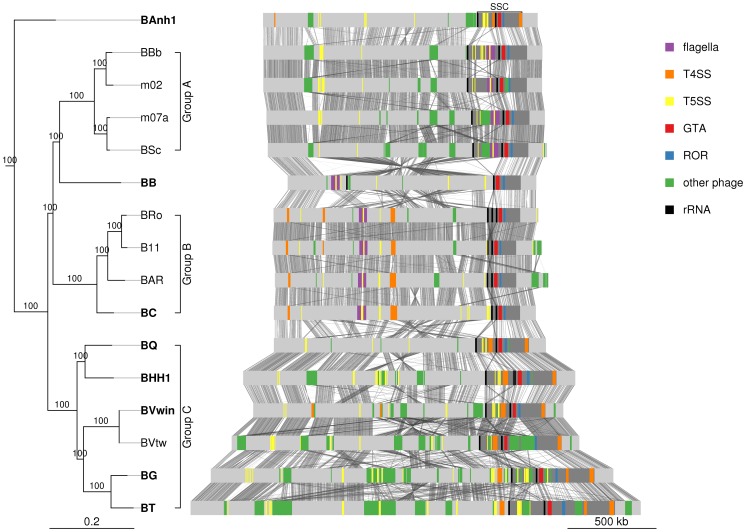
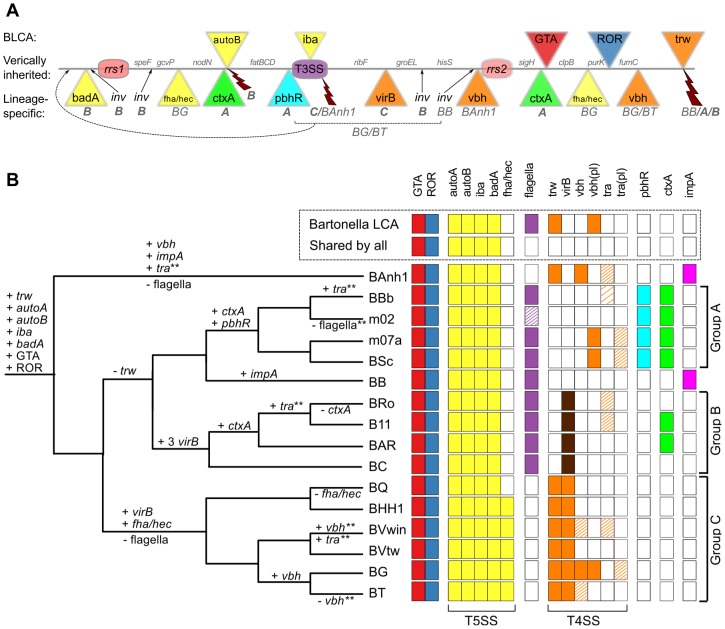
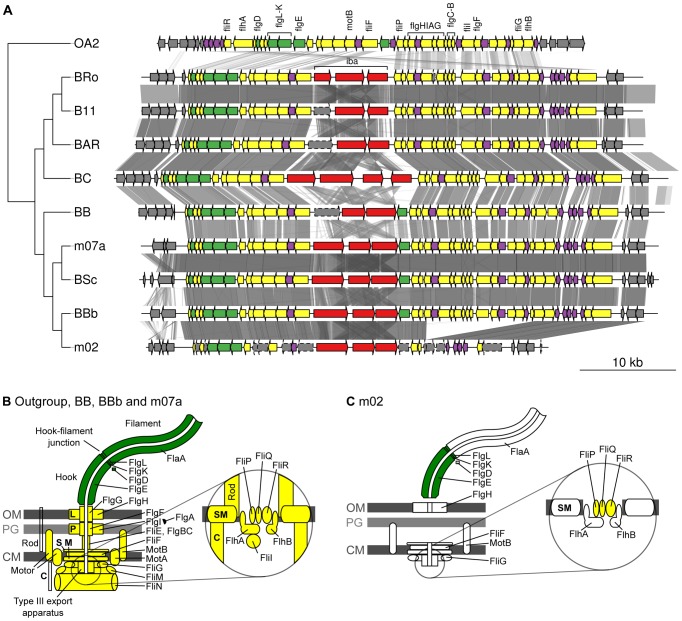
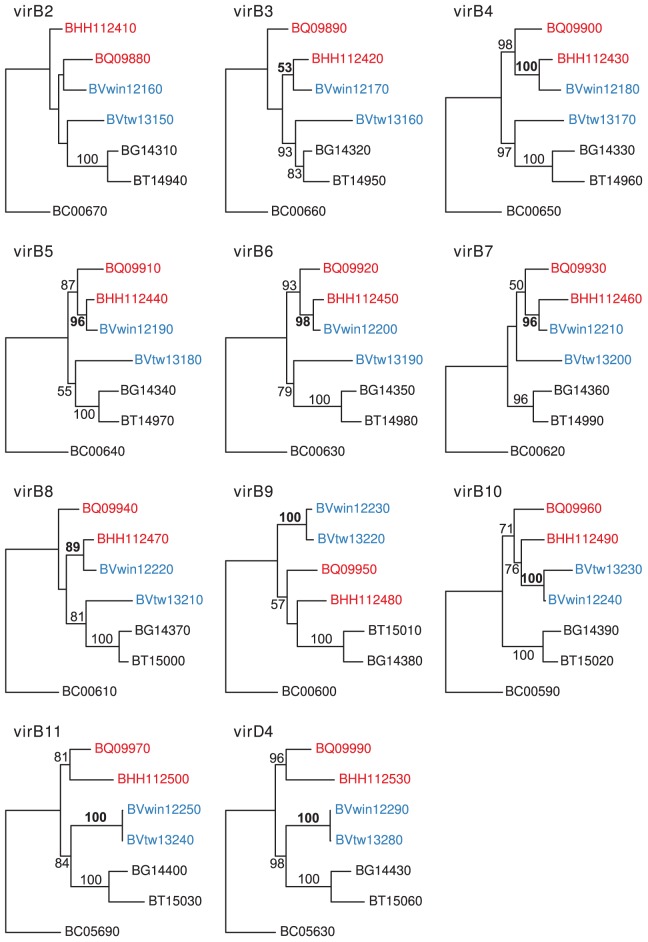
Gene transfer agents (GTAs) randomly transfer short fragments of a bacterial genome. A novel putative GTA was recently discovered in the mouse-infecting bacterium Bartonella grahamii. Although GTAs are widespread in phylogenetically diverse bacteria, their role in evolution is largely unknown. Here, we present a comparative analysis of 16 Bartonella genomes ranging from 1.4 to 2.6 Mb in size, including six novel genomes from Bartonella isolated from a cow, two moose, two dogs, and a kangaroo. A phylogenetic tree inferred from 428 orthologous core genes indicates that the deadly human pathogen B. bacilliformis is related to the ruminant-adapted clade, rather than being the earliest diverging species in the genus as previously thought. A gene flux analysis identified 12 genes for a GTA and a phage-derived origin of replication as the most conserved innovations. These are located in a region of a few hundred kb that also contains 8 insertions of gene clusters for type III, IV, and V secretion systems, and genes for putatively secreted molecules such as cholera-like toxins. The phylogenies indicate a recent transfer of seven genes in the virB gene cluster for a type IV secretion system from a cat-adapted B. henselae to a dog-adapted B. vinsonii strain. We show that the B. henselae GTA is functional and can transfer genes in vitro. We suggest that the maintenance of the GTA is driven by selection to increase the likelihood of horizontal gene transfer and argue that this process is beneficial at the population level, by facilitating adaptive evolution of the host-adaptation systems and thereby expansion of the host range size. The process counters gene loss and forces all cells to contribute to the production of the GTA and the secreted molecules. The results advance our understanding of the role that GTAs play for the evolution of bacterial genomes.
基因转移因子(GTAs)随机转移细菌基因组的短片段。最近在感染老鼠的巴尔通体菌中发现了一种新型假定的 GTA。尽管 GTAs 在系统发育上多样化的细菌中广泛存在,但它们在进化中的作用在很大程度上是未知的。在这里,我们对 16 个大小在 1.4 到 2.6 Mb 之间的巴尔通体基因组进行了比较分析,包括从牛、两头驼鹿、两只狗和一只袋鼠中分离出的六种新型巴尔通体基因组。从 428 个直系同源核心基因推断的系统发育树表明,致命的人类病原体 B. bacilliformis 与反刍动物适应的进化枝有关,而不是像以前认为的那样是属中最早分化的物种。基因通量分析确定了 12 个 GTA 基因和一个噬菌体衍生的复制起点作为最保守的创新。这些位于几百 kb 的区域内,还包含 8 个 III、IV 和 V 型分泌系统的基因簇插入和推测分泌分子(如霍乱样毒素)的基因。系统发育表明,最近从适应猫的 B. henselae 到适应狗的 B. vinsonii 菌株,有 7 个基因在 IV 型分泌系统的 virB 基因簇中发生了转移。我们证明了 B. henselae GTA 是功能性的,可以在体外转移基因。我们认为,GTA 的维持是由选择驱动的,以增加水平基因转移的可能性,并认为这个过程在种群水平上是有益的,通过促进宿主适应系统的适应性进化,从而扩大宿主范围大小。这个过程抵消了基因的丢失,并迫使所有细胞都为 GTA 和分泌分子的产生做出贡献。研究结果推进了我们对 GTA 在细菌基因组进化中所起作用的理解。