Key Laboratory of Zoological Systematics and Evolution, Institute of Zoology, Chinese Academy of Sciences, Beijing, China.
PLoS One. 2013;8(3):e60029. doi: 10.1371/journal.pone.0060029. Epub 2013 Mar 29.
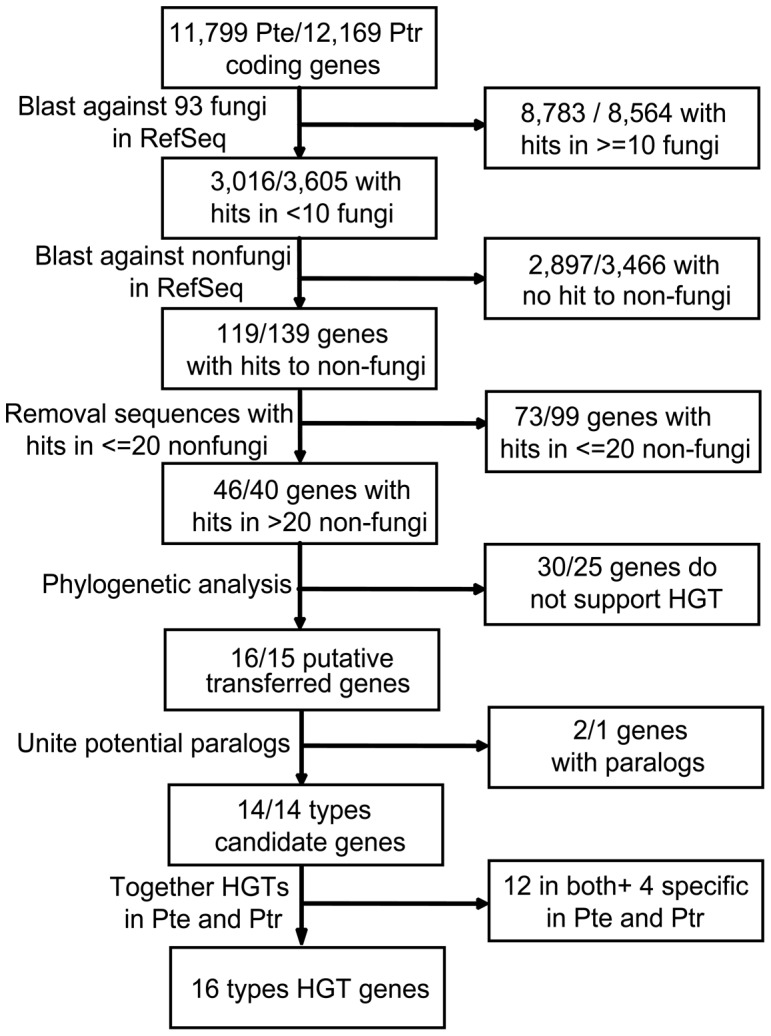
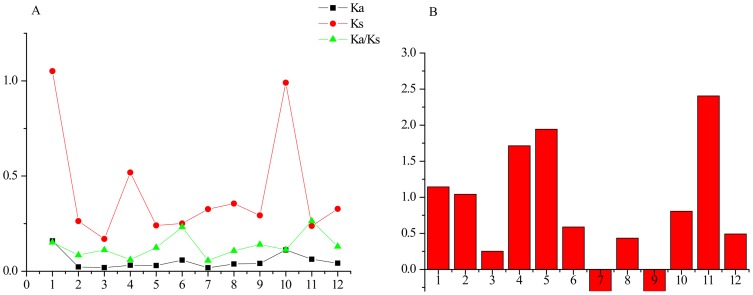
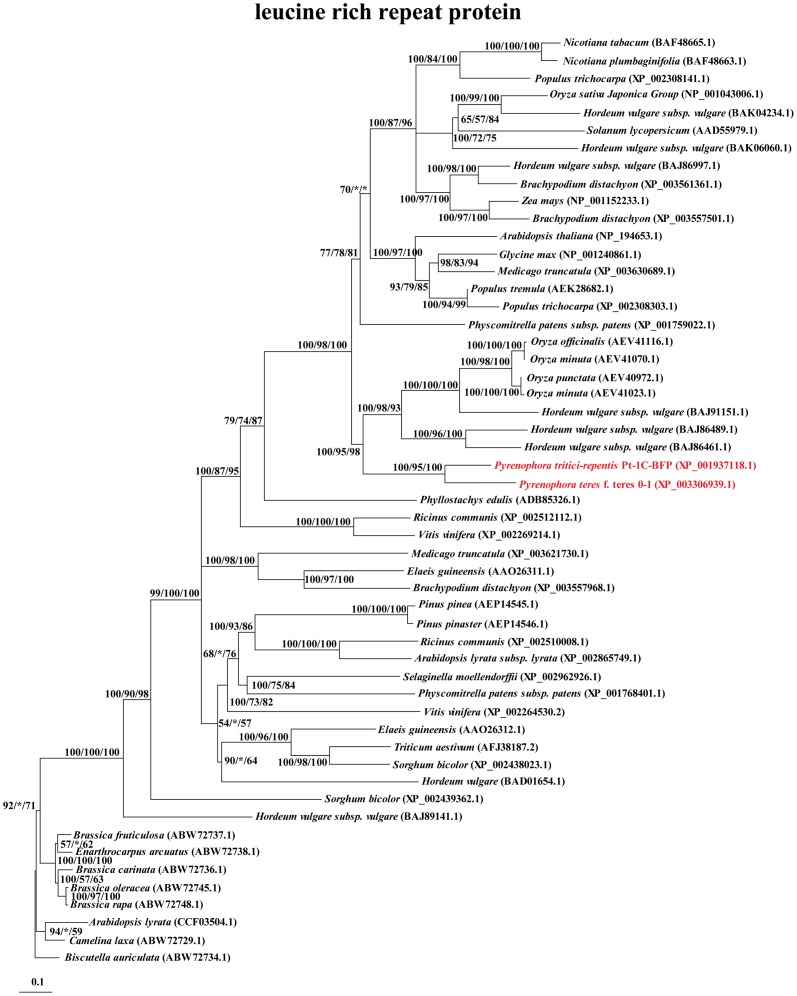
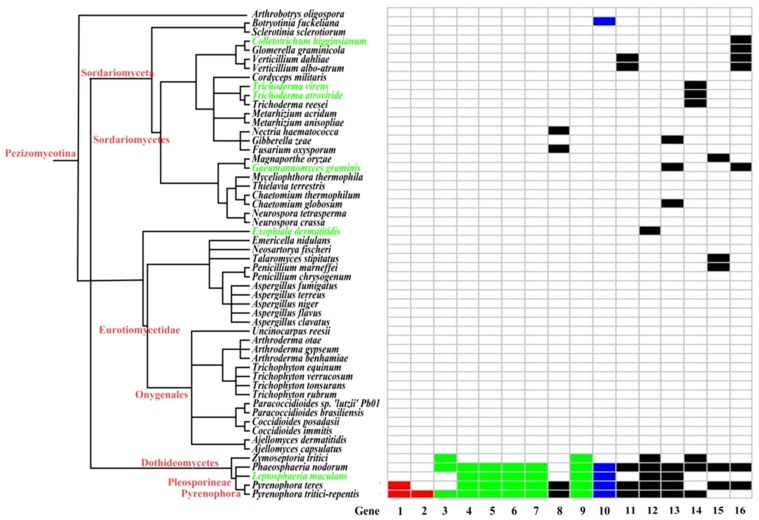
Many studies have reported horizontal gene transfer (HGT) events from eukaryotes, especially fungi. However, only a few investigations summarized multiple interkingdom HGTs involving important phytopathogenic species of Pyrenophora and few have investigated the genetic contributions of HGTs to fungi. We investigated HGT events in P. teres and P. tritici-repentis and discovered that both species harbored 14 HGT genes derived from bacteria and plants, including 12 HGT genes that occurred in both species. One gene coding a leucine-rich repeat protein was present in both species of Pyrenophora and it may have been transferred from a host plant. The transfer of genes from a host plant to pathogenic fungi has been reported rarely and we discovered the first evidence for this transfer in phytopathogenic Pyrenophora. Two HGTs in Pyrenophora underwent subsequent duplications. Some HGT genes had homologs in a few other fungi, indicating relatively ancient transfer events. Functional analyses indicated that half of the HGT genes encoded extracellular proteins and these may have facilitated the infection of plants by Pyrenophora via interference with plant defense-response and the degradation of plant cell walls. Some other HGT genes appeared to participate in carbohydrate metabolism. Together, these functions implied that HGTs may have led to highly efficient mechanisms of infection as well as the utilization of host carbohydrates. Evolutionary analyses indicated that HGT genes experienced amelioration, purifying selection, and accelerated evolution. These appeared to constitute adaptations to the background genome of the recipient. The discovery of multiple interkingdom HGTs in Pyrenophora, their significance to infection, and their adaptive evolution, provided valuable insights into the evolutionary significance of interkingdom HGTs from multiple donors.
许多研究报道了真核生物(尤其是真菌)的水平基因转移(HGT)事件。然而,只有少数研究总结了涉及重要植物病原物种禾旋孢腔菌和旋孢腔菌的多个跨界 HGT,并且很少有研究调查 HGT 对真菌的遗传贡献。我们调查了禾旋孢腔菌和禾旋孢腔菌的 HGT 事件,发现这两个物种都含有 14 个源自细菌和植物的 HGT 基因,其中包括在两个物种中都发生的 12 个 HGT 基因。一个编码富含亮氨酸重复蛋白的基因存在于禾旋孢腔菌和禾旋孢腔菌中,它可能是从宿主植物转移而来的。从宿主植物到病原真菌的基因转移很少有报道,我们在植物病原性禾旋孢腔菌中首次发现了这种转移的证据。禾旋孢腔菌中的两个 HGT 随后发生了复制。一些 HGT 基因在其他几种真菌中也有同源基因,表明这是相对古老的转移事件。功能分析表明,HGT 基因的一半编码细胞外蛋白,这些蛋白可能通过干扰植物防御反应和降解植物细胞壁,促进禾旋孢腔菌对植物的感染。其他一些 HGT 基因似乎参与碳水化合物代谢。总的来说,这些功能表明 HGT 可能导致了高效的感染机制以及对宿主碳水化合物的利用。进化分析表明,HGT 基因经历了改善、纯化选择和加速进化。这些似乎构成了对受体背景基因组的适应。在禾旋孢腔菌中发现了多个跨界 HGT,它们对感染的意义及其适应性进化,为来自多个供体的跨界 HGT 的进化意义提供了有价值的见解。