Wan Alwin M D, Chandler Emily M, Madhavan Maya, Infanger David W, Ober Christopher K, Gourdon Delphine, Malliaras George G, Fischbach Claudia
Department of Materials Science and Engineering, Cornell University, Ithaca, NY 14853, USA.
Biochim Biophys Acta. 2013 Sep;1830(9):4314-20. doi: 10.1016/j.bbagen.2013.03.033. Epub 2013 Apr 6.
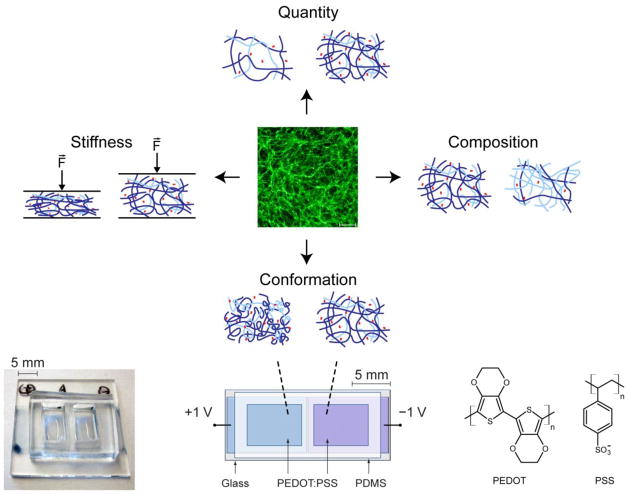
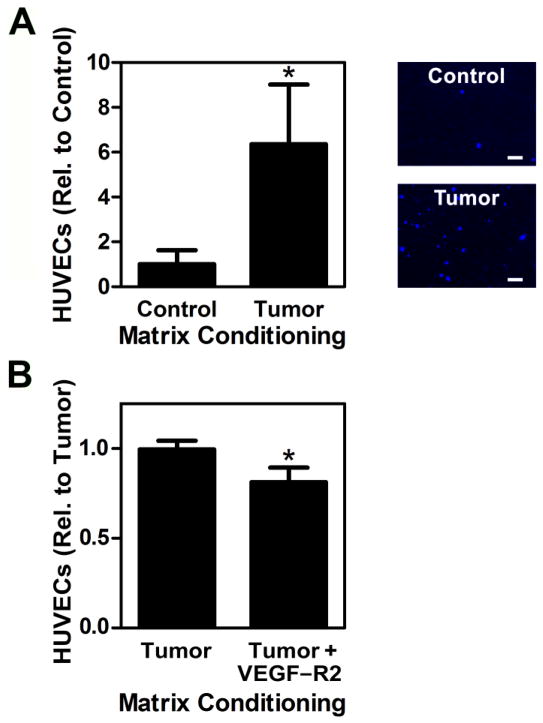
Changes in fibronectin (Fn) matrix remodeling contribute to mammary tumor angiogenesis and are related to altered behavior of adipogenic stromal cells; yet, the underlying mechanisms remain unclear due in part to a lack of reductionist model systems that allow the inherent complexity of cell-derived extracellular matrices (ECMs) to be deciphered. In particular, breast cancer-associated adipogenic stromal cells not only enhance the composition, quantity, and rigidity of deposited Fn, but also partially unfold these matrices. However, the specific effect of Fn conformation on tumor angiogenesis is undefined.
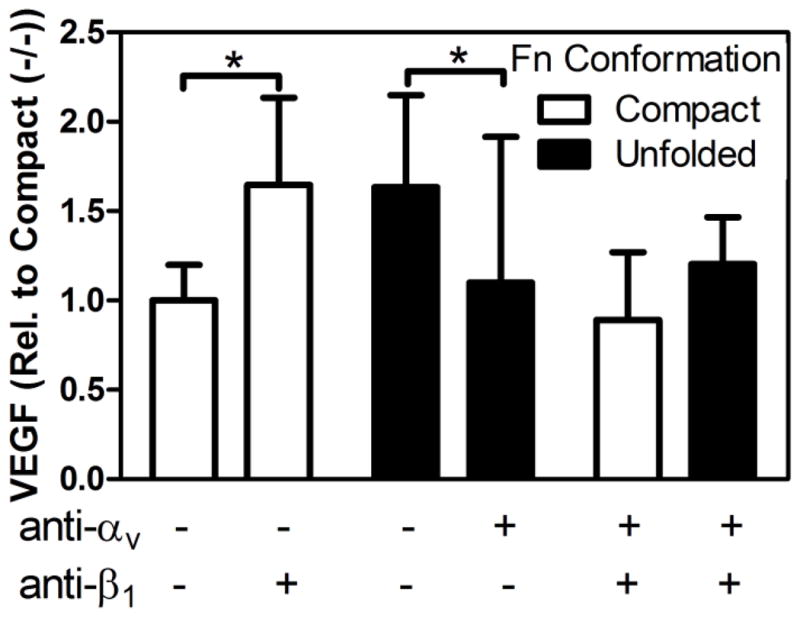
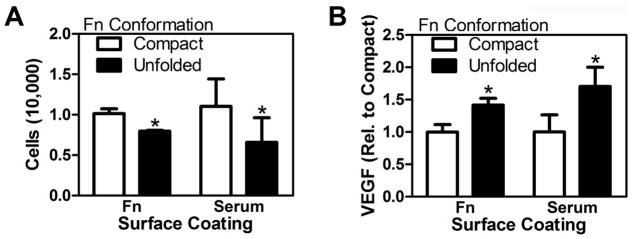
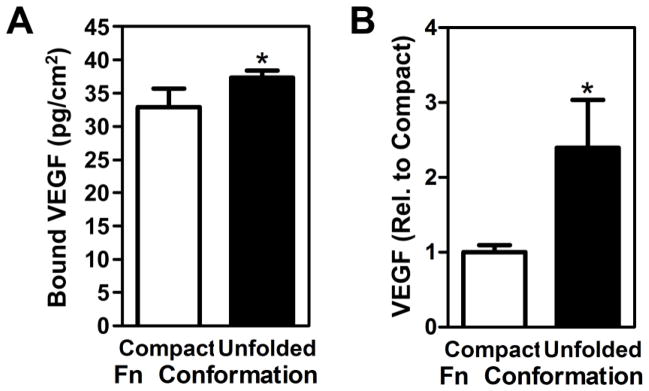
Decellularized matrices and a conducting polymer device consisting of poly(3,4-ethylenedioxythiophene) doped with poly(styrenesulfonate) (PEDOT:PSS) were used to examine the effect of Fn conformation on the behavior of 3T3-L1 preadipocytes. Changes in cell adhesion and proangiogenic capability were tested via cell counting and by quantification of vascular endothelial growth factor (VEGF) secretion, respectively. Integrin-blocking antibodies were utilized to examine varied integrin specificity as a potential mechanism.
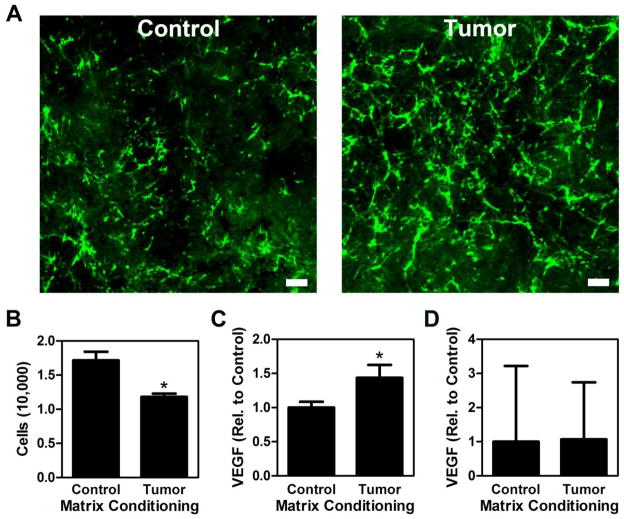
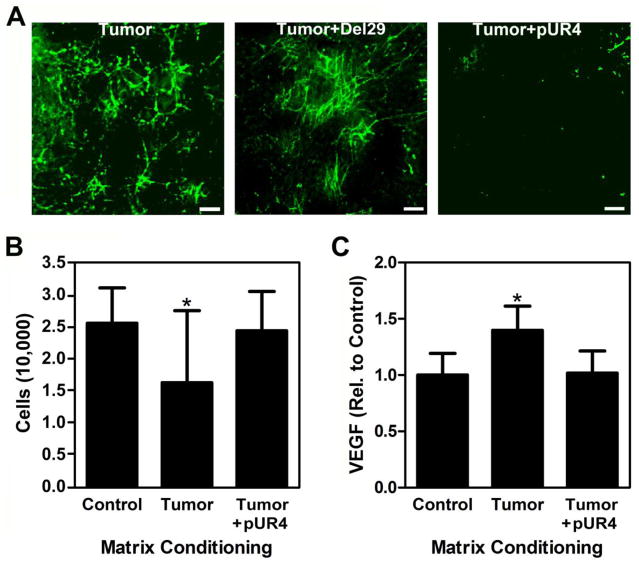
Our findings suggest that tumor-associated partial unfolding of Fn decreases adhesion while enhancing VEGF secretion by breast cancer-associated adipogenic precursor cells, and that altered integrin specificity may underlie these changes.
These results not only have important implications for our understanding of tumorigenesis, but also enhance knowledge of cell-ECM interactions that may be harnessed for other applications including advanced tissue engineering approaches. This article is part of a Special Issue entitled Organic Bioelectronics - Novel Applications in Biomedicine.
纤连蛋白(Fn)基质重塑的变化有助于乳腺肿瘤血管生成,并与脂肪生成性基质细胞行为改变有关;然而,部分由于缺乏能够解析细胞衍生细胞外基质(ECM)内在复杂性的简化模型系统,其潜在机制仍不清楚。特别是,乳腺癌相关的脂肪生成性基质细胞不仅会增强沉积Fn的组成、数量和硬度,还会使这些基质部分展开。然而,Fn构象对肿瘤血管生成的具体影响尚不清楚。
使用脱细胞基质和由掺杂聚(苯乙烯磺酸盐)的聚(3,4 - 乙撑二氧噻吩)(PEDOT:PSS)组成的导电聚合物装置,研究Fn构象对3T3 - L1前脂肪细胞行为的影响。分别通过细胞计数和血管内皮生长因子(VEGF)分泌定量来测试细胞黏附变化和促血管生成能力。利用整合素阻断抗体来检测不同的整合素特异性作为一种潜在机制。
我们的研究结果表明,肿瘤相关的Fn部分展开会降低乳腺癌相关脂肪生成前体细胞的黏附,同时增强其VEGF分泌,并且整合素特异性改变可能是这些变化的基础。
这些结果不仅对我们理解肿瘤发生具有重要意义,还增进了对细胞 - ECM相互作用的认识,这些认识可用于包括先进组织工程方法在内的其他应用。本文是题为“有机生物电子学 - 生物医学中的新应用”的特刊的一部分。