Schountz Tony, Shaw Timothy I, Glenn Travis C, Feldmann Heinz, Prescott Joseph
BMC Immunol. 2013 Apr 9;14:18. doi: 10.1186/1471-2172-14-18.
Deer mice (Peromyscus maniculatus) are the principal reservoir hosts of Sin Nombre virus (SNV), the cause of the great majority of hantavirus cardiopulmonary syndrome (HCPS) cases in North America. SNV, like all hantaviruses with their reservoirs, causes persistent infection without pathology in deer mice and appear to elicit a regulatory T cell response. Deer mice are also susceptible to Andes virus (ANDV), which causes the great majority of HCPS cases in South America, but they clear infection by 56 days post infection without signs of disease.
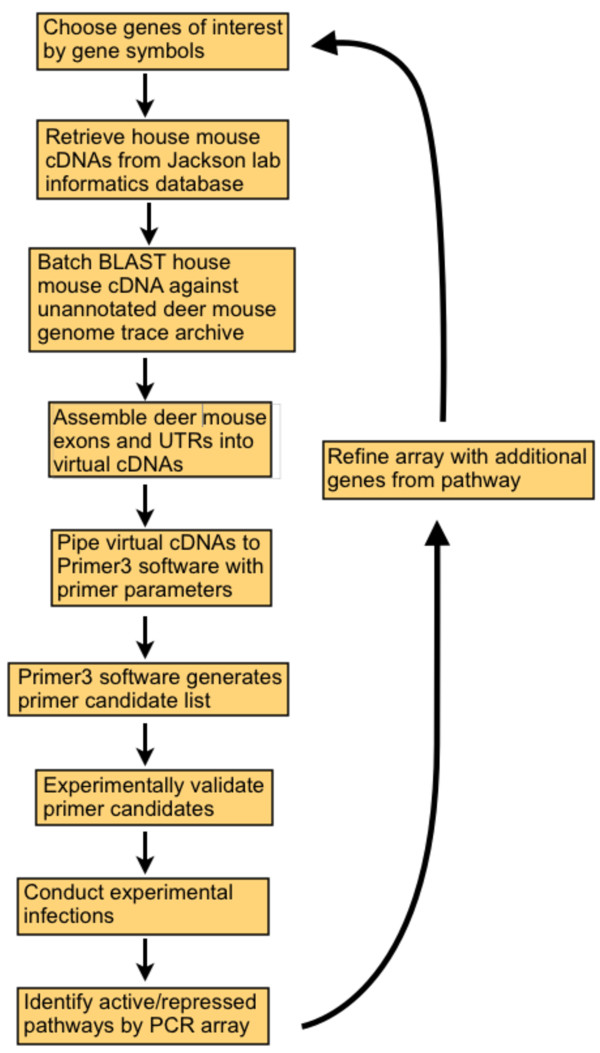
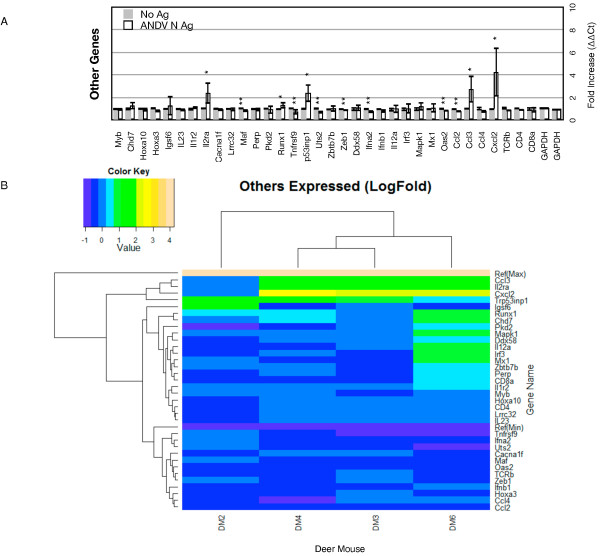
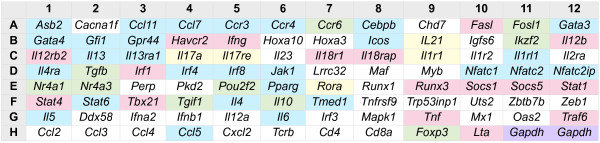
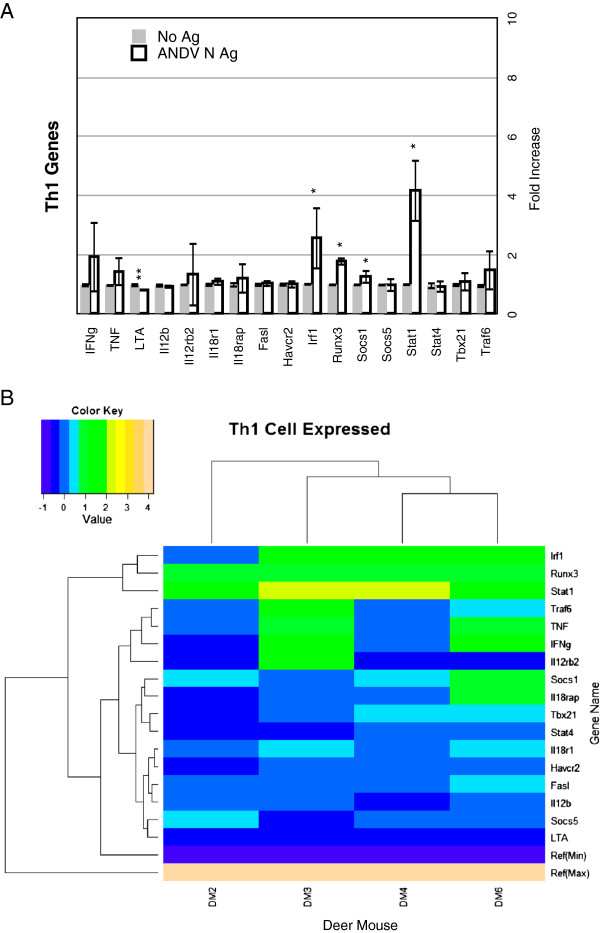
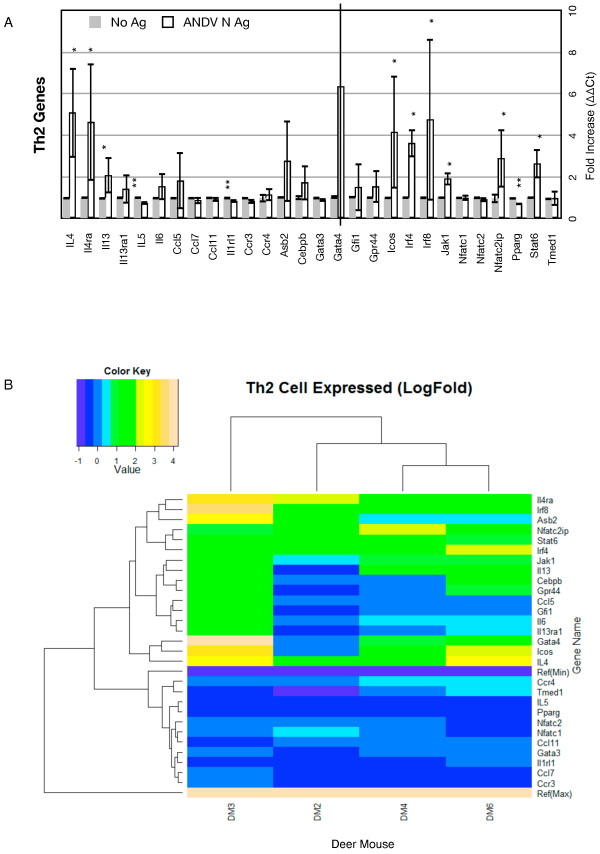
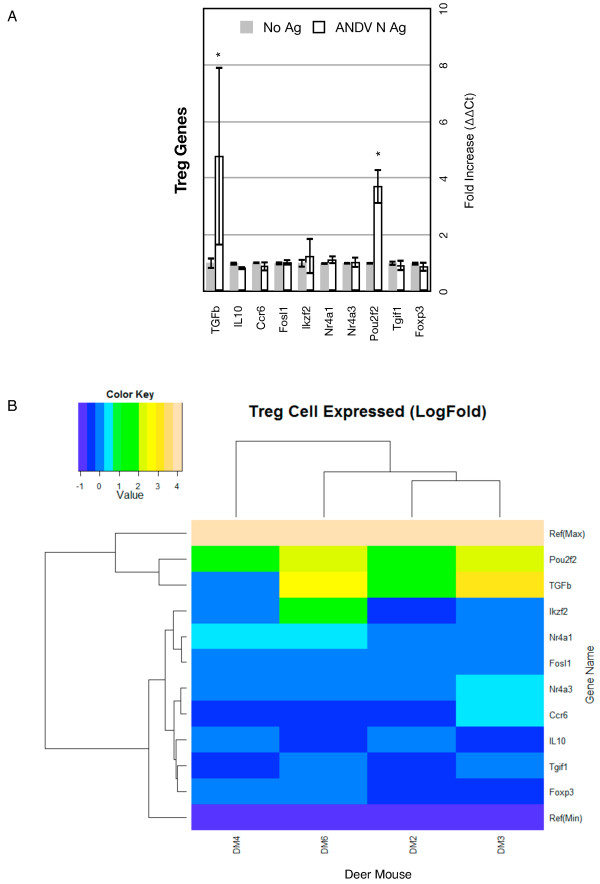
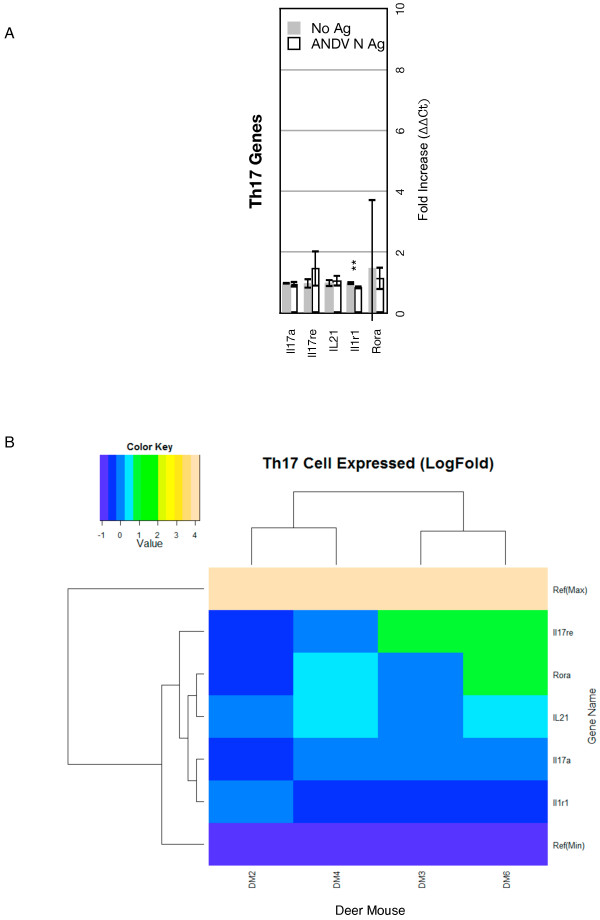
We examined lymph node cell responses of deer mice infected with ANDV to determine expression profiles upon in vitro recall challenge with viral antigen. Because the deer mouse genome is currently unannotated, we developed a bioinformatics pipeline to use known lab mouse (Mus musculus) cDNAs to predict genes within the deer mouse genome and design primers for quantitative PCR (http://dna.publichealth.uga.edu/BlastPrimer/BlastPrimer.php). Of 94 genes examined, 20 were elevated, the plurality of which were Th2-specific, whereas 12 were downregulated. Other expressed genes represented Th1, regulatory T cells and follicular helper T cells, and B cells, but not Th17 cells, indicating that many cellular phenotypes participate in the host response to Andes virus.
The ability to examine expression levels of nearly any gene from deer mice should allow direct comparison of infection with SNV or ANDV to determine the immunological pathways used for clearance of hantavirus infection in a reservoir host species.
鹿鼠(白足鼠)是辛诺柏病毒(SNV)的主要储存宿主,SNV是北美绝大多数汉坦病毒心肺综合征(HCPS)病例的病因。与所有携带储存宿主的汉坦病毒一样,SNV在鹿鼠中引起持续感染但无病理学变化,并且似乎引发调节性T细胞反应。鹿鼠也易感染安第斯病毒(ANDV),该病毒是南美绝大多数HCPS病例的病因,但它们在感染后56天清除感染且无疾病迹象。
我们检测了感染ANDV的鹿鼠的淋巴结细胞反应,以确定在体外用病毒抗原进行回忆激发时的表达谱。由于目前鹿鼠基因组未注释,我们开发了一种生物信息学流程,使用已知的实验室小鼠(小家鼠)cDNA来预测鹿鼠基因组中的基因,并设计定量PCR引物(http://dna.publichealth.uga.edu/BlastPrimer/BlastPrimer.php)。在所检测的94个基因中,20个基因表达上调,其中大多数是Th2特异性的,而12个基因表达下调。其他表达的基因代表Th1、调节性T细胞和滤泡辅助性T细胞以及B细胞,但不包括Th17细胞,这表明许多细胞表型参与了宿主对安第斯病毒的反应。
检测鹿鼠几乎任何基因表达水平的能力应有助于直接比较感染SNV或ANDV的情况,以确定在储存宿主物种中清除汉坦病毒感染所使用的免疫途径。