National Geographic Society, Washington, DC, United States of America.
PLoS One. 2013;8(4):e58799. doi: 10.1371/journal.pone.0058799. Epub 2013 Apr 3.
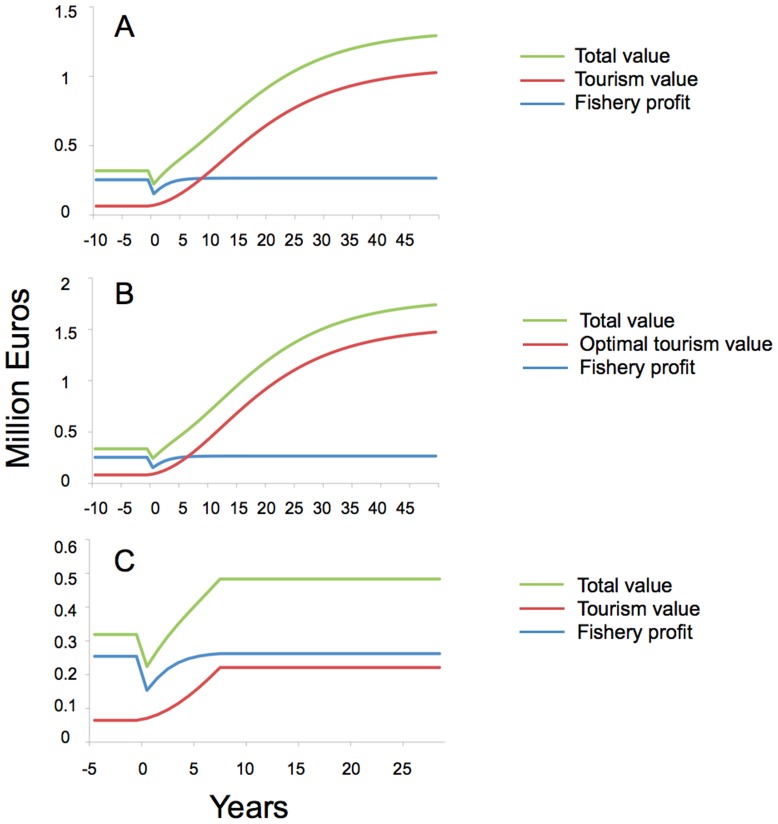
Marine reserves are an effective tool for protecting biodiversity locally, with potential economic benefits including enhancement of local fisheries, increased tourism, and maintenance of ecosystem services. However, fishing communities often fear short-term income losses associated with closures, and thus may oppose marine reserves. Here we review empirical data and develop bioeconomic models to show that the value of marine reserves (enhanced adjacent fishing + tourism) may often exceed the pre-reserve value, and that economic benefits can offset the costs in as little as five years. These results suggest the need for a new business model for creating and managing reserves, which could pay for themselves and turn a profit for stakeholder groups. Our model could be expanded to include ecosystem services and other benefits, and it provides a general framework to estimate costs and benefits of reserves and to develop such business models.
海洋保护区是保护本地生物多样性的有效工具,具有潜在的经济利益,包括提高当地渔业、增加旅游业和维护生态系统服务。然而,渔业社区通常担心关闭带来的短期收入损失,因此可能会反对海洋保护区。在这里,我们回顾了实证数据并开发了生物经济模型,以表明海洋保护区的价值(增加的邻近渔业+旅游业)可能经常超过保护区建立前的价值,并且经济利益可以在短短五年内抵消成本。这些结果表明,需要建立和管理保护区的新商业模式,这可以为利益相关者群体支付自己的费用并创造利润。我们的模型可以扩展到包括生态系统服务和其他利益,它提供了一个估计保护区成本和效益并开发这种商业模式的一般框架。