Department of Psychology, Northeastern University, Boston, Massachusetts, United States of America.
PLoS One. 2013;8(4):e60617. doi: 10.1371/journal.pone.0060617. Epub 2013 Apr 3.
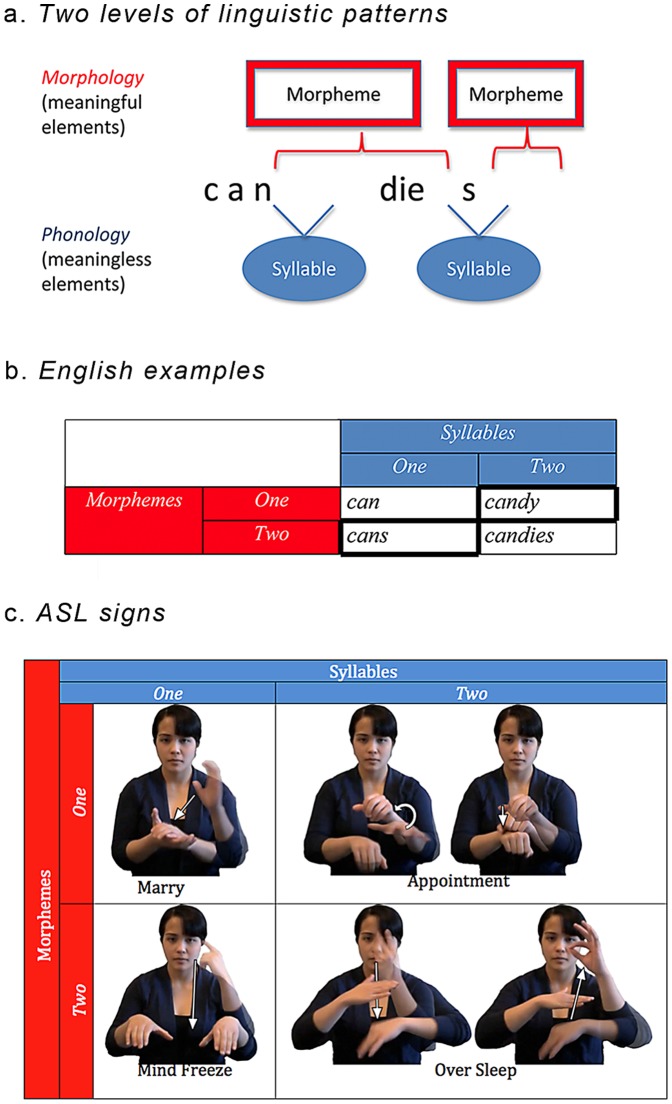
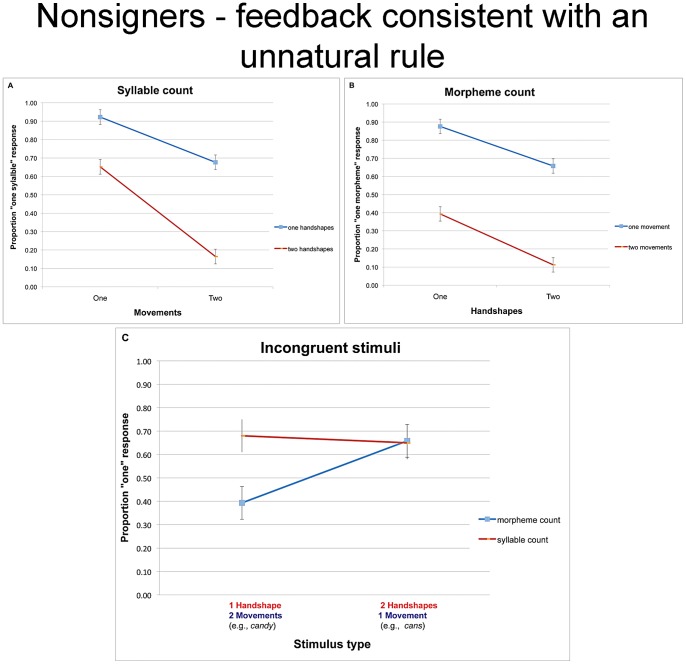
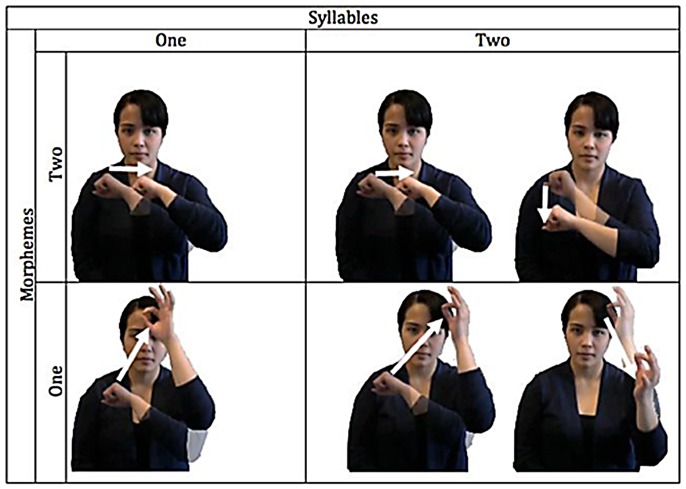
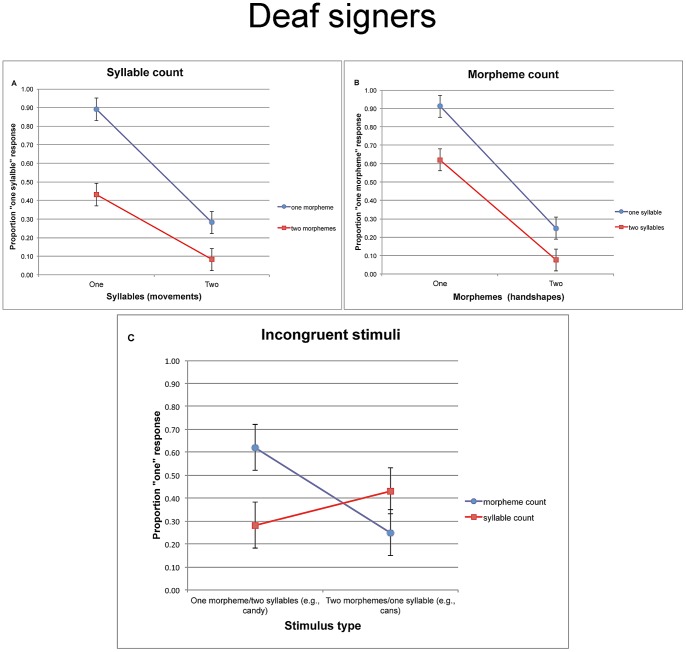
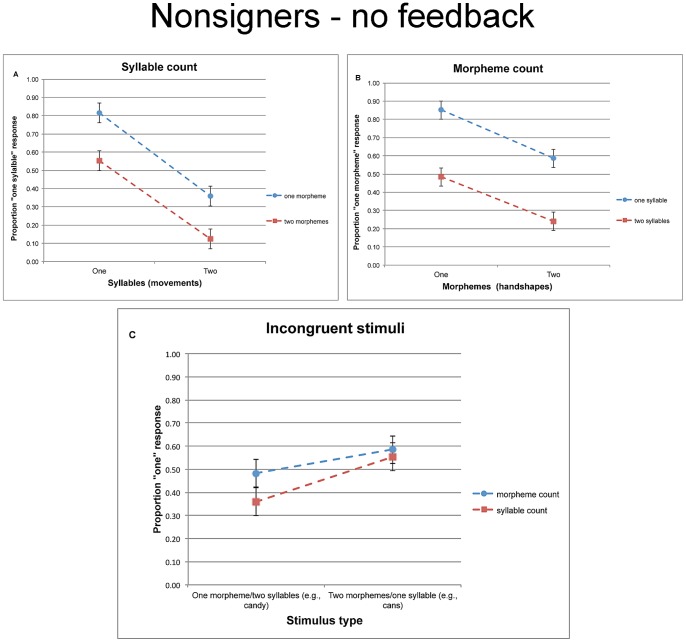
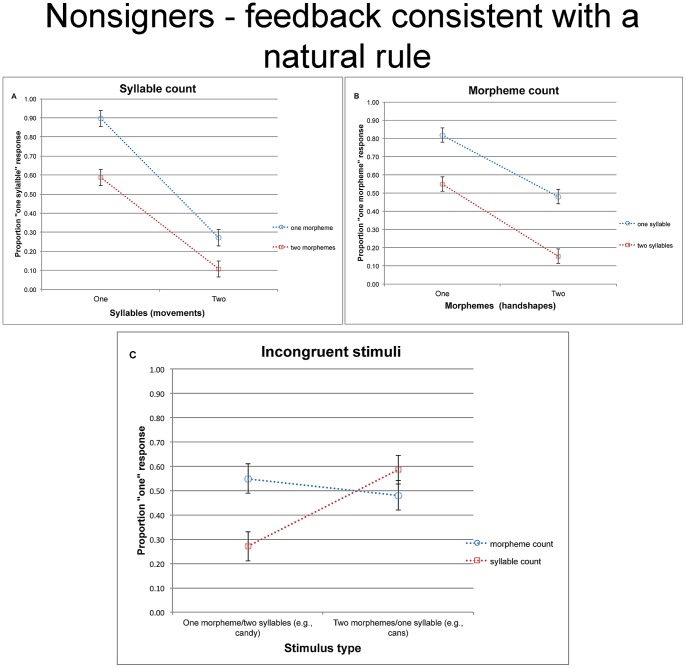
All spoken languages encode syllables and constrain their internal structure. But whether these restrictions concern the design of the language system, broadly, or speech, specifically, remains unknown. To address this question, here, we gauge the structure of signed syllables in American Sign Language (ASL). Like spoken languages, signed syllables must exhibit a single sonority/energy peak (i.e., movement). Four experiments examine whether this restriction is enforced by signers and nonsigners. We first show that Deaf ASL signers selectively apply sonority restrictions to syllables (but not morphemes) in novel ASL signs. We next examine whether this principle might further shape the representation of signed syllables by nonsigners. Absent any experience with ASL, nonsigners used movement to define syllable-like units. Moreover, the restriction on syllable structure constrained the capacity of nonsigners to learn from experience. Given brief practice that implicitly paired syllables with sonority peaks (i.e., movement)--a natural phonological constraint attested in every human language--nonsigners rapidly learned to selectively rely on movement to define syllables and they also learned to partly ignore it in the identification of morpheme-like units. Remarkably, nonsigners failed to learn an unnatural rule that defines syllables by handshape, suggesting they were unable to ignore movement in identifying syllables. These findings indicate that signed and spoken syllables are subject to a shared phonological restriction that constrains phonological learning in a new modality. These conclusions suggest the design of the phonological system is partly amodal.
所有口语语言都对音节进行编码,并限制其内部结构。但是,这些限制是涉及语言系统的设计,还是涉及特定的语音,目前尚不清楚。为了解决这个问题,我们在这里评估了美国手语(ASL)中手语音节的结构。与口语语言一样,手语音节必须表现出单个的响度/能量峰值(即运动)。四个实验检验了这种限制是否由手语使用者和非手语使用者共同执行。我们首先表明,聋人美国手语使用者会选择性地将响音限制应用于新的美国手语符号中的音节(但不是词素)。我们接下来研究了这个原则是否会进一步影响非手语使用者对手语音节的表示。在没有任何美国手语经验的情况下,非手语使用者使用运动来定义类似音节的单位。此外,音节结构的限制限制了非手语使用者从经验中学习的能力。在短暂的练习中,我们隐式地将音节与响音峰值(即运动)配对——这是每种人类语言都存在的自然音韵限制,非手语使用者迅速学会了有选择性地依赖运动来定义音节,并且他们也学会了在识别词素类似单位时部分忽略它。值得注意的是,非手语使用者未能学习一种不自然的规则,该规则通过手形定义音节,这表明他们无法在识别音节时忽略运动。这些发现表明,手语和口语音节都受到一个共同的音韵限制的约束,这种限制限制了新模态中的音韵学习。这些结论表明,音韵系统的设计在某种程度上是跨模态的。