School of Psychology, Cardiff University, Cardiff, United Kingdom.
PLoS One. 2013;8(4):e60713. doi: 10.1371/journal.pone.0060713. Epub 2013 Apr 3.
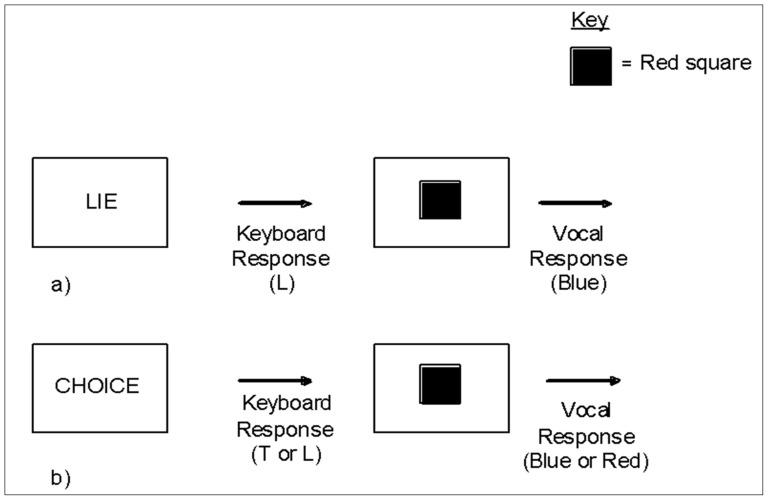
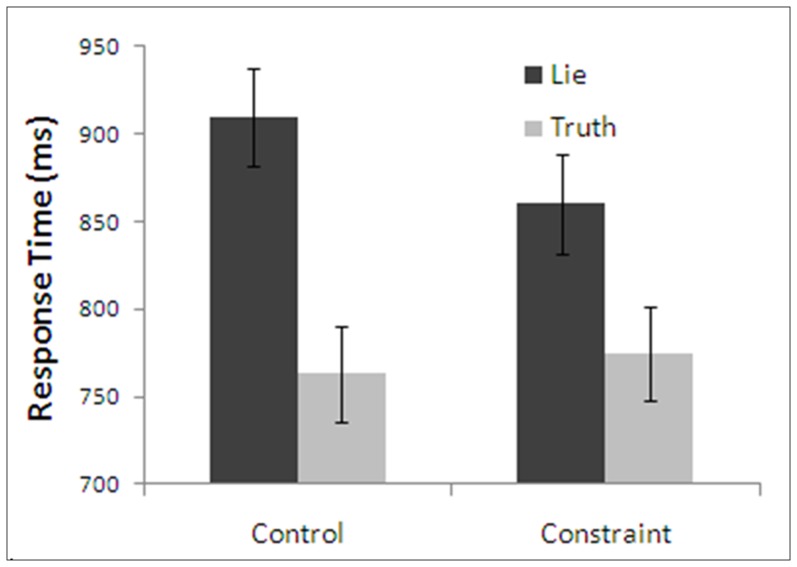
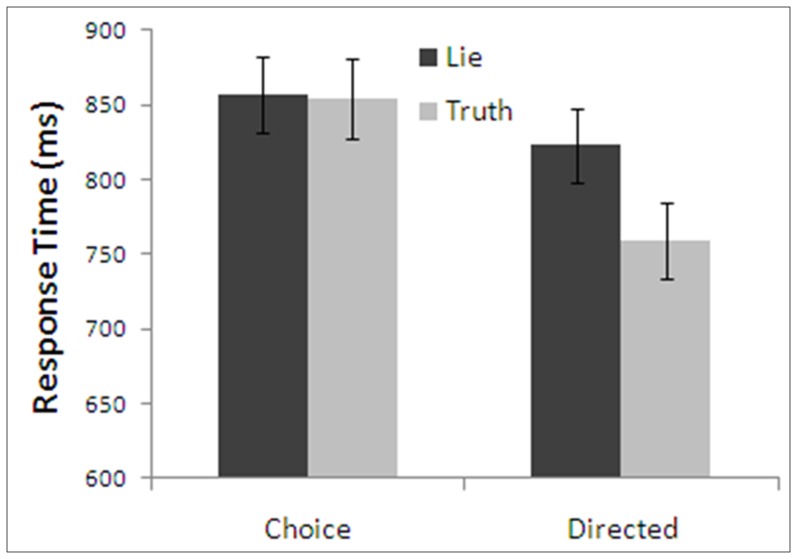
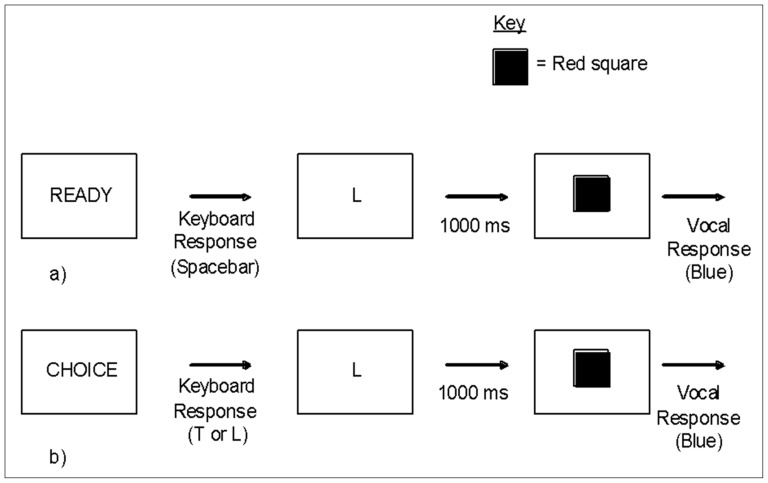
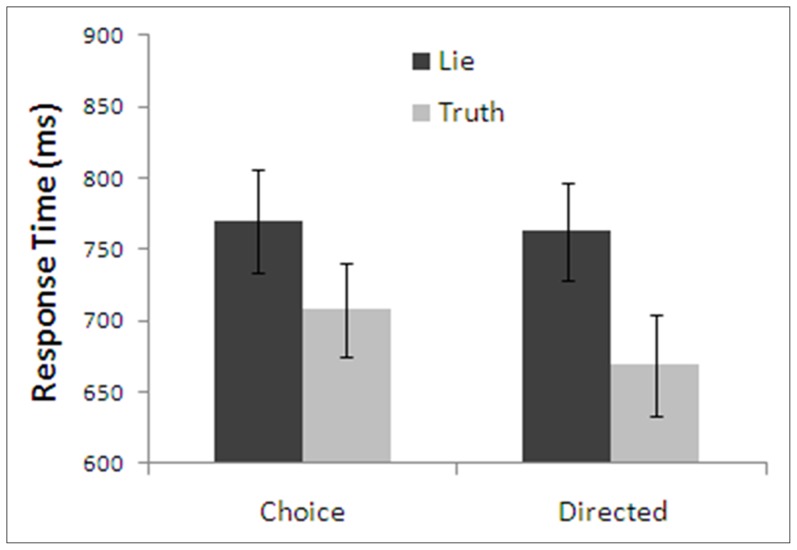
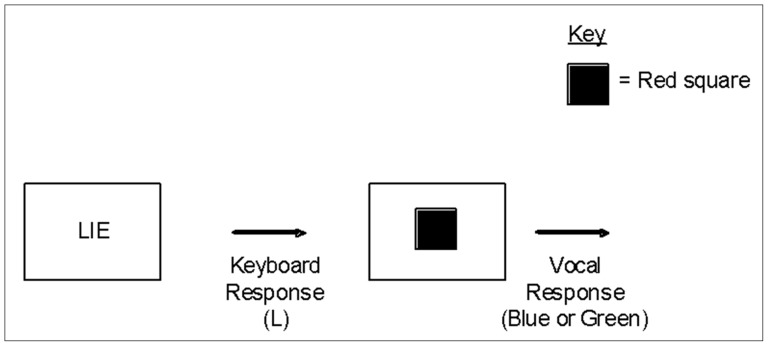
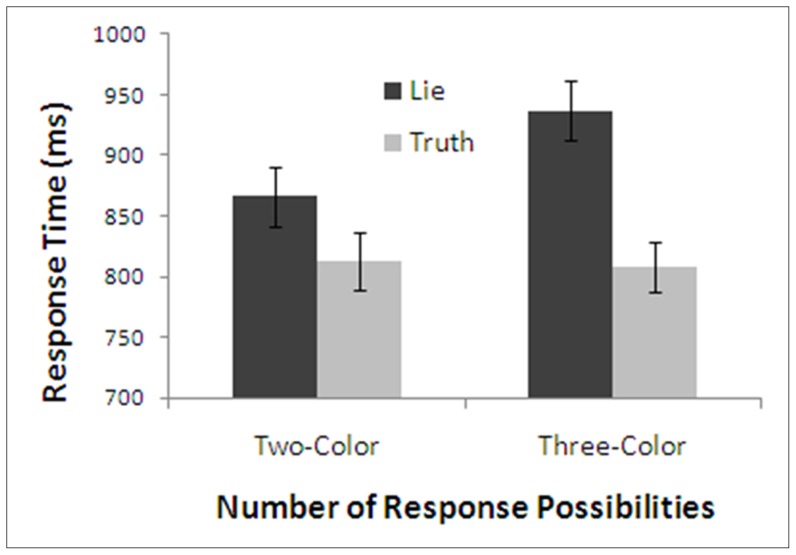
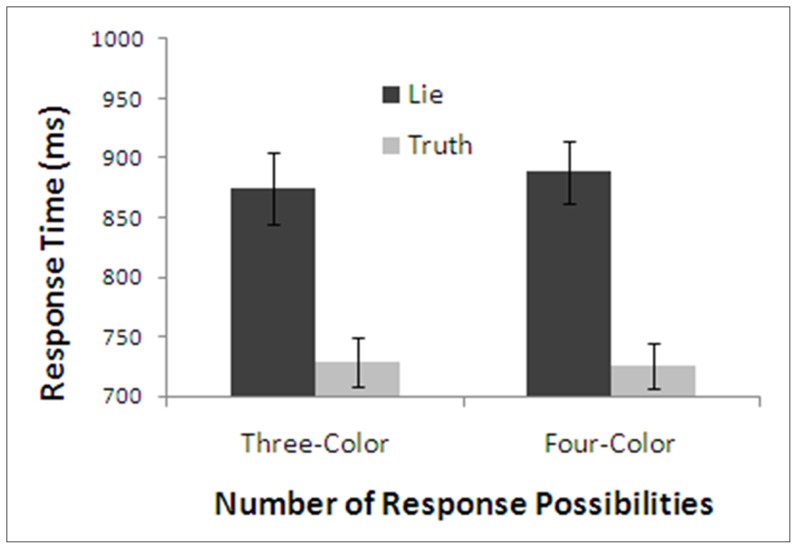
Telling a lie takes longer than telling the truth but precisely why remains uncertain. We investigated two processes suggested to increase response times, namely the decision to lie and the construction of a lie response. In Experiments 1 and 2, participants were directed or chose whether to lie or tell the truth. A colored square was presented and participants had to name either the true color of the square or lie about it by claiming it was a different color. In both experiments we found that there was a greater difference between lying and telling the truth when participants were directed to lie compared to when they chose to lie. In Experiments 3 and 4, we compared response times when participants had only one possible lie option to a choice of two or three possible options. There was a greater lying latency effect when questions involved more than one possible lie response. Experiment 5 examined response choice mechanisms through the manipulation of lie plausibility. Overall, results demonstrate several distinct mechanisms that contribute to additional processing requirements when individuals tell a lie.
撒谎比说实话需要更长的时间,但具体原因尚不确定。我们研究了两种被认为会增加反应时间的过程,即撒谎的决定和撒谎的构建。在实验 1 和 2 中,参与者被指示或选择撒谎或说实话。呈现一个彩色方块,参与者必须说出方块的真实颜色,或者通过声称它是另一种颜色来撒谎。在这两个实验中,我们发现当参与者被指示撒谎时,撒谎和说实话之间的差异比他们选择撒谎时更大。在实验 3 和 4 中,我们比较了当参与者只有一个可能的撒谎选项和两个或三个可能选项可供选择时的反应时间。当问题涉及多个可能的撒谎反应时,撒谎潜伏期的影响更大。实验 5 通过操纵谎言的可能性来检验反应选择机制。总的来说,结果表明,当个人撒谎时,有几个不同的机制会导致额外的处理要求。