Shanghai Research Centre for Model Organisms, Shanghai 201203, PR China.
State Key Laboratory of Cell Biology, Institute of Biochemistry and Cell biology, Shanghai Institutes for Biological Sciences, Chinese Academy of Sciences, Shanghai, 200031, PR China.
J Inflamm (Lond). 2013 Apr 11;10(1):16. doi: 10.1186/1476-9255-10-16.
Interleukin 1 beta (IL-1β) contributes to the development of inflammatory bowel disease (IBD) and is correlated with the severity of intestinal inflammation. However, the precise source of IL-1β producing cells in DSS colitis is currently not known.
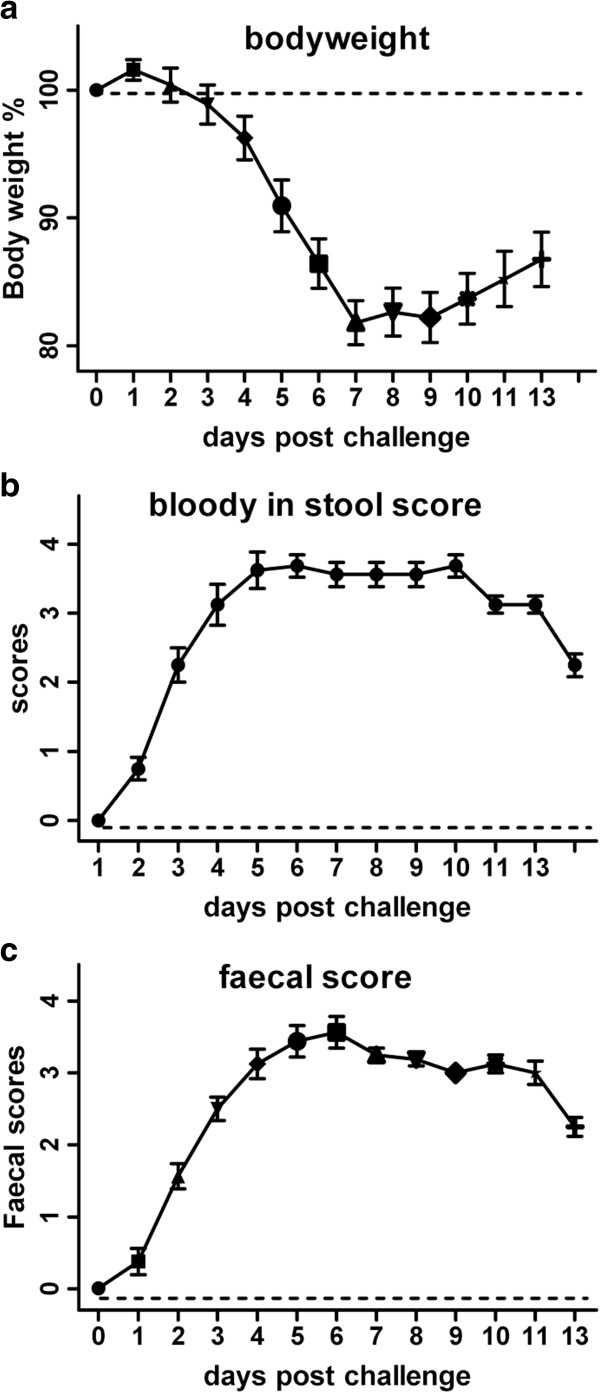
To determine IL-1β activity during intestinal inflammation in real time, an IL-1β transgenic mouse has been generated by incorporating the firefly luciferase gene driven by a 4.5-kb fragment of human IL-1β gene promoter (named cHS4I-hIL-1βP-Luc transgenic mice). Dextran sodium sulfate (DSS) induced colitis was confirmed with clinical presentation and histopathology.
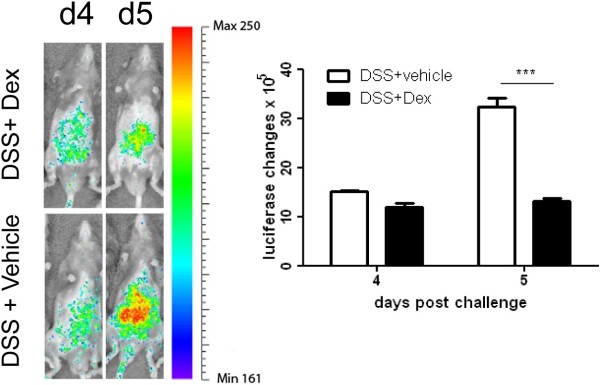
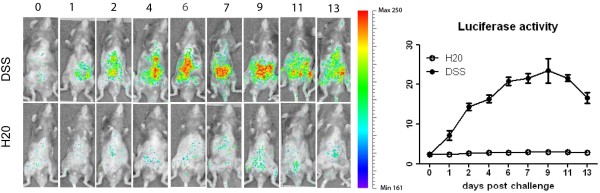
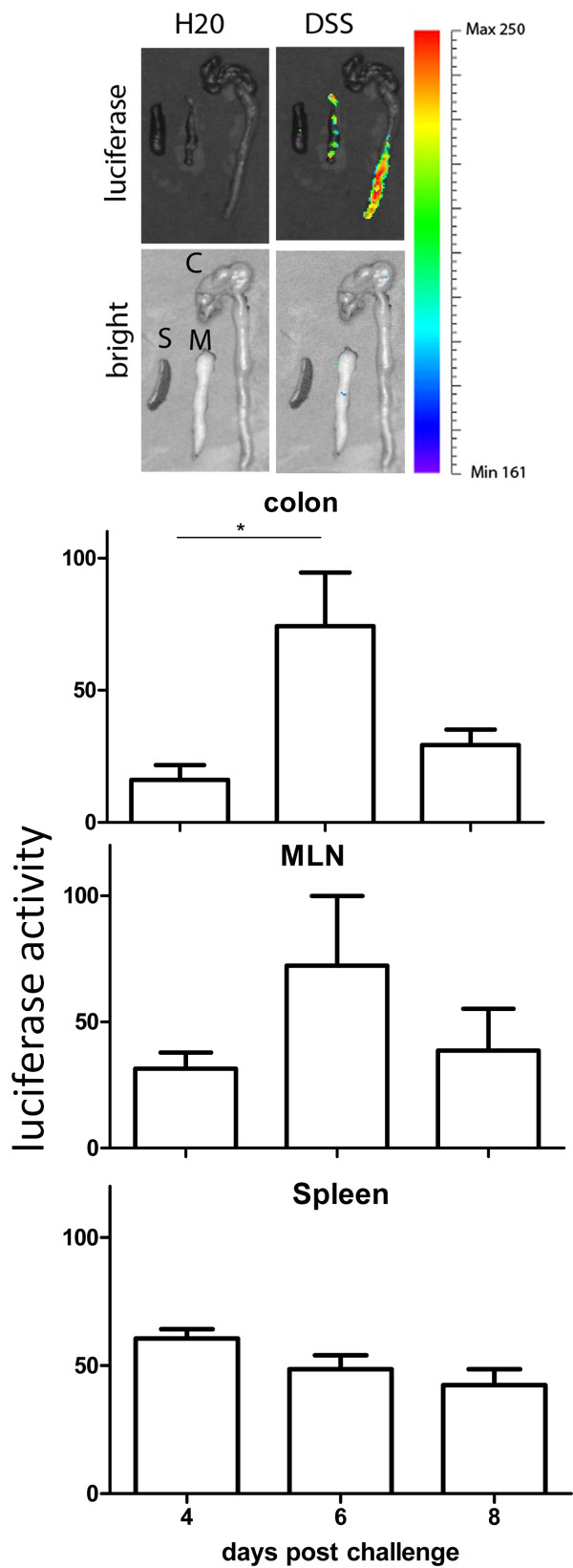
A substantial increase in luciferase activity (reflecting IL-1β production) in the region of inflamed colon was observed in a time dependent manner, followed by additional activity in the region of the mesenteric lymph node. The up-regulated luciferase activity was suppressed by dexamethasone (steroids) during DSS challenge, consistent with reduced severity of colitis, confirming the specificity of luciferase activity.
Our data suggests that bioluminescence is an interesting technology, which may be used to evaluate transcription of various genes in real time in experimental colitis.
白细胞介素 1β(IL-1β)有助于炎症性肠病(IBD)的发展,并与肠道炎症的严重程度相关。然而,目前尚不清楚 DSS 结肠炎中产生 IL-1β 的细胞的确切来源。
为了实时确定肠道炎症过程中的 IL-1β 活性,通过将萤火虫荧光素酶基因整合到 4.5kb 人 IL-1β 基因启动子片段驱动的基因中,生成了 IL-1β 转基因小鼠(命名为 cHS4I-hIL-1βP-Luc 转基因小鼠)。用葡聚糖硫酸钠(DSS)诱导结肠炎,并通过临床症状和组织病理学进行确认。
在时间依赖性方式下,在发炎结肠区域观察到荧光素酶活性(反映 IL-1β 产生)的大量增加,随后肠系膜淋巴结区域的活性增加。在 DSS 挑战期间,地塞米松(类固醇)抑制了上调的荧光素酶活性,与结肠炎严重程度降低一致,证实了荧光素酶活性的特异性。
我们的数据表明,生物发光是一种有趣的技术,可用于实时评估实验性结肠炎中各种基因的转录。