Garvey Christopher J, Lenné Thomas, Koster Karen L, Kent Ben, Bryant Gary
Australian Nuclear Science and Technology Organisation, Locked Bag 2001, Kirrawee DC NSW 2232, Australia.
Int J Mol Sci. 2013 Apr 12;14(4):8148-63. doi: 10.3390/ijms14048148.
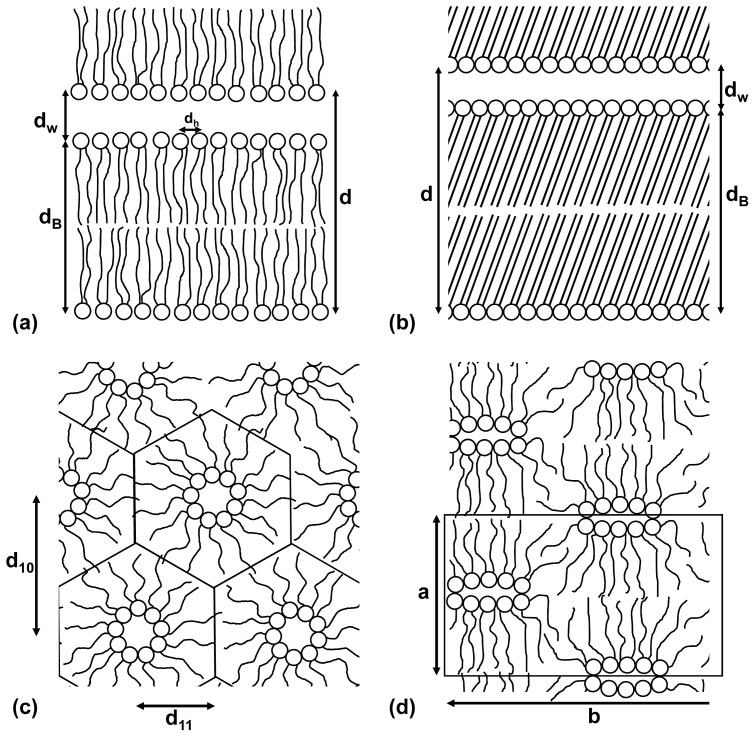
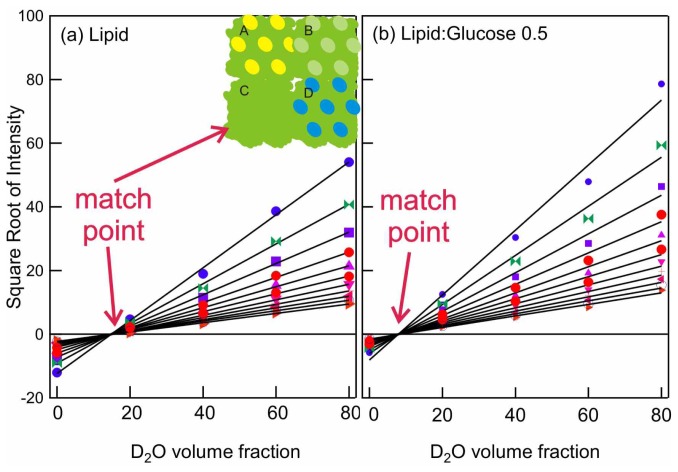
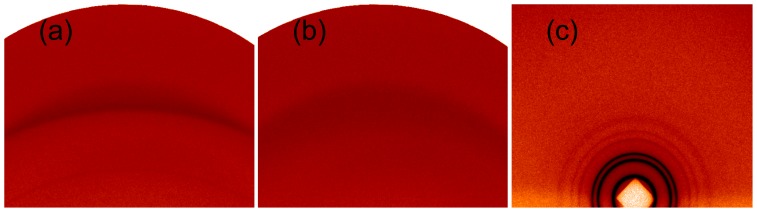
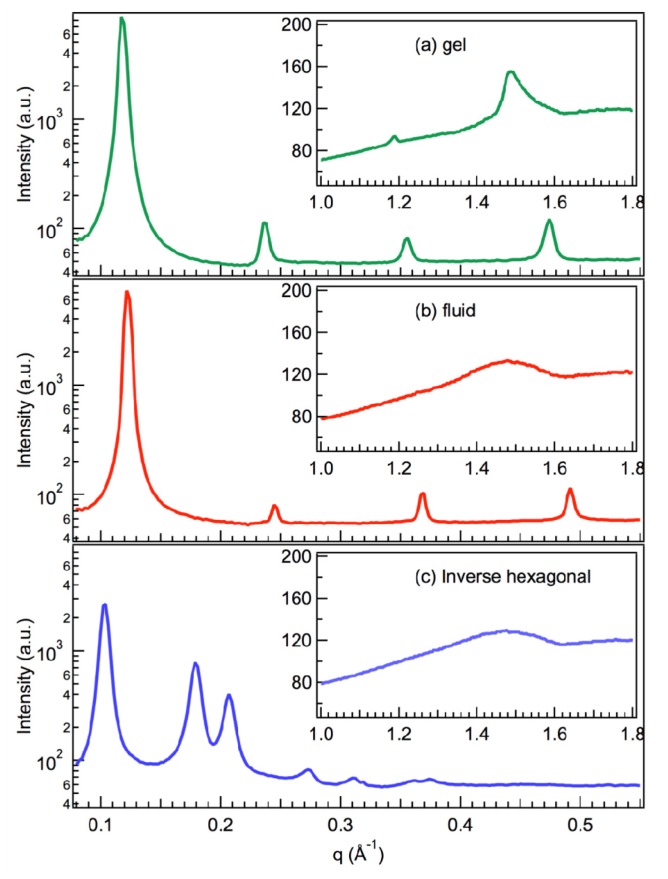
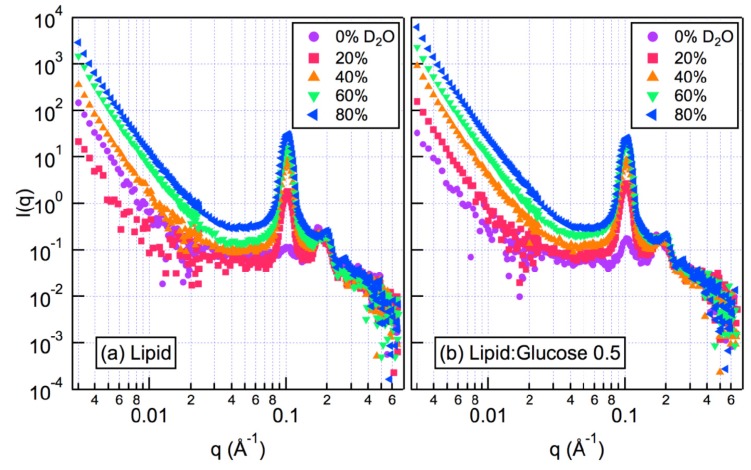
Scattering techniques have played a key role in our understanding of the structure and function of phospholipid membranes. These techniques have been applied widely to study how different molecules (e.g., cholesterol) can affect phospholipid membrane structure. However, there has been much less attention paid to the effects of molecules that remain in the aqueous phase. One important example is the role played by small solutes, particularly sugars, in protecting phospholipid membranes during drying or slow freezing. In this paper, we present new results and a general methodology, which illustrate how contrast variation small angle neutron scattering (SANS) and synchrotron-based X-ray scattering (small angle (SAXS) and wide angle (WAXS)) can be used to quantitatively understand the interactions between solutes and phospholipids. Specifically, we show the assignment of lipid phases with synchrotron SAXS and explain how SANS reveals the exclusion of sugars from the aqueous region in the particular example of hexagonal II phases formed by phospholipids.
散射技术在我们对磷脂膜的结构和功能的理解中发挥了关键作用。这些技术已被广泛应用于研究不同分子(如胆固醇)如何影响磷脂膜结构。然而,对于留在水相中的分子的影响关注较少。一个重要的例子是小溶质,特别是糖类,在干燥或缓慢冷冻过程中对磷脂膜的保护作用。在本文中,我们展示了新的结果和一种通用方法,说明了对比变化小角中子散射(SANS)和基于同步加速器的X射线散射(小角(SAXS)和广角(WAXS))如何用于定量理解溶质与磷脂之间的相互作用。具体而言,我们展示了用同步加速器SAXS对脂质相的归属,并解释了在磷脂形成的六方II相的特定例子中,SANS如何揭示糖类从水相区域的排除。