
南非夸祖鲁-纳塔尔省参加 HIV 预防试验的女性中 HIV-1 耐药性的流行情况(MTN-009)。
Prevalence of HIV-1 drug resistance among women screening for HIV prevention trials in KwaZulu-Natal, South Africa (MTN-009).
机构信息
Department of Infectious Diseases, University of Pittsburgh School of Medicine, Pittsburgh, Pennsylvania, United States of America.
出版信息
PLoS One. 2013 Apr 9;8(4):e59787. doi: 10.1371/journal.pone.0059787. Print 2013.
BACKGROUND
A major concern with using antiretroviral (ARV)-based products for HIV prevention is the potential spread of drug resistance, particularly from individuals who are HIV-infected but unaware of their status. Limited data exist on the prevalence of HIV infection or drug resistance among potential users of ARV-based prevention products.
METHODS
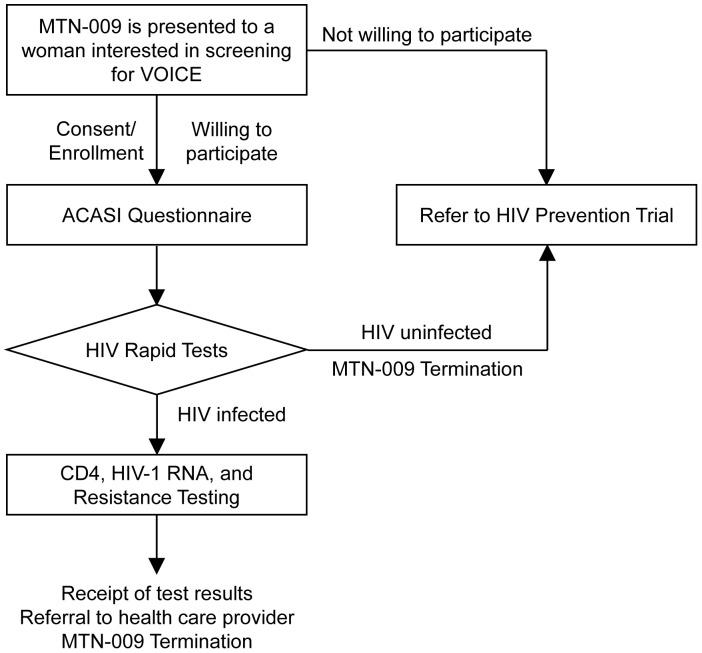
A cross-sectional study of reproductive-aged women who presented to screen for an HIV prevention trial was conducted at 7 clinical sites in Durban, South Africa. CD4+T cell counts, HIV-1 RNA levels and population sequencing of the protease and reverse transcriptase genes were performed for all women with 2 positive HIV rapid tests. Resistance mutations were identified using the Stanford Calibrated Population Resistance Tool.
RESULTS
Of the 1073 evaluable women, 400(37%) were confirmed as HIV-infected. Of those, plasma HIV-1 RNA was detectable in 365/400(91%) and undetectable(<40 copies/ml) in 35/400(9%) women. 156 women(39%) were eligible for antiretroviral therapy (CD4+T cell counts<350 cells/mm(3)) and 50(13%) met criteria for AIDS(CD4<200 cells/mm(3)). Of 352 plasma samples(>200 copies/ml) analyzed for drug resistance, 26(7.4%) had nucleoside reverse transcriptase inhibitor (NRTI), non-nucleoside reverse transcriptase inhibitor (NNRTI) or protease inhibitor (PI) drug resistance mutations. Among those with resistance, 18/26 participants(62%) had single-class NNRTI resistance and 5/26(19%) had dual-class NRTI/NNRTI. Major mutations in reverse transcriptase included K65R(n = 1), L74I(n = 1), K103N(n = 19), V106M(n = 4), Y181C(n = 2), M184V(n = 4), and K219E/R(n = 2). Major PI-resistance mutations were rare: M46L(n = 1) and I85V(n = 1). All participants were infected with subtype C virus, except one infected with subtype A.
CONCLUSIONS
In women from Durban, South Africa screening for an HIV prevention trial, the HIV prevalence was high (37%) and HIV drug resistance prevalence was above 5%. This study highlights the potential challenges faced when implementing an ARV-based prevention product that overlaps with first-line antiretroviral therapy. Effective screening to exclude HIV infection among women interested in uptake of ARV-based HIV prevention will be essential in limiting the spread of ARV resistance.
背景
使用基于抗逆转录病毒(ARV)的产品进行 HIV 预防的一个主要问题是潜在的耐药性传播,尤其是在那些已经感染 HIV 但不知道自己状况的人群中。目前,关于潜在的 ARV 预防产品使用者中 HIV 感染或耐药性的流行率,数据有限。
方法
在南非德班的 7 个临床点对参加 HIV 预防试验筛选的育龄妇女进行了一项横断面研究。对所有 2 项 HIV 快速检测呈阳性的妇女进行 CD4+T 细胞计数、HIV-1 RNA 水平以及蛋白酶和逆转录酶基因的群体测序。使用斯坦福校准人群耐药性工具确定耐药突变。
结果
在可评估的 1073 名妇女中,有 400 名(37%)被确认为 HIV 感染。其中,365/400(91%)名妇女的血浆 HIV-1 RNA 可检测到,35/400(9%)名妇女的血浆 HIV-1 RNA 不可检测(<40 拷贝/ml)。156 名妇女(39%)符合接受抗逆转录病毒治疗的条件(CD4+T 细胞计数<350 个细胞/mm³),50 名妇女(13%)符合艾滋病标准(CD4<200 个细胞/mm³)。在对 352 份(>200 拷贝/ml)进行耐药性分析的血浆样本中,有 26 份(7.4%)存在核苷逆转录酶抑制剂(NRTI)、非核苷逆转录酶抑制剂(NNRTI)或蛋白酶抑制剂(PI)耐药突变。在有耐药性的患者中,18/26 名患者(62%)存在单一 NNRTI 耐药,5/26 名患者(19%)存在 NRTI/NNRTI 双重耐药。逆转录酶的主要突变包括 K65R(n=1)、L74I(n=1)、K103N(n=19)、V106M(n=4)、Y181C(n=2)、M184V(n=4)和 K219E/R(n=2)。罕见的主要 PI 耐药突变包括 M46L(n=1)和 I85V(n=1)。所有参与者均感染了 C 型病毒,除了 1 名感染 A 型病毒的患者。
结论
在南非德班参加 HIV 预防试验筛选的妇女中,HIV 流行率较高(37%),HIV 耐药率超过 5%。本研究强调了在实施与一线抗逆转录病毒治疗重叠的基于 ARV 的预防产品时所面临的潜在挑战。对有兴趣使用基于 ARV 的 HIV 预防的妇女进行有效的 HIV 感染筛查,以限制 ARV 耐药性的传播至关重要。



 Zotero 插件