Department of Plant Pathology, University of California Davis Davis, CA, USA.
Front Plant Sci. 2013 Apr 11;4:86. doi: 10.3389/fpls.2013.00086. eCollection 2013.
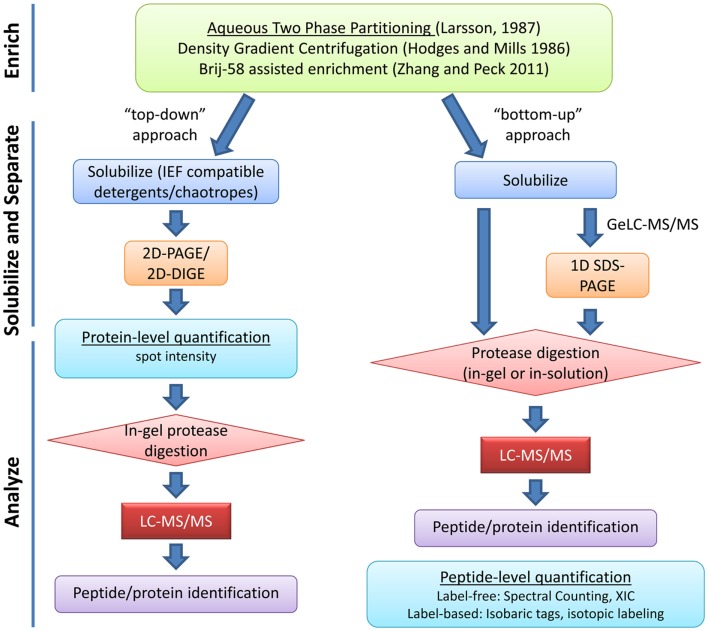
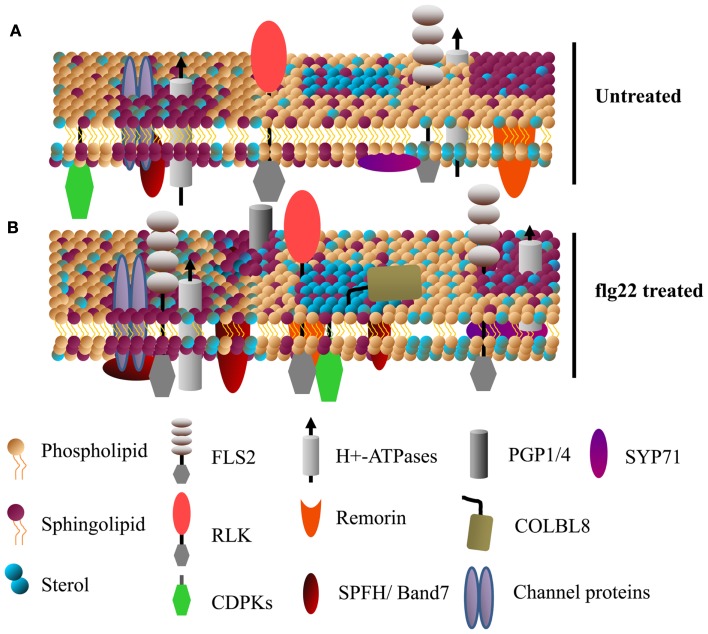
The plasma membrane (PM) regulates diverse processes essential to plant growth, development, and survival in an ever-changing environment. In addition to maintaining normal cellular homeostasis and plant nutrient status, PM proteins perceive and respond to a myriad of environmental cues. Here we review recent advances in the analysis of the plant PM proteome with a focus on the model plant Arabidopsis thaliana. Due to membrane heterogeneity, hydrophobicity, and low relative abundance, analysis of the PM proteome has been a special challenge. Various experimental techniques to enrich PM proteins and different protein and peptide separation strategies have facilitated the identification of thousands of integral and membrane-associated proteins. Numerous classes of proteins are present at the PM with diverse biological functions. PM microdomains have attracted much attention. However, it still remains a challenge to characterize these cell membrane compartments. Dynamic changes in the PM proteome in response to different biotic and abiotic stimuli are highlighted. Future prospects for PM proteomics research are also discussed.
质膜(PM)调节多种过程,对于植物在不断变化的环境中的生长、发育和生存至关重要。除了维持正常的细胞内稳态和植物养分状态外,PM 蛋白还能感知和响应无数的环境线索。在这里,我们回顾了近年来利用模式植物拟南芥分析植物质膜蛋白质组的进展。由于膜的异质性、疏水性和相对丰度低,PM 蛋白质组的分析一直是一个特殊的挑战。各种富集 PM 蛋白的实验技术和不同的蛋白质和肽分离策略促进了数千种完整和膜相关蛋白的鉴定。许多类别的蛋白质存在于 PM 上,具有不同的生物学功能。PM 微区吸引了很多关注。然而,对这些细胞膜隔室进行特征描述仍然是一个挑战。还强调了 PM 蛋白质组对不同生物和非生物刺激的动态变化。还讨论了 PM 蛋白质组学研究的未来前景。