Department of Ornamental Horticulture, China Agricultural University, Beijing 100193, PR China.
J Exp Bot. 2013 May;64(8):2333-44. doi: 10.1093/jxb/ert092. Epub 2013 Apr 18.
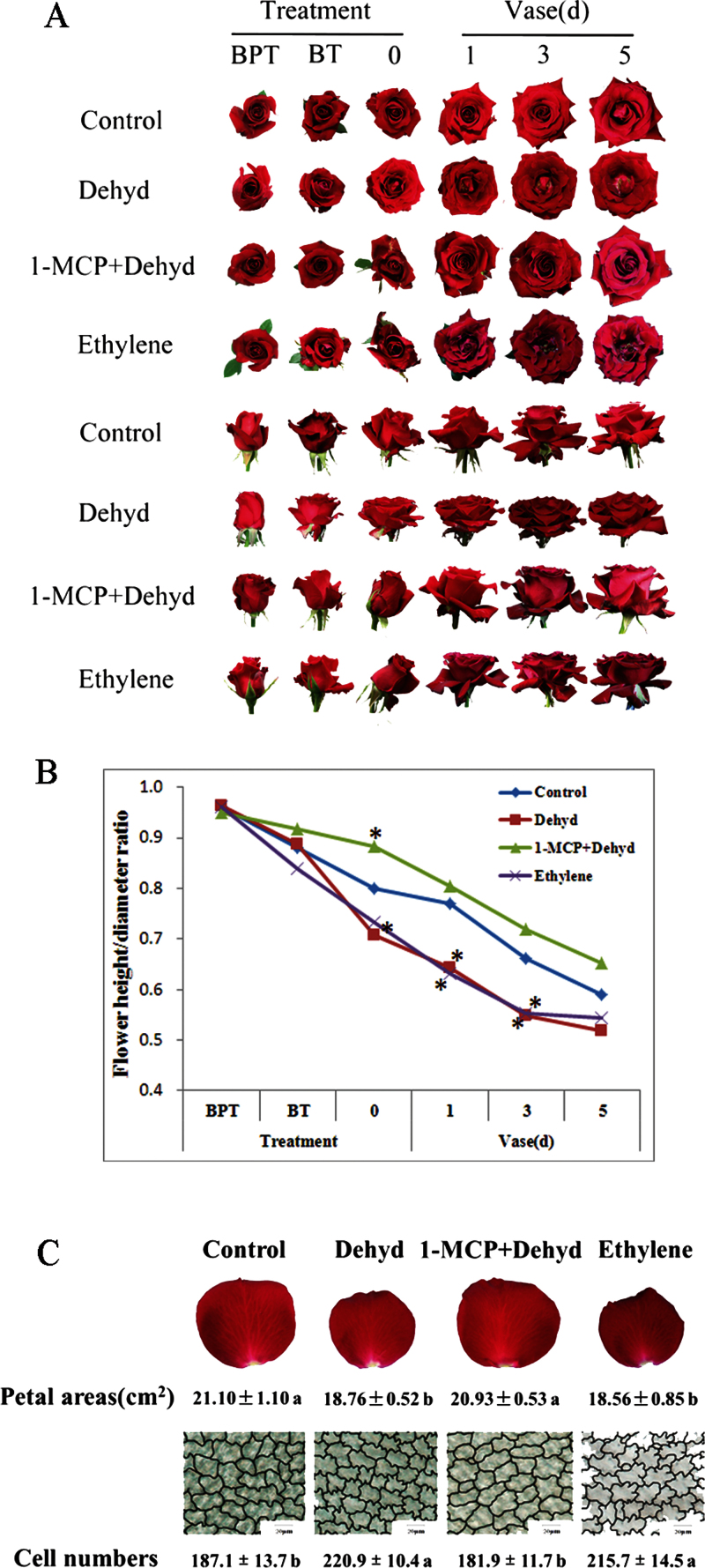
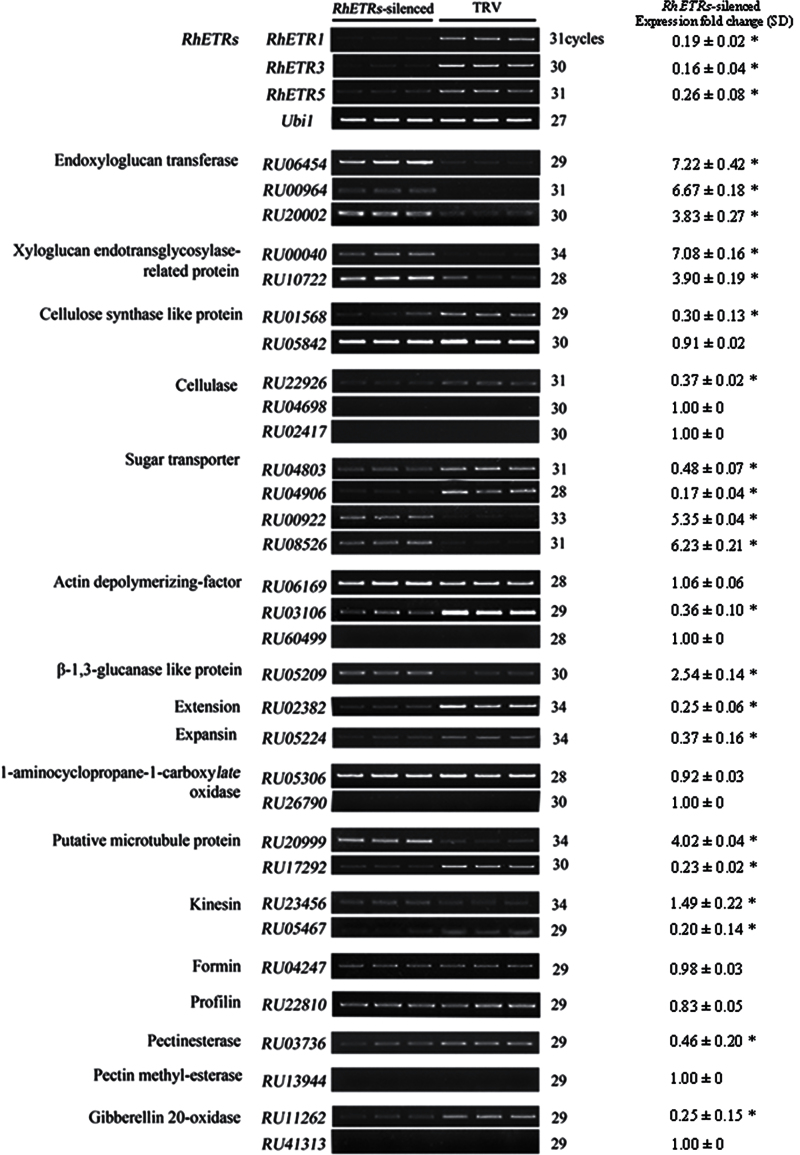
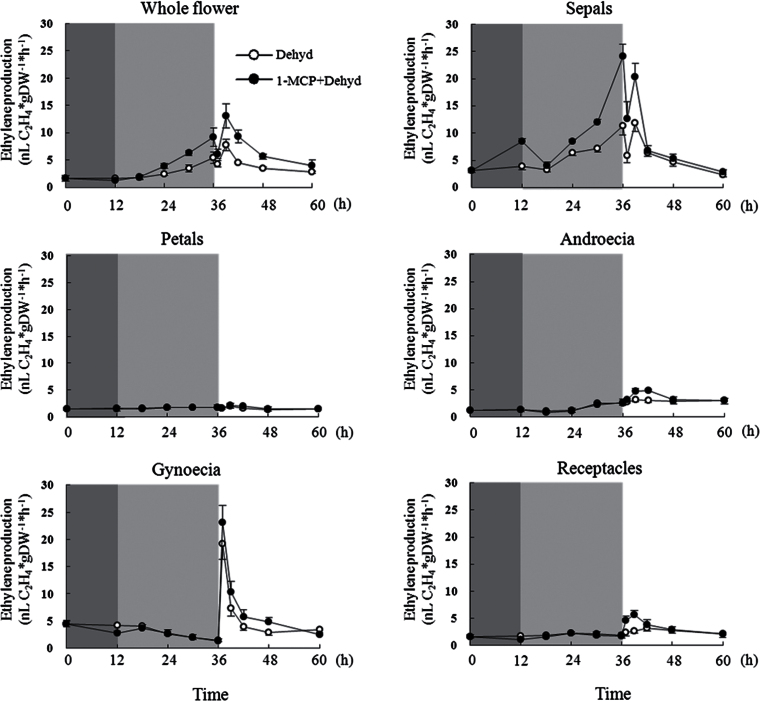
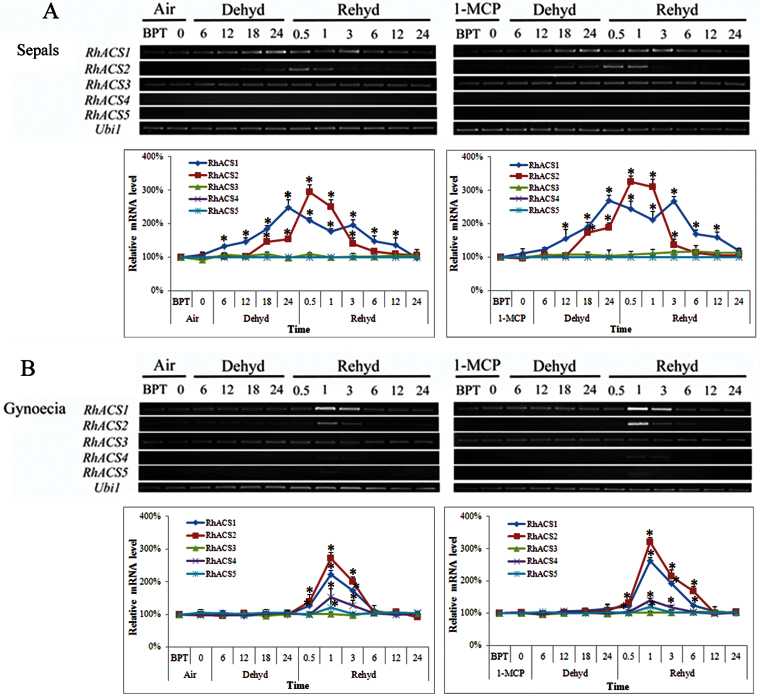
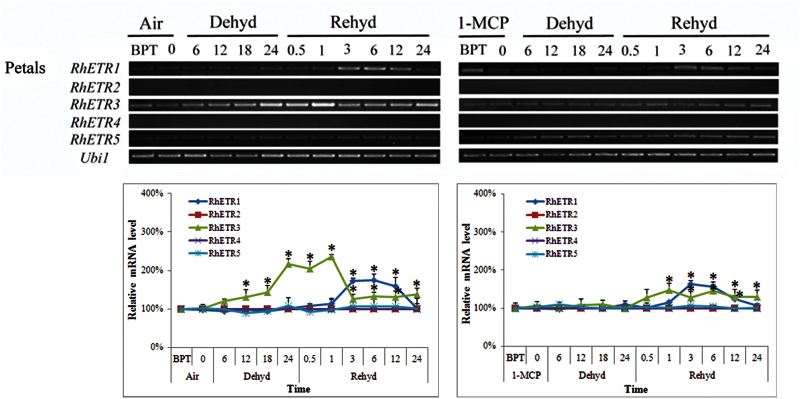
Dehydration is a major factor resulting in huge loss from cut flowers during transportation. In the present study, dehydration inhibited petal cell expansion and resulted in irregular flowers in cut roses, mimicking ethylene-treated flowers. Among the five floral organs, dehydration substantially elevated ethylene production in the sepals, whilst rehydration caused rapid and elevated ethylene levels in the gynoecia and sepals. Among the five ethylene biosynthetic enzyme genes (RhACS1-5), expression of RhACS1 and RhACS2 was induced by dehydration and rehydration in the two floral organs. Silencing both RhACS1 and RhACS2 significantly suppressed dehydration- and rehydration-induced ethylene in the sepals and gynoecia. This weakened the inhibitory effect of dehydration on petal cell expansion. β-glucuronidase activity driven by both the RhACS1 and RhACS2 promoters was dramatically induced in the sepals, pistil, and stamens, but not in the petals of transgenic Arabidopsis. This further supports the organ-specific induction of these two genes. Among the five rose ethylene receptor genes (RhETR1-5), expression of RhETR3 was predominantly induced by dehydration and rehydration in the petals. RhETR3 silencing clearly aggravated the inhibitory effect of dehydration on petal cell expansion. However, no significant difference in the effect between RhETR3-silenced flowers and RhETR-genes-silenced flowers was observed. Furthermore, RhETR-genes silencing extensively altered the expression of 21 cell expansion-related downstream genes in response to ethylene. These results suggest that induction of ethylene biosynthesis by dehydration proceeds in an organ-specific manner, indicating that ethylene can function as a mediator in dehydration-caused inhibition of cell expansion in rose petals.
脱水是导致切花在运输过程中大量损失的主要因素。本研究表明,脱水抑制花瓣细胞的扩张,导致切玫瑰花朵畸形,类似于乙烯处理的花朵。在五个花器官中,脱水在萼片中大量提高了乙烯的产生,而复水则导致雌蕊和萼片中乙烯水平的快速升高。在五个乙烯生物合成酶基因(RhACS1-5)中,RhACS1 和 RhACS2 的表达在两个花器官中被脱水和复水诱导。沉默 RhACS1 和 RhACS2 显著抑制了萼片和雌蕊中由脱水和复水诱导的乙烯。这削弱了脱水对花瓣细胞扩张的抑制作用。由 RhACS1 和 RhACS2 启动子驱动的β-葡萄糖醛酸酶活性在萼片、雌蕊和雄蕊中显著诱导,但在转基因拟南芥的花瓣中没有诱导。这进一步支持了这两个基因的器官特异性诱导。在五个玫瑰乙烯受体基因(RhETR1-5)中,RhETR3 的表达主要在花瓣中被脱水和复水诱导。RhETR3 沉默明显加重了脱水对花瓣细胞扩张的抑制作用。然而,在 RhETR3 沉默的花朵和 RhETR 基因沉默的花朵之间,没有观察到脱水抑制效果的显著差异。此外,RhETR 基因沉默广泛改变了 21 个与细胞扩张相关的下游基因在乙烯响应中的表达。这些结果表明,脱水诱导的乙烯生物合成以器官特异性的方式进行,表明乙烯可以作为玫瑰花瓣脱水引起的细胞扩张抑制的介质。