Ganeshan Kirthana, Chawla Ajay
Cardiovascular Research Institute.
Annu Rev Immunol. 2014;32:609-34. doi: 10.1146/annurev-immunol-032713-120236.
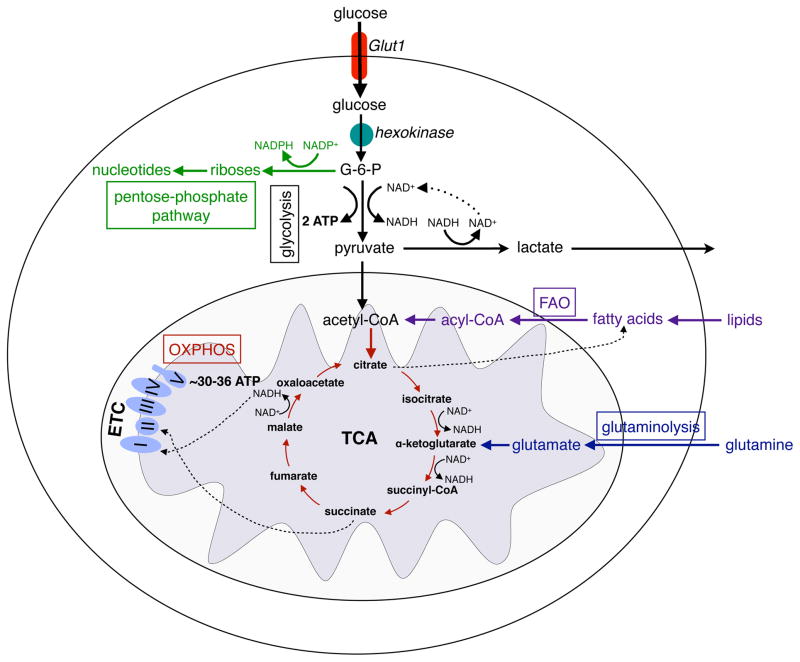
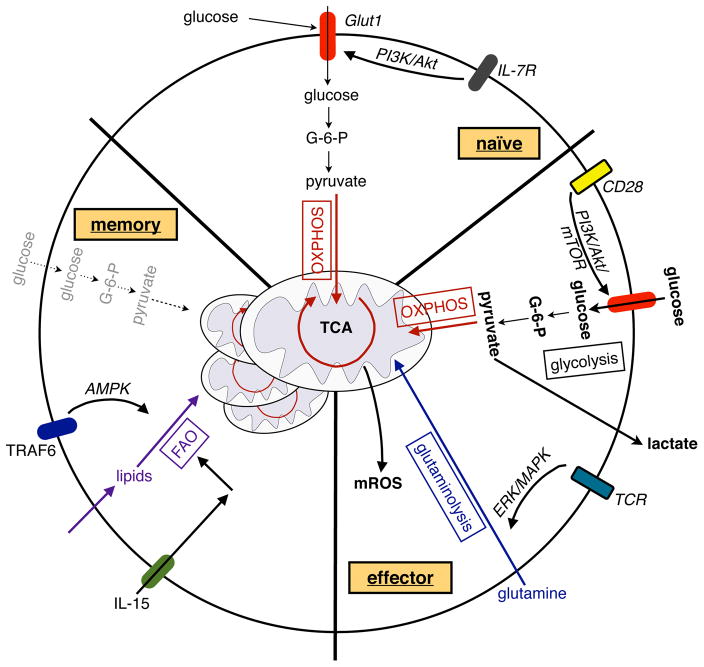
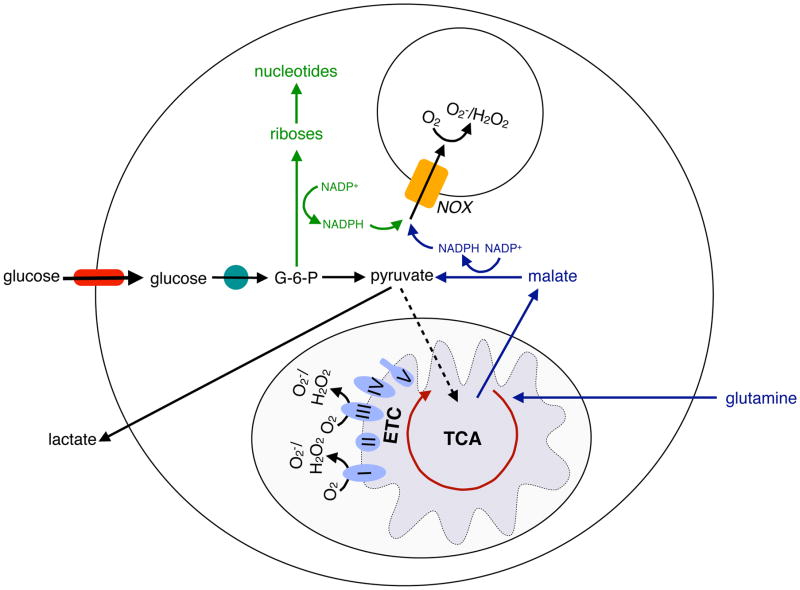
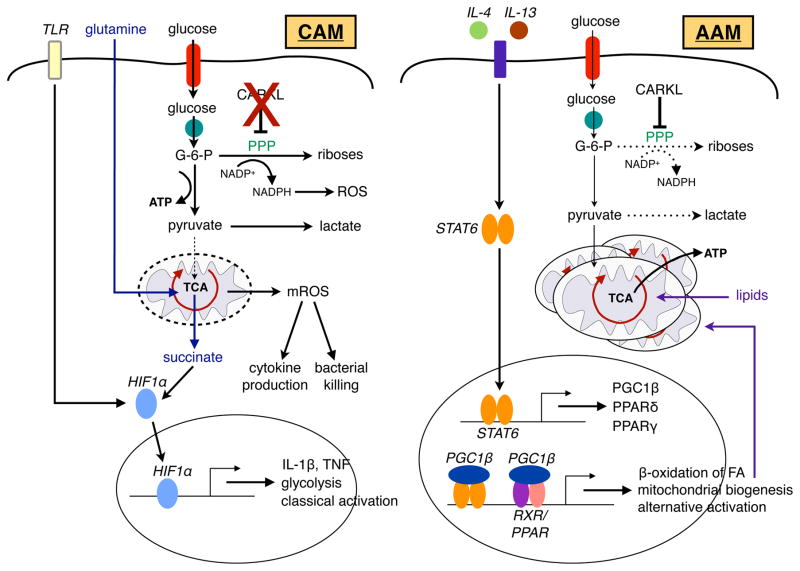
The immune system defends against pathogens and maintains tissue homeostasis for the life of the organism. These diverse functions are bioenergetically expensive, requiring precise control of cellular metabolic pathways. Although initial observations in this area were made almost a century ago, studies over the past decade have elucidated the molecular basis for how extracellular signals control the uptake and catabolism of nutrients in quiescent and activated immune cells. Collectively, these studies have revealed that the metabolic pathways of oxidative metabolism, glycolysis, and glutaminolysis preferentially fuel the cell fate decisions and effector functions of immune cells. Here, we discuss these findings and provide a general framework for understanding how metabolism fuels and regulates the maturation of immune responses. A better understanding of the metabolic checkpoints that control these transitions might provide new insights for modulating immunity in infection, cancer, or inflammatory disorders.
免疫系统抵御病原体,并在生物体的整个生命过程中维持组织稳态。这些多样的功能在生物能量方面代价高昂,需要对细胞代谢途径进行精确控制。尽管该领域的初步观察是在近一个世纪前进行的,但过去十年的研究已经阐明了细胞外信号如何控制静止和活化免疫细胞中营养物质的摄取和分解代谢的分子基础。总体而言,这些研究表明,氧化代谢、糖酵解和谷氨酰胺分解代谢途径优先为免疫细胞的细胞命运决定和效应功能提供能量。在此,我们讨论这些发现,并提供一个总体框架,以理解代谢如何为免疫反应的成熟提供能量并对其进行调节。更好地理解控制这些转变的代谢检查点可能为调节感染、癌症或炎症性疾病中的免疫提供新的见解。