Center for Information Technology, Bruno Kessler Foundation, Trento, Italy.
PLoS One. 2013 Apr 17;8(4):e60732. doi: 10.1371/journal.pone.0060732. Print 2013.
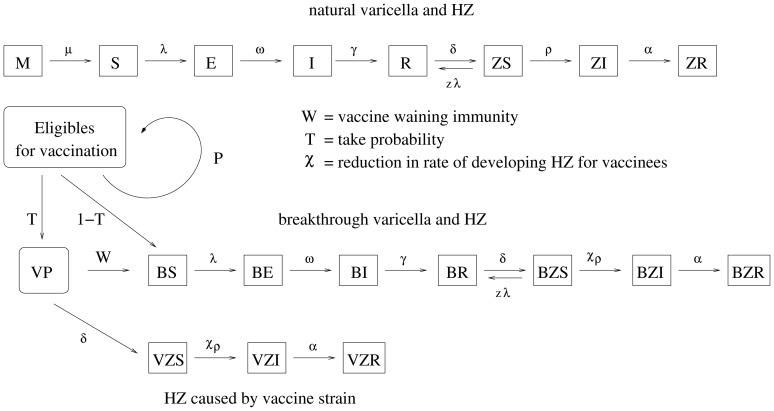
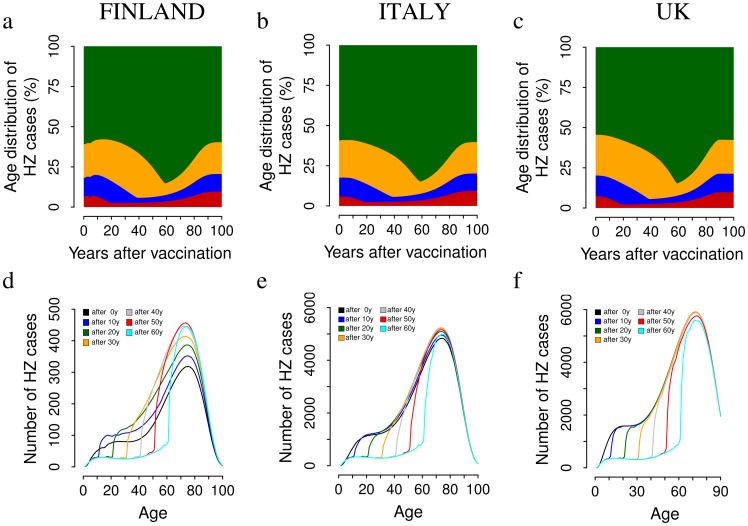
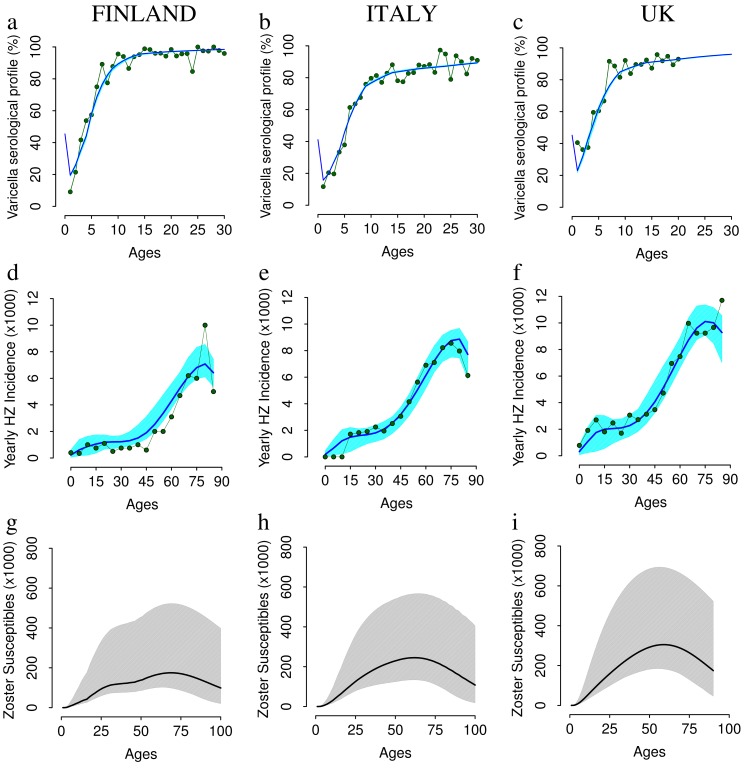
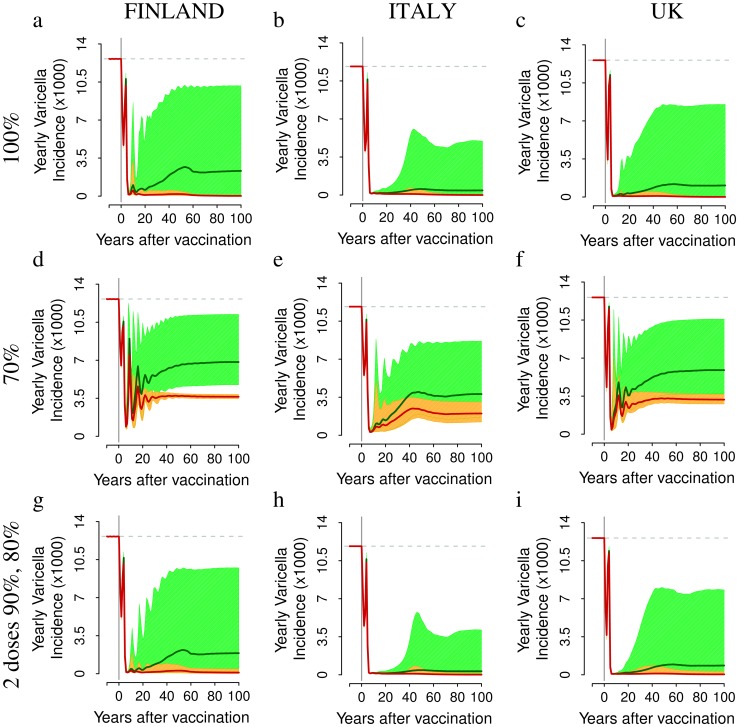
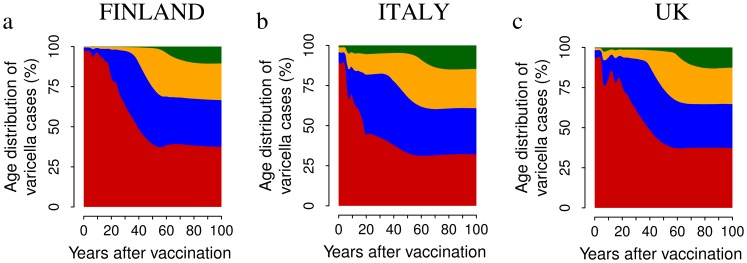
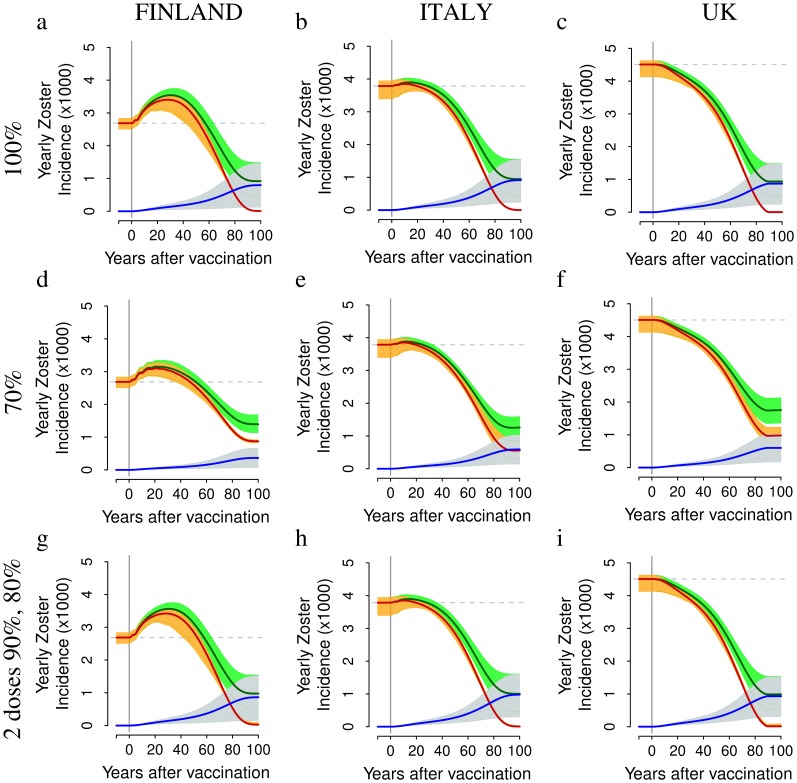
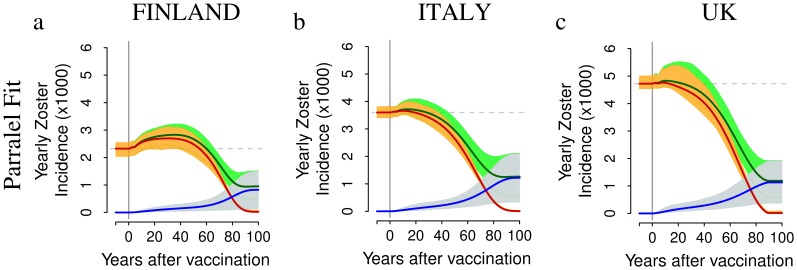
The introduction of mass vaccination against Varicella-Zoster-Virus (VZV) is being delayed in many European countries because of, among other factors, the possibility of a large increase in Herpes Zoster (HZ) incidence in the first decades after the initiation of vaccination, due to the expected decline of the boosting of Cell Mediated Immunity caused by the reduced varicella circulation. A multi-country model of VZV transmission and reactivation, is used to evaluate the possible impact of varicella vaccination on HZ epidemiology in Italy, Finland and the UK. Despite the large uncertainty surrounding HZ and vaccine-related parameters, surprisingly robust medium-term predictions are provided, indicating that an increase in HZ incidence is likely to occur in countries where the incidence rate is lower in absence of immunization, possibly due to a higher force of boosting (e.g. Finland), whereas increases in HZ incidence might be minor where the force of boosting is milder (e.g. the UK). Moreover, a convergence of HZ post vaccination incidence levels in the examined countries is predicted despite different initial degrees of success of immunization policies. Unlike previous model-based evaluations, our investigation shows that after varicella immunization an increase of HZ incidence is not a certain fact, rather depends on the presence or absence of factors promoting a strong boosting intensity and which might or not be heavily affected by changes in varicella circulation due to mass immunization. These findings might explain the opposed empirical evidences observed about the increases of HZ in sites where mass varicella vaccination is ongoing.
由于多种因素,包括疫苗接种后最初几十年中由于预期的细胞介导免疫增强作用下降导致带状疱疹(HZ)发病率大幅增加的可能性,许多欧洲国家正在推迟大规模接种水痘带状疱疹病毒(VZV)疫苗。本研究采用 VZV 传播和再激活的多国家模型,评估水痘疫苗接种对意大利、芬兰和英国 HZ 流行病学的可能影响。尽管 HZ 和疫苗相关参数存在很大的不确定性,但仍提供了非常稳健的中期预测,表明在没有免疫接种的情况下发病率较低的国家中,HZ 发病率可能会增加,这可能是由于增强作用更强(例如芬兰),而在增强作用较弱的国家(例如英国),HZ 发病率的增加可能较小。此外,尽管免疫政策的初始成功率不同,但预测在接种疫苗后,HZ 的发病水平会在被检查的国家中趋于一致。与之前基于模型的评估不同,我们的研究表明,接种水痘疫苗后,HZ 发病率的增加并非必然,而是取决于促进强烈增强作用的因素的存在与否,而这些因素可能会或不会受到大规模免疫接种导致的水痘流行变化的严重影响。这些发现可能解释了在正在进行大规模水痘疫苗接种的地方观察到的 HZ 增加的相反经验证据。