School of Medical Science and Technology, Indian Institute of Technology Kharagpur, Kharagpur, West Bengal, India.
PLoS One. 2013 Apr 17;8(4):e61342. doi: 10.1371/journal.pone.0061342. Print 2013.
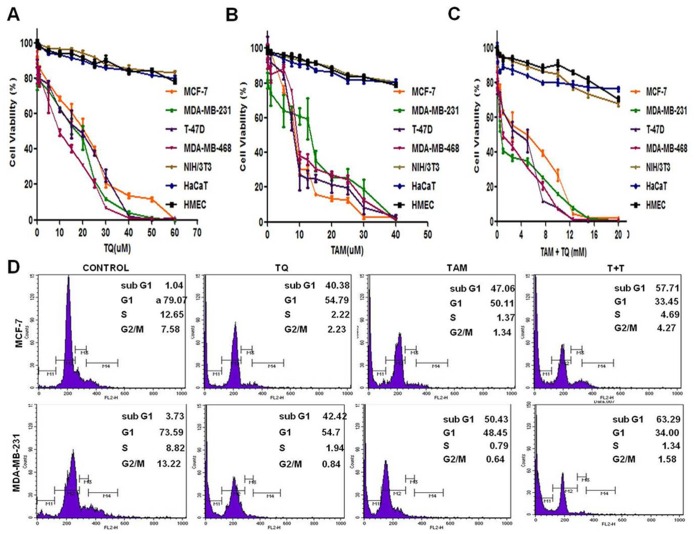
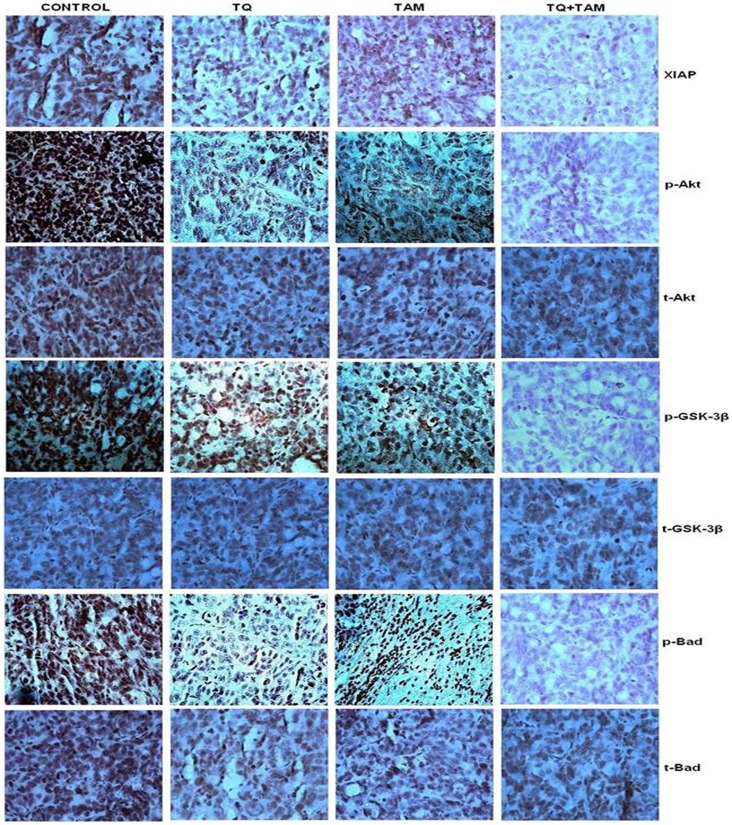
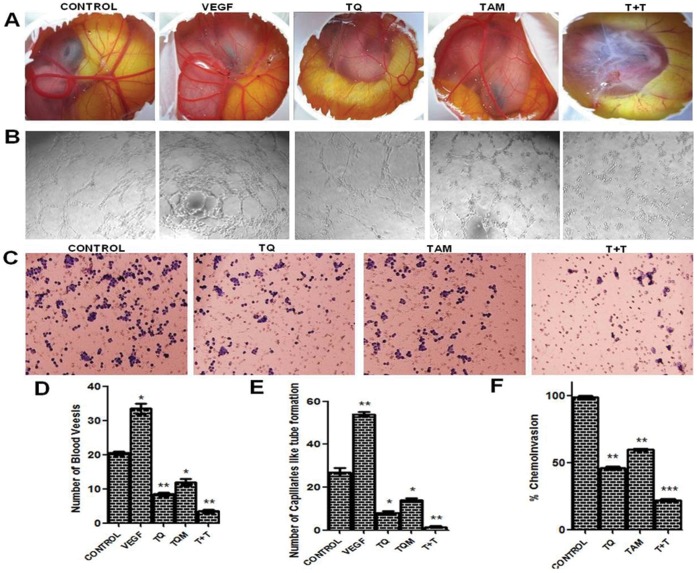
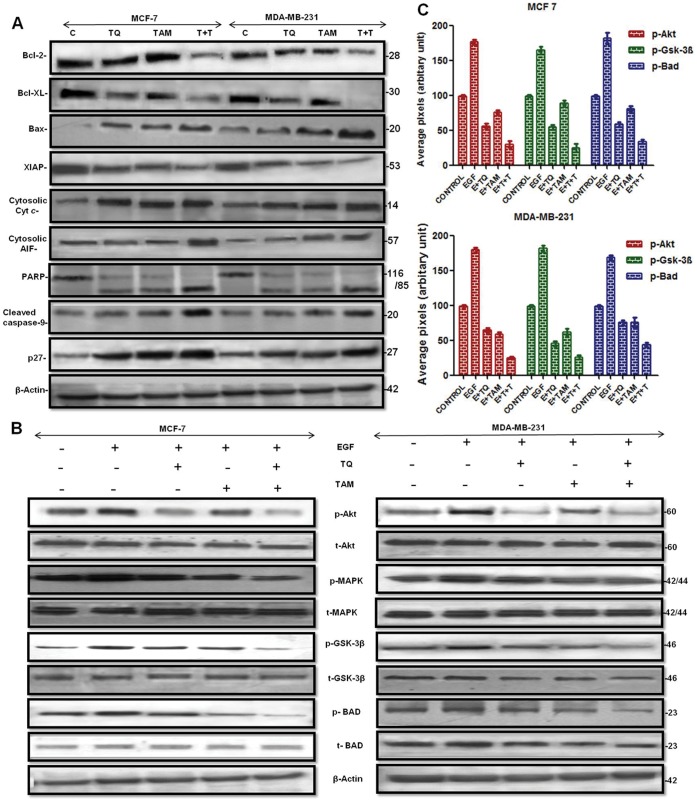
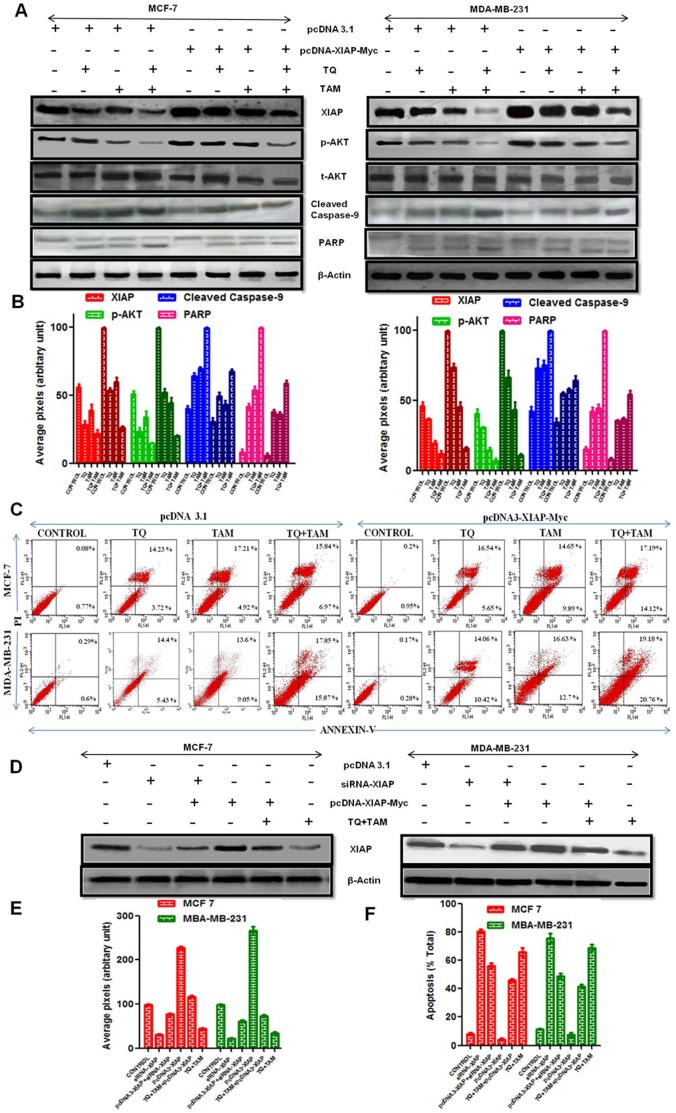
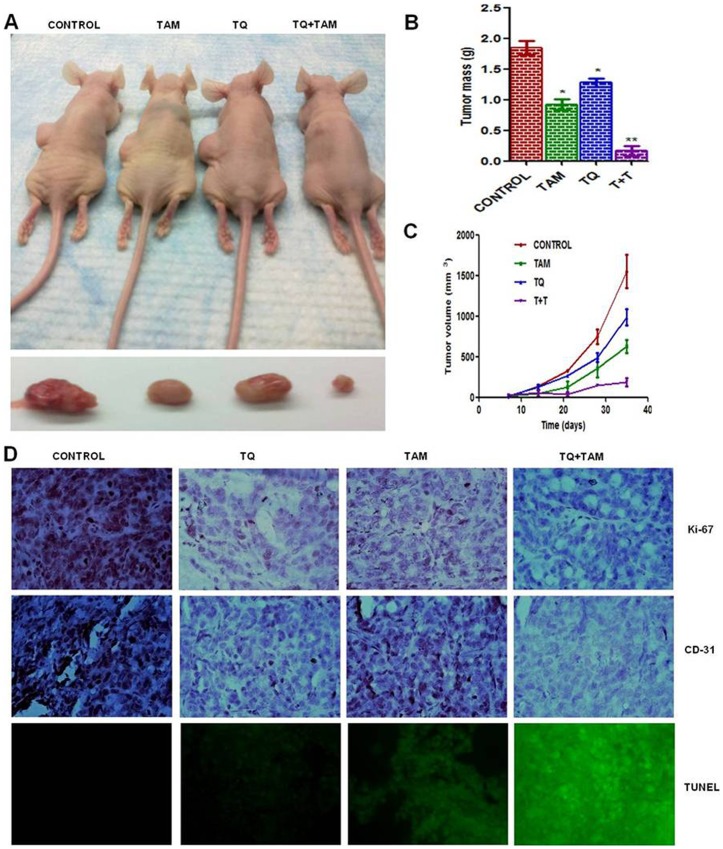
X-linked inhibitor of apoptosis protein (XIAP) is constitutively expressed endogenous inhibitor of apoptosis, exhibit its antiapoptotic effect by inactivating key caspases such as caspase-3, caspase-7 and caspase-9 and also play pivotal role in rendering cancer chemoresistance. Our studies showed the coadministration of TQ and TAM resulting in a substantial increase in breast cancer cell apoptosis and marked inhibition of cell growth both in vitro and in vivo. Anti-angiogenic and anti-invasive potential of TQ and TAM was assessed through in vitro studies. This novel combinatorial regimen leads to regulation of multiple cell signaling targets including inactivation of Akt and XIAP degradation. At molecular level, TQ and TAM synergistically lowers XIAP expression resulting in binding and activation of caspase-9 in apoptotic cascade, and interfere with cell survival through PI3-K/Akt pathway by inhibiting Akt phosphorylation. Cleaved caspase-9 further processes other intracellular death substrates such as PARP thereby shifting the balance from survival to apoptosis, indicated by rise in the sub-G1 cell population. This combination also downregulates the expression of Akt-regulated downstream effectors such as Bcl-xL, Bcl-2 and induce expression of Bax, AIF, cytochrome C and p-27. Consistent with these results, overexpression studies further confirmed the involvement of XIAP and its regulatory action on Akt phosphorylation along with procaspase-9 and PARP cleavage in TQ-TAM coadministrated induced apoptosis. The ability of TQ and TAM in inhibiting XIAP was confirmed through siRNA-XIAP cotransfection studies. This novel modality may be a promising tool in breast cancer treatment.
X 连锁凋亡抑制蛋白(XIAP)是一种组成性表达的内源性凋亡抑制剂,通过失活关键半胱天冬酶如 caspase-3、caspase-7 和 caspase-9 发挥其抗凋亡作用,并且在赋予癌症化疗耐药性方面发挥着关键作用。我们的研究表明,TQ 和 TAM 的联合使用导致乳腺癌细胞凋亡显著增加,并显著抑制体外和体内的细胞生长。通过体外研究评估了 TQ 和 TAM 的抗血管生成和抗侵袭潜力。这种新的联合方案导致调节多个细胞信号靶标,包括 Akt 的失活和 XIAP 的降解。在分子水平上,TQ 和 TAM 协同降低 XIAP 的表达,导致 caspase-9 在凋亡级联中的结合和激活,并通过抑制 Akt 磷酸化来干扰细胞存活通过 PI3-K/Akt 途径。裂解的 caspase-9 进一步处理其他细胞内死亡底物,如 PARP,从而使平衡从存活转向凋亡,亚 G1 细胞群的增加表明了这一点。这种组合还下调 Akt 调节的下游效应物如 Bcl-xL、Bcl-2 的表达,并诱导 Bax、AIF、细胞色素 C 和 p-27 的表达。与这些结果一致,过表达研究进一步证实了 XIAP 的参与及其对 Akt 磷酸化的调节作用以及 caspase-9 和 PARP 在 TQ-TAM 联合给药诱导的凋亡中的裂解。通过 siRNA-XIAP 共转染研究证实了 TQ 和 TAM 抑制 XIAP 的能力。这种新的方式可能是乳腺癌治疗的有前途的工具。