Zhuang Xuliang, Gao Jie, Ma Anzhou, Fu Shenglei, Zhuang Guoqiang
Research Center for Eco-Environmental Sciences, Chinese Academy of Sciences, Beijing 100085, China.
Int J Mol Sci. 2013 Apr 24;14(5):8841-68. doi: 10.3390/ijms14058841.
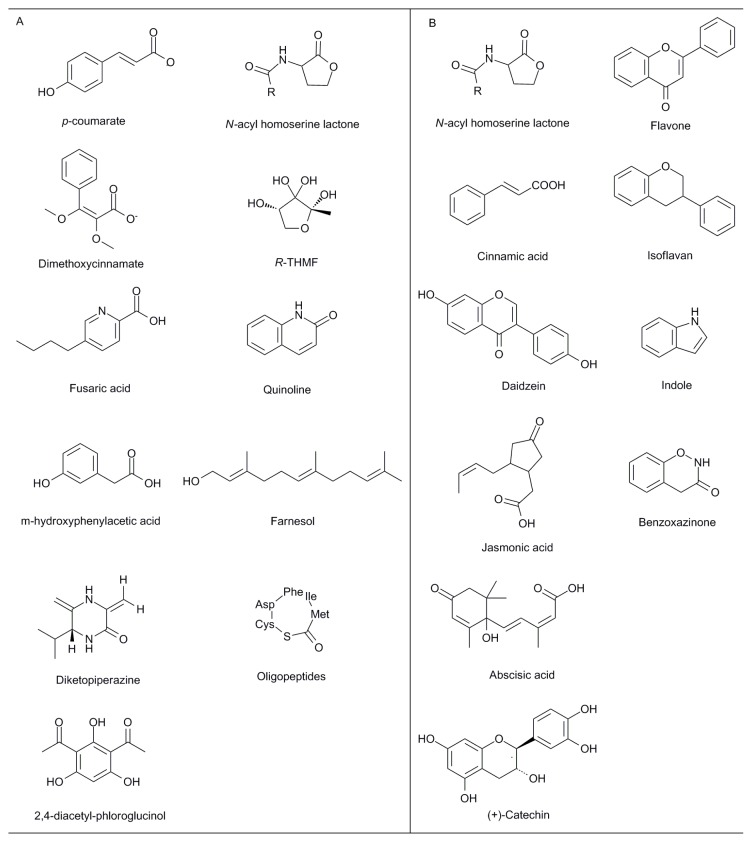
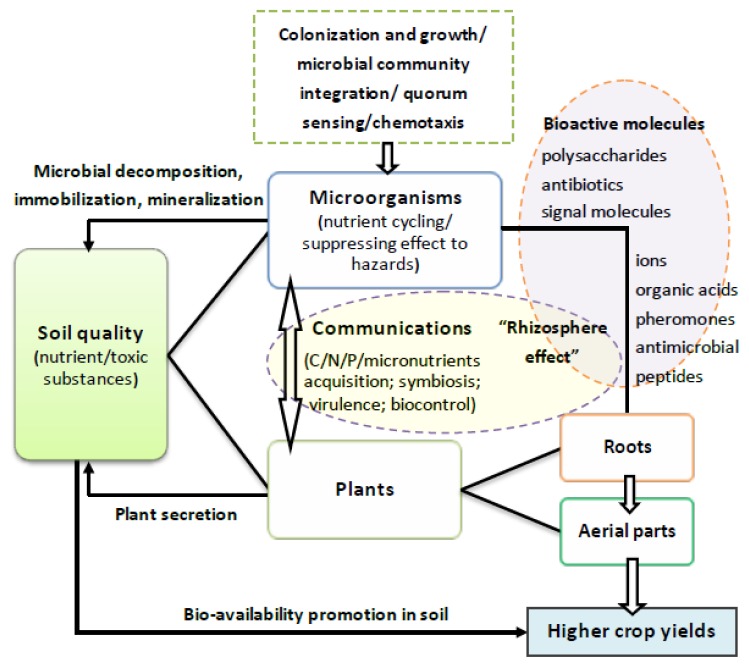
Complex biological and ecological processes occur in the rhizosphere through ecosystem-level interactions between roots, microorganisms and soil fauna. Over the past decade, studies of the rhizosphere have revealed that when roots, microorganisms and soil fauna physically contact one another, bioactive molecular exchanges often mediate these interactions as intercellular signal, which prepare the partners for successful interactions. Despite the importance of bioactive molecules in sustainable agriculture, little is known of their numerous functions, and improving plant health and productivity by altering ecological processes remains difficult. In this review, we describe the major bioactive molecules present in below-ground ecosystems (i.e., flavonoids, exopolysaccharides, antibiotics and quorum-sensing signals), and we discuss how these molecules affect microbial communities, nutrient availability and plant defense responses.
复杂的生物和生态过程通过根、微生物和土壤动物之间的生态系统层面相互作用在根际发生。在过去十年中,对根际的研究表明,当根、微生物和土壤动物相互物理接触时,生物活性分子交换通常作为细胞间信号介导这些相互作用,为伙伴之间的成功相互作用做好准备。尽管生物活性分子在可持续农业中很重要,但对其众多功能知之甚少,通过改变生态过程来改善植物健康和生产力仍然很困难。在这篇综述中,我们描述了地下生态系统中存在的主要生物活性分子(即黄酮类化合物、胞外多糖、抗生素和群体感应信号),并讨论了这些分子如何影响微生物群落、养分有效性和植物防御反应。