IBMC - Instituto de Biologia Molecular e Celular, Universidade do Porto, Porto, Portugal.
Parasit Vectors. 2013 Apr 26;6:122. doi: 10.1186/1756-3305-6-122.
Leishmaniasis is a group of diseases with a variety of clinical manifestations. The form of the disease is highly dependent on the infective Leishmania species and the immunological status of the host. The infectivity of the parasite strain also plays an important role in the progression of the infection. The aim of this work is to understand the influence of the natural infectivity of Leishmania strains in the outcome of visceral leishmaniasis.
In this study we have characterized four strains of L. infantum in terms of molecular typing, in vitro cultivation and differentiation. Two strains were isolated from HIV+ patients with visceral leishmaniasis (Bibiano and E390M), one strain was isolated from a cutaneous lesion in an immunocompetent patient (HL) and another internal reference strain causative of visceral leishmaniasis (ST) also from an immunocompetent patient was used for comparison. For this objective, we have compared their virulence by in vitro and in vivo infectivity in a murine model of visceral leishmaniasis.
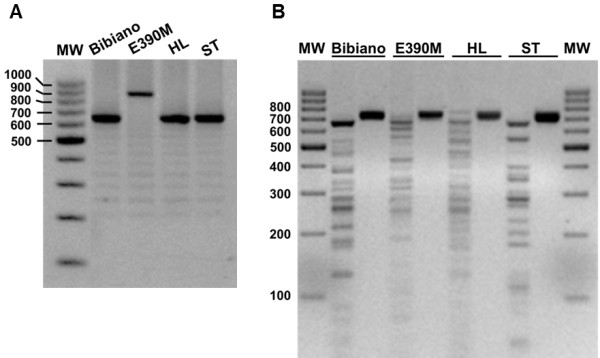
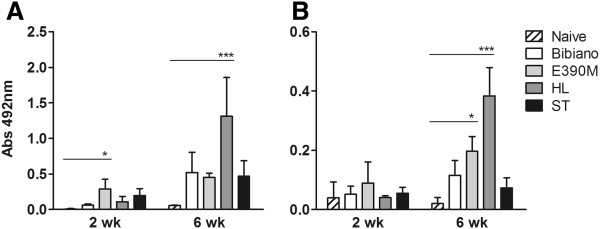
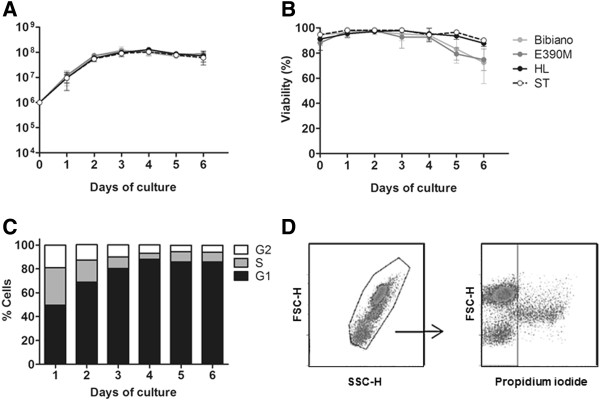
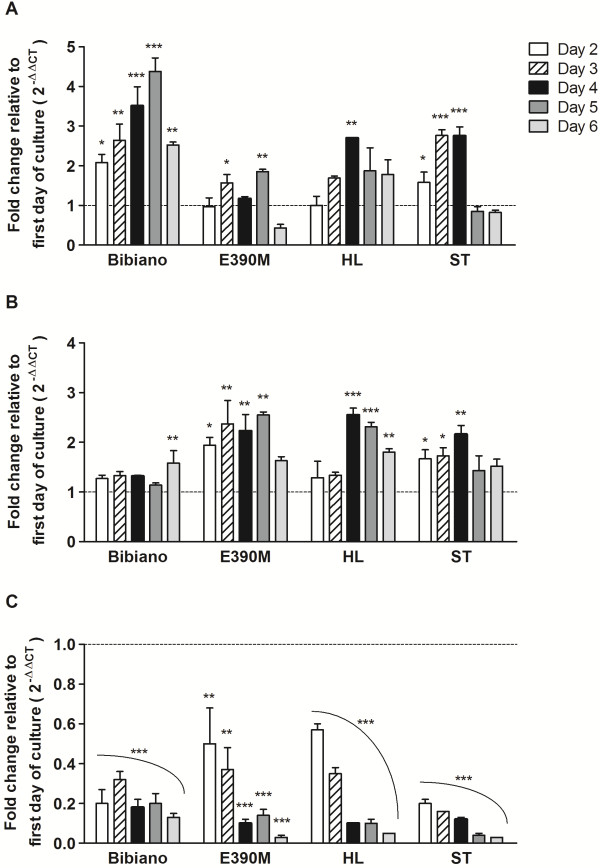
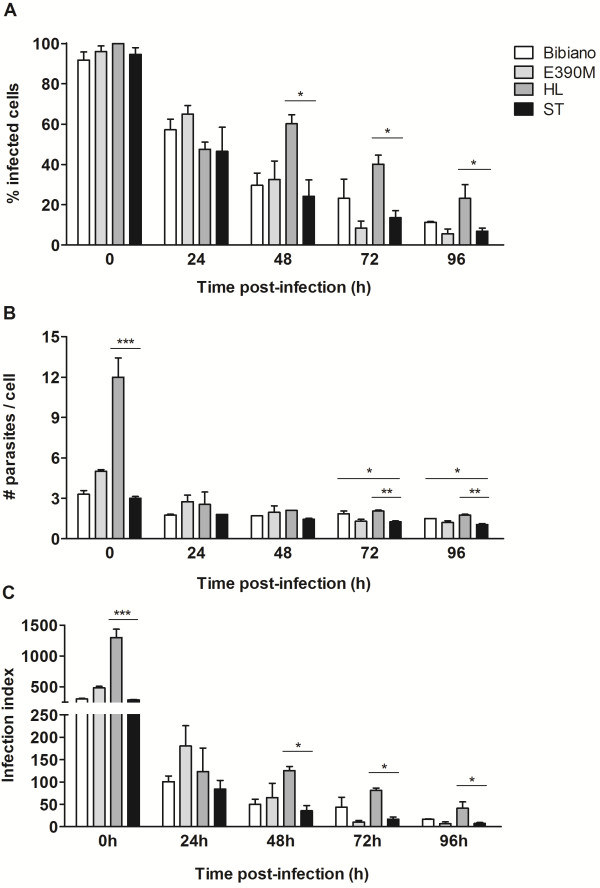
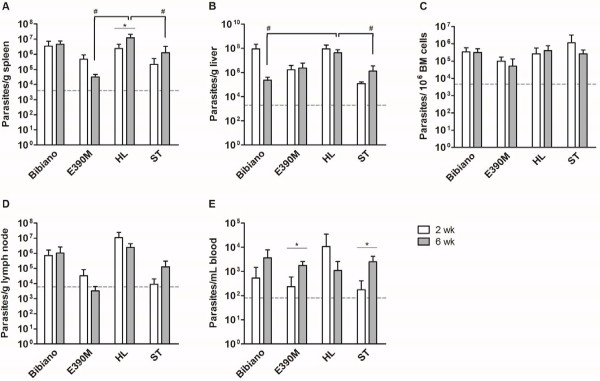
Molecular typing unraveled a new k26 sequence attributed to MON-284 zymodeme and allowed the generation of a molecular signature for the identification of each strain. In vitro cultivation enabled the production of promastigotes with comparable growth curves and metacyclogenesis development. The HL strain was the most infective, showing the highest parasite loads in vitro that were corroborated with the in vivo assays, 6 weeks post-infection in BALB/c mice. The two strains isolated from HIV+ patients, both belonging to two different zymodemes, revealed different kinetics of infection.
Differences in in vitro and in vivo infectivity found in the murine model were then attributed to intrinsic characteristics of each strain. This work is supported by other studies that present the parasite's inherent features as factors for the multiplicity of clinical manifestations and severity of leishmaniasis.
利什曼病是一组具有多种临床表现的疾病。疾病的形式高度依赖于感染的利什曼原虫种类和宿主的免疫状态。寄生虫株的感染力在感染的进展中也起着重要作用。本工作的目的是了解利什曼原虫天然感染力对内脏利什曼病结局的影响。
在本研究中,我们根据分子分型、体外培养和分化对四种 L. infantum 菌株进行了特征描述。两株从艾滋病毒阳性(HIV+)内脏利什曼病患者(Bibiano 和 E390M)中分离得到,一株从免疫功能正常的皮肤病变患者(HL)中分离得到,另一株内部参考株(ST)也是从免疫功能正常的内脏利什曼病患者中分离得到的,用于比较。为此,我们通过体外和体内感染的方法比较了它们在一种内脏利什曼病小鼠模型中的毒力。
分子分型揭示了一种新的 k26 序列,归因于 MON-284 生物型,并为每种菌株的鉴定生成了分子特征。体外培养能够产生具有相似生长曲线和动基体发育的前鞭毛体。HL 株最具感染力,体外寄生虫负荷最高,与体内试验(BALB/c 小鼠感染后 6 周)相吻合。从 HIV+患者中分离得到的两株,属于两种不同的生物型,感染的动力学不同。
在小鼠模型中发现的体外和体内感染力的差异随后归因于每个菌株的固有特征。这项工作得到了其他研究的支持,这些研究表明寄生虫的固有特征是多种临床表现和利什曼病严重程度的因素。