Azeez Oyebisi M, Akhigbe Roland E, Anigbogu Chikodi N
Department of Physiology and Pharmacology, Faculty of Veterinary Medicine, University of Ilorin, Ilorin, Kwara state, Nigeria.
J Nat Sci Biol Med. 2013 Jan;4(1):149-54. doi: 10.4103/0976-9668.107280.
The study investigates the possible role of oxidative stress on renal tissues in association with petroleum hydrocarbon-induced nephrotoxicity.
Rats of comparable weights were randomly distributed into 10 groups: Control and groups exposed to kerosene, petrol, and diesel via inhalation, contamination by food, and contamination by water. The exposure lasted for eight weeks.
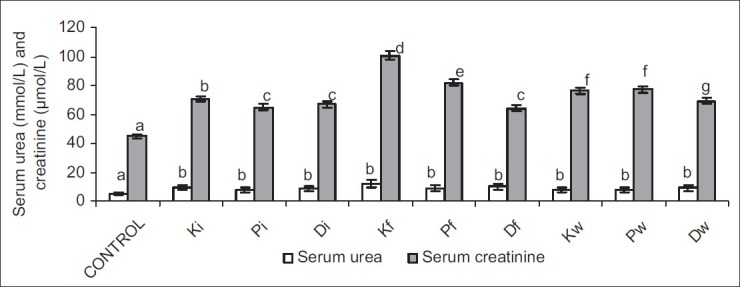
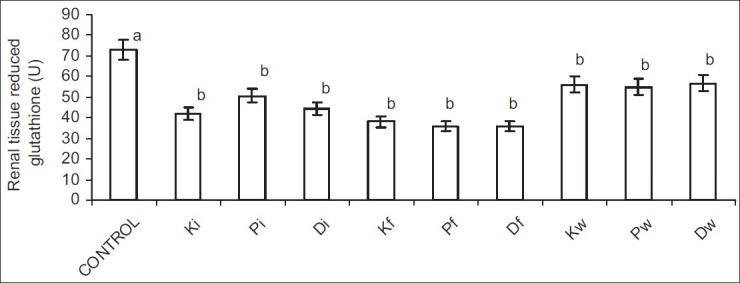
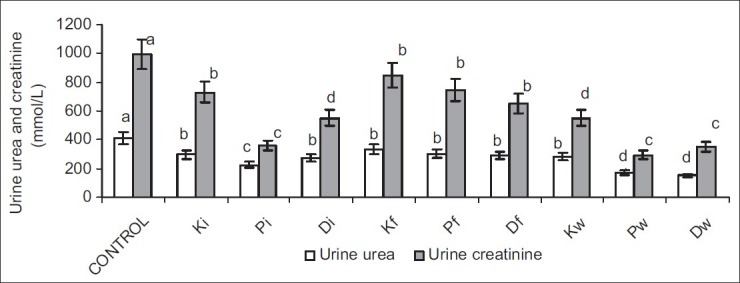
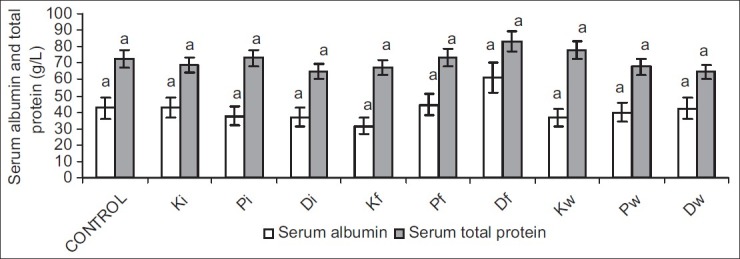
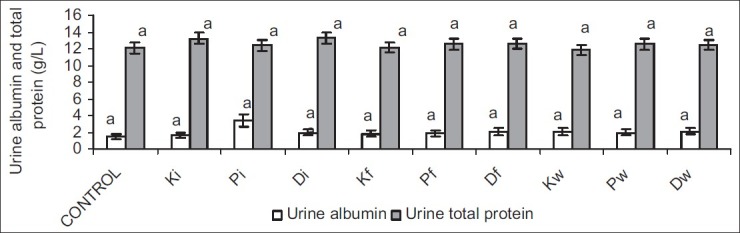
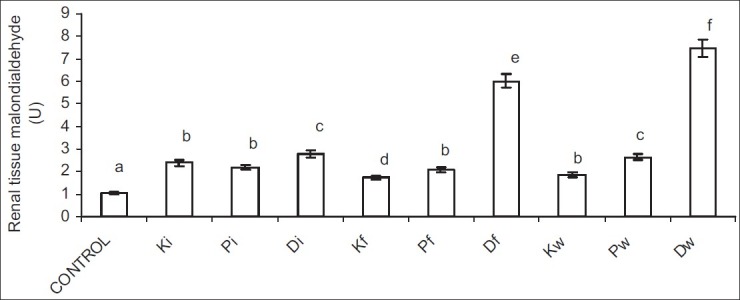
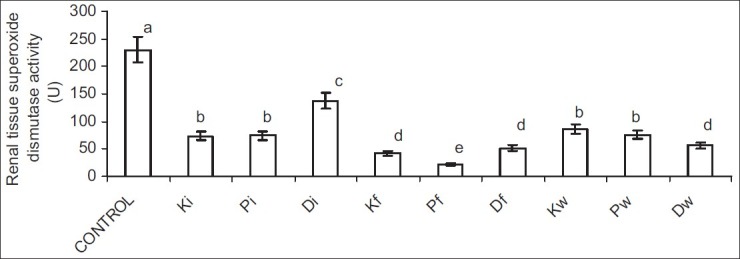
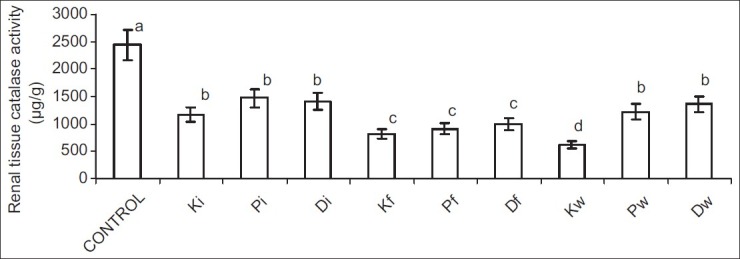
Exposure to petroleum hydrocarbon led to significant rise in serum urea and creatinine, and renal tissue malondialdehyde. It also caused significant reduction in urinary urea and creatinine, and reduced glutathione, superoxide dismutase, and catalase activities of renal tissue homogenate. However, serum and urine concentrations of albumin and total protein were comparable in all groups.
Results from this study shows that exposure to petroleum hydrocarbon led to renal dysfunction via oxidative stress, increasing lipid peroxidation and reducing the antioxidant defense mechanism.
本研究调查氧化应激在与石油烃诱导的肾毒性相关的肾组织中可能发挥的作用。
将体重相当的大鼠随机分为10组:对照组以及通过吸入、食物污染和水污染暴露于煤油、汽油和柴油的组。暴露持续8周。
暴露于石油烃导致血清尿素和肌酐以及肾组织丙二醛显著升高。它还导致尿尿素和肌酐以及肾组织匀浆的还原型谷胱甘肽、超氧化物歧化酶和过氧化氢酶活性显著降低。然而,所有组的血清和尿液中白蛋白和总蛋白浓度相当。
本研究结果表明,暴露于石油烃通过氧化应激导致肾功能障碍,增加脂质过氧化并降低抗氧化防御机制。