Department of Microbiology and Immunology, Brown University, Providence, Rhode Island, United States of America.
PLoS Pathog. 2013;9(4):e1003305. doi: 10.1371/journal.ppat.1003305. Epub 2013 Apr 18.
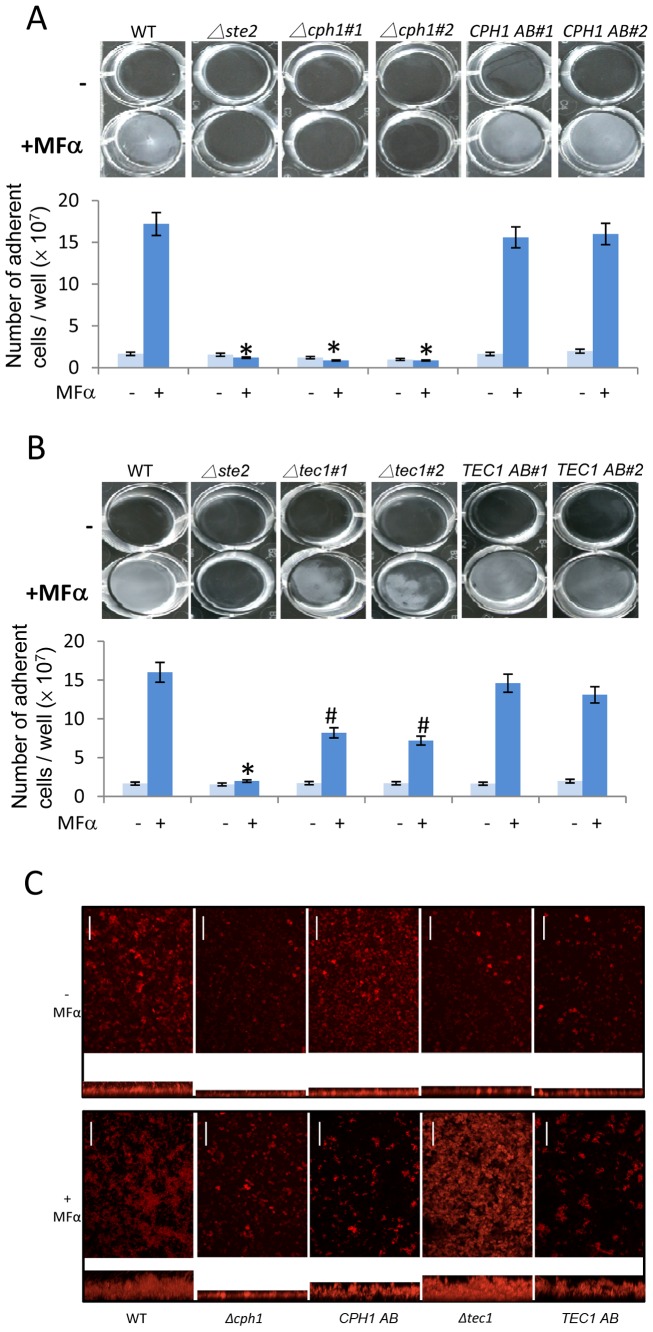
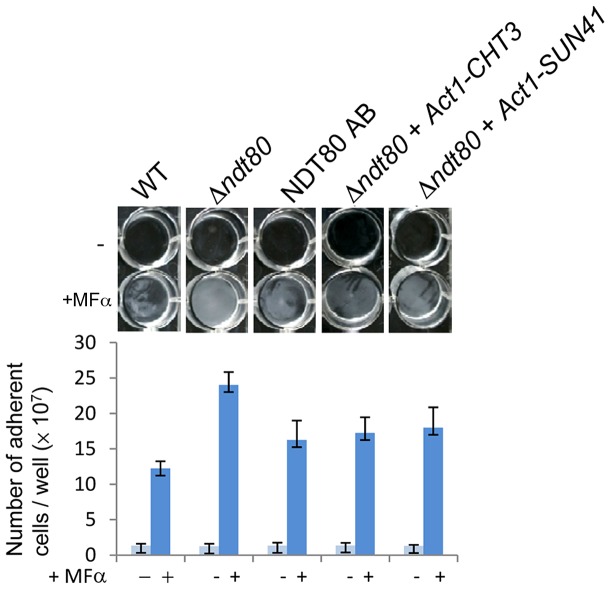
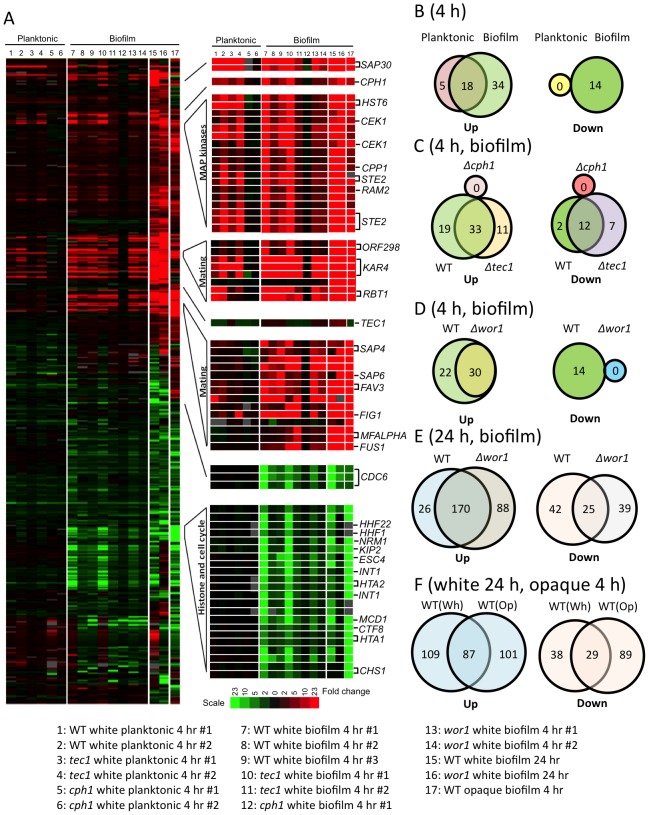
Candida albicans can stochastically switch between two phenotypes, white and opaque. Opaque cells are the sexually competent form of C. albicans and therefore undergo efficient polarized growth and mating in the presence of pheromone. In contrast, white cells cannot mate, but are induced - under a specialized set of conditions - to form biofilms in response to pheromone. In this work, we compare the genetic regulation of such "pheromone-stimulated" biofilms with that of "conventional" C. albicans biofilms. In particular, we examined a network of six transcriptional regulators (Bcr1, Brg1, Efg1, Tec1, Ndt80, and Rob1) that mediate conventional biofilm formation for their potential roles in pheromone-stimulated biofilm formation. We show that four of the six transcription factors (Bcr1, Brg1, Rob1, and Tec1) promote formation of both conventional and pheromone-stimulated biofilms, indicating they play general roles in cell cohesion and biofilm development. In addition, we identify the master transcriptional regulator of pheromone-stimulated biofilms as C. albicans Cph1, ortholog of Saccharomyces cerevisiae Ste12. Cph1 regulates mating in C. albicans opaque cells, and here we show that Cph1 is also essential for pheromone-stimulated biofilm formation in white cells. In contrast, Cph1 is dispensable for the formation of conventional biofilms. The regulation of pheromone- stimulated biofilm formation was further investigated by transcriptional profiling and genetic analyses. These studies identified 196 genes that are induced by pheromone signaling during biofilm formation. One of these genes, HGC1, is shown to be required for both conventional and pheromone-stimulated biofilm formation. Taken together, these observations compare and contrast the regulation of conventional and pheromone-stimulated biofilm formation in C. albicans, and demonstrate that Cph1 is required for the latter, but not the former.
白色念珠菌可以随机切换两种表型,即白色和不透明。不透明细胞是白色念珠菌有性繁殖的形式,因此在存在信息素的情况下能够进行有效的极化生长和交配。相比之下,白色细胞不能交配,但在专门的一组条件下,会在信息素的诱导下形成生物膜。在这项工作中,我们比较了这种“信息素刺激”生物膜与“传统”白色念珠菌生物膜的遗传调控。特别是,我们研究了六个转录调节因子(Bcr1、Brg1、Efg1、Tec1、Ndt80 和 Rob1)的网络,它们介导传统生物膜的形成,以研究它们在信息素刺激生物膜形成中的潜在作用。我们表明,六个转录因子中的四个(Bcr1、Brg1、Rob1 和 Tec1)促进了传统和信息素刺激生物膜的形成,这表明它们在细胞凝聚力和生物膜发育中发挥一般作用。此外,我们确定了信息素刺激生物膜的主转录调节因子为白色念珠菌 Cph1,它是酿酒酵母 Ste12 的同源物。Cph1 调节白色念珠菌不透明细胞的交配,在这里我们表明 Cph1 对于白色细胞中信息素刺激生物膜的形成也是必不可少的。相比之下,Cph1 对于传统生物膜的形成是可有可无的。通过转录谱分析和遗传分析进一步研究了信息素刺激生物膜形成的调控。这些研究鉴定了 196 个在生物膜形成过程中被信息素信号诱导的基因。其中一个基因 HGC1 被证明对于传统和信息素刺激的生物膜形成都是必需的。总的来说,这些观察结果比较和对比了白色念珠菌中传统和信息素刺激生物膜形成的调控,并表明 Cph1 对于后者是必需的,而不是前者。