Programa de Pós-Graduação em Ecologia, Universidade Federal do Rio Grande do Sul, Porto Alegre, Brazil.
PLoS One. 2013 Apr 16;8(4):e60742. doi: 10.1371/journal.pone.0060742. Print 2013.
We evaluated the direct and indirect influence of climate, land use, phylogenetic structure, species richness and endemism on the distribution of New World threatened amphibians.
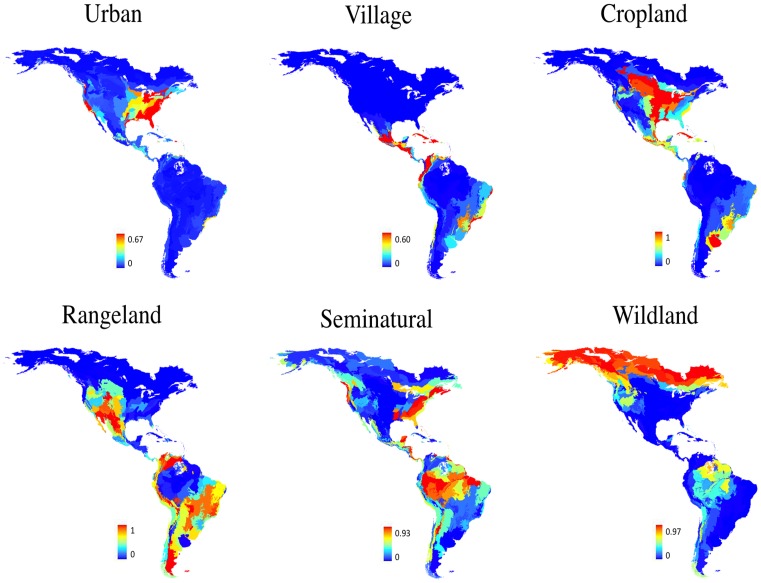
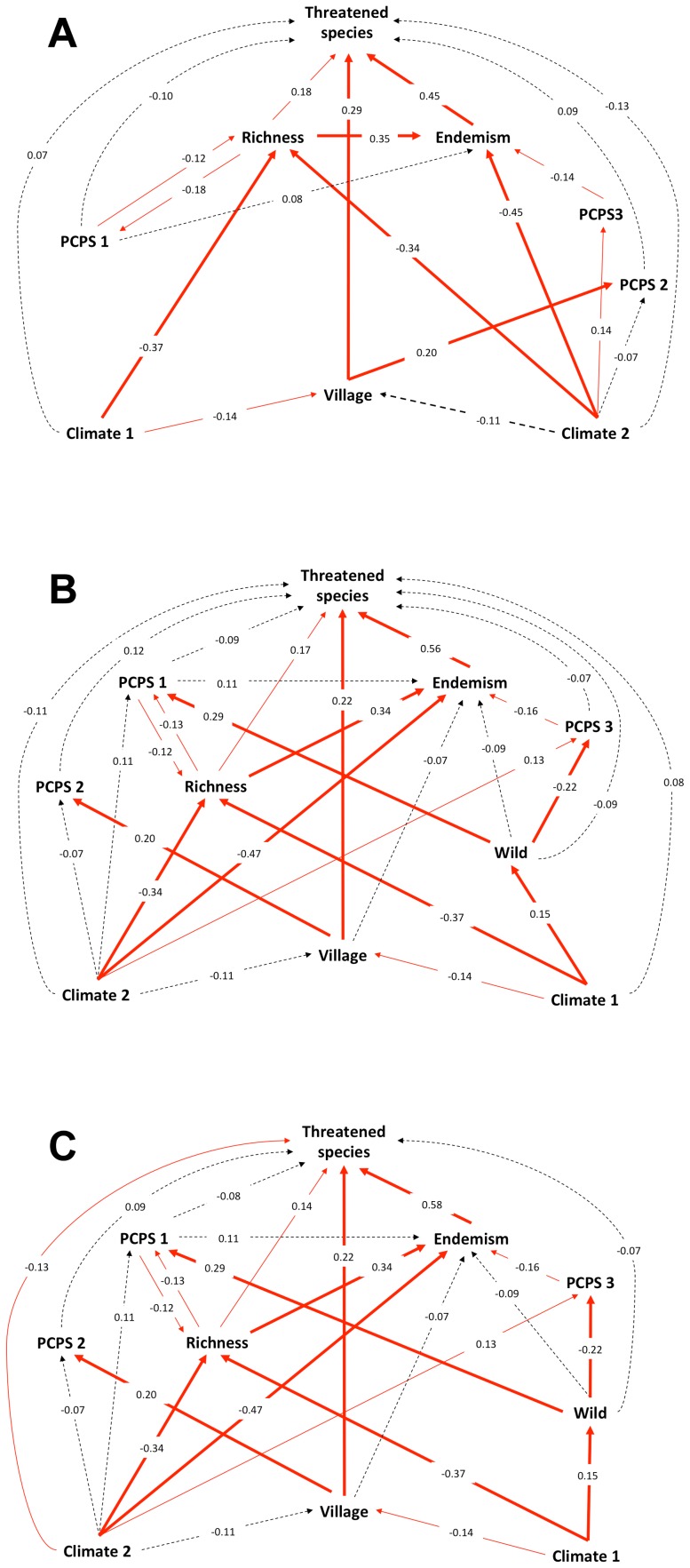
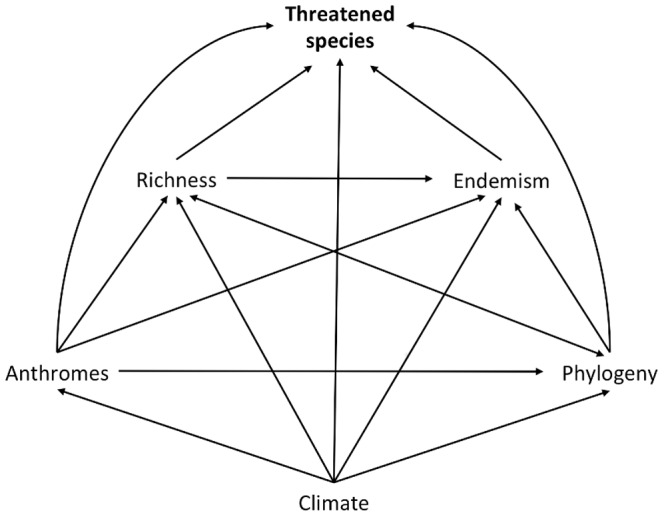
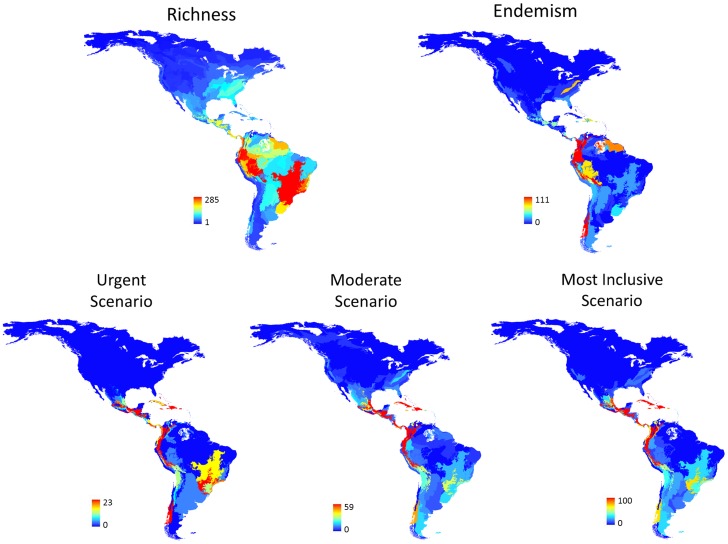
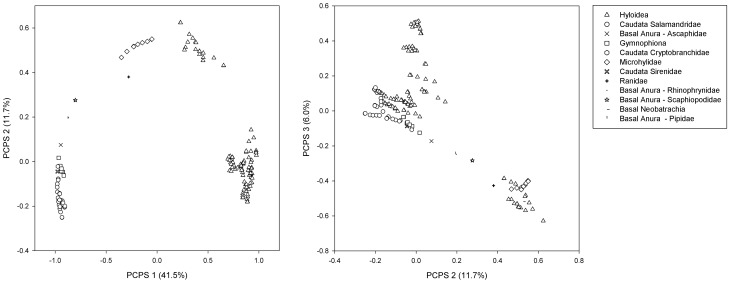
METHODOLOGY/PRINCIPAL FINDINGS: We used the WWF's New World ecoregions, the WWFs amphibian distributional data and the IUCN Red List Categories to obtain the number of threatened species per ecoregion. We analyzed three different scenarios urgent, moderate, and the most inclusive scenario. Using path analysis we evaluated the direct and indirect effects of climate, type of land use, phylogenetic structure, richness and endemism on the number of threatened amphibians in New World ecoregions. In all scenarios we found strong support for direct influences of endemism, the cover of villages and species richness on the number of threatened species in each ecoregion. The proportion of wild area had indirect effects in the moderate and the most inclusive scenario. Phylogenetic composition was important in determining the species richness and endemism in each ecoregion. Climate variables had complex and indirect effects on the number of threatened species.
CONCLUSION/SIGNIFICANCE: Land use has a more direct influence than climate in determining the distribution of New World threatened amphibians. Independently of the scenario analyzed, the main variables influencing the distribution of threatened amphibians were consistent, with endemism having the largest magnitude path coefficient. The importance of phylogenetic composition could indicate that some clades may be more threatened than others, and their presence increases the number of threatened species. Our results highlight the importance of man-made land transformation, which is a local variable, as a critical factor underlying the distribution of threatened amphibians at a biogeographic scale.
我们评估了气候、土地利用、系统发育结构、物种丰富度和特有性对新世界受威胁两栖动物分布的直接和间接影响。
方法/主要发现:我们使用世界自然基金会(WWF)的新世界生态区、WWF 的两栖动物分布数据和 IUCN 红色名录类别来获得每个生态区的受威胁物种数量。我们分析了三种不同的情况:紧急情况、中度情况和最全面的情况。我们使用路径分析来评估气候、土地利用类型、系统发育结构、丰富度和特有性对新世界生态区受威胁两栖动物数量的直接和间接影响。在所有情况下,我们都强烈支持特有性、村庄覆盖率和物种丰富度对每个生态区受威胁物种数量的直接影响。在中度和最全面的情况下,野生面积比例具有间接影响。系统发育组成对确定每个生态区的物种丰富度和特有性非常重要。气候变量对受威胁物种数量有复杂的间接影响。
结论/意义:土地利用对确定新世界受威胁两栖动物的分布有比气候更直接的影响。无论分析的情况如何,影响受威胁两栖动物分布的主要变量都是一致的,其中特有性的路径系数最大。系统发育组成的重要性可能表明,一些进化枝可能比其他进化枝受到更大的威胁,并且它们的存在增加了受威胁物种的数量。我们的研究结果强调了人为土地转化的重要性,作为一个地方变量,它是一个关键因素,决定了受威胁两栖动物在生物地理尺度上的分布。