Conservation Ecology Group, Department of Biosciences, Durham University, South Road, Durham, DH1 3LE, UK.
US Forest Service Rocky Mountain Research Station, Fort Collins, CO, 80526, USA.
Nat Commun. 2020 Feb 20;11(1):993. doi: 10.1038/s41467-020-14771-6.
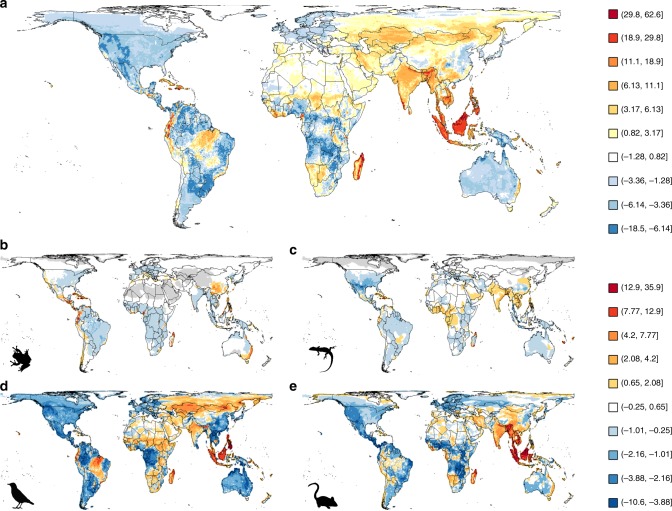
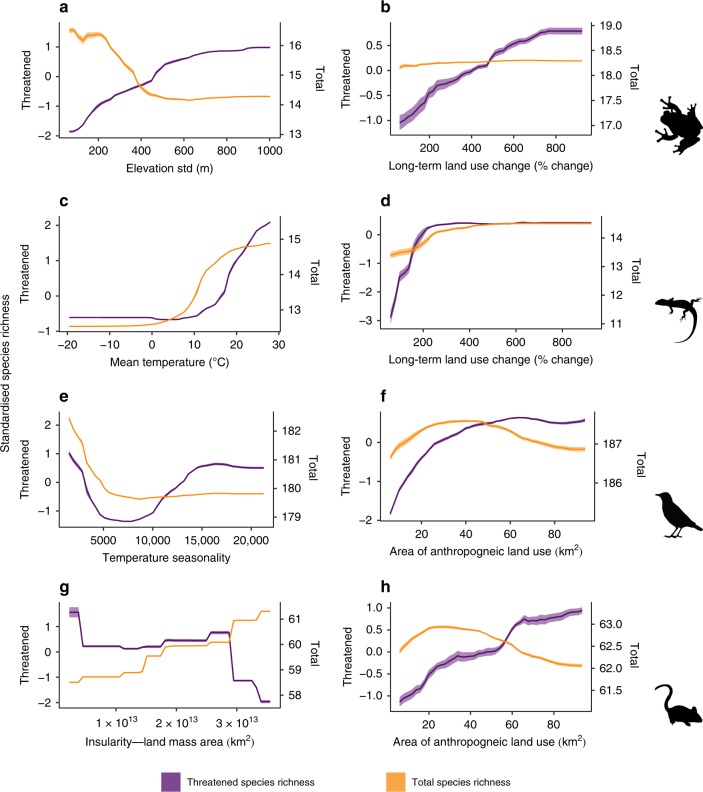
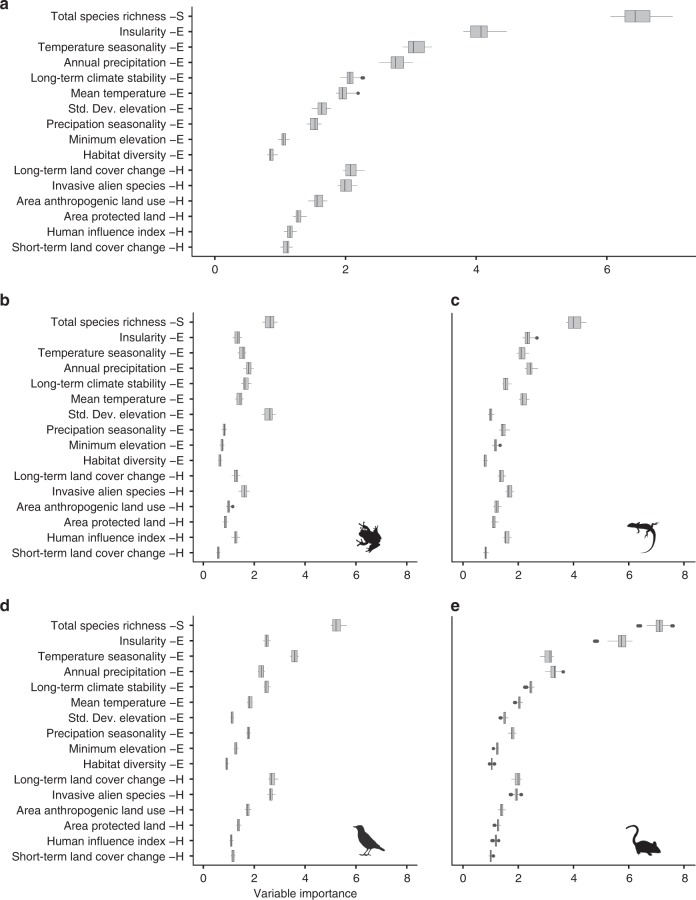
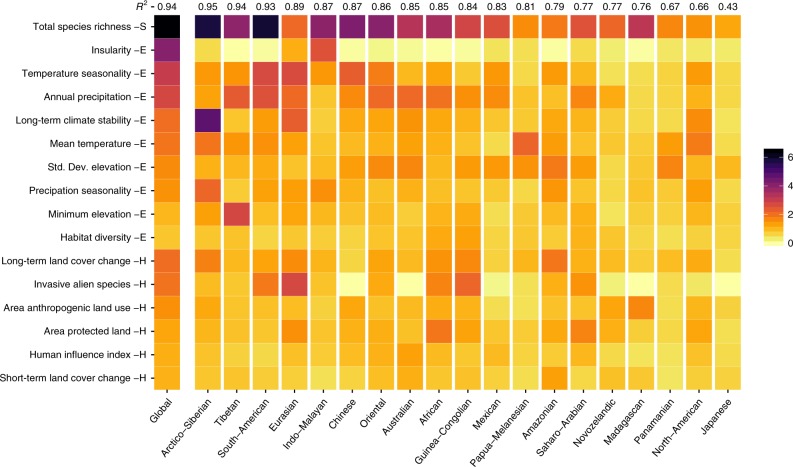
High numbers of threatened species might be expected to occur where overall species richness is also high; however, this explains only a proportion of the global variation in threatened species richness. Understanding why many areas have more or fewer threatened species than would be expected given their species richness, and whether that is consistent across taxa, is essential for identifying global conservation priorities. Here, we show that, after controlling for species richness, environmental factors, such as temperature and insularity, are typically more important than human impacts for explaining spatial variation in global threatened species richness. Human impacts, nevertheless, have an important role, with relationships varying between vertebrate groups and zoogeographic regions. Understanding this variation provides a framework for establishing global conservation priorities, identifying those regions where species are inherently more vulnerable to the effects of threatening human processes, and forecasting how threatened species might be distributed in a changing world.
高数量的受威胁物种可能出现在物种丰富度也很高的地方;然而,这只能解释全球受威胁物种丰富度变化的一部分。了解为什么许多地区的受威胁物种比根据其物种丰富度所预期的要多或要少,以及这种情况在分类群之间是否一致,对于确定全球保护优先事项至关重要。在这里,我们表明,在控制物种丰富度后,环境因素(如温度和岛屿性)通常比人类影响对于解释全球受威胁物种丰富度的空间变化更为重要。尽管如此,人类影响仍起着重要作用,其关系因脊椎动物群体和动物地理区域而异。理解这种变化为确定全球保护优先事项提供了一个框架,确定了那些物种本身更容易受到威胁人类过程影响的地区,并预测了受威胁物种在变化的世界中可能如何分布。