The NEPI foundation, Department of Health Analysis, Division of Medicine and Health, Linköping University, Linköping, Sweden.
Eur J Clin Pharmacol. 2013 May;69 Suppl 1(Suppl 1):79-87. doi: 10.1007/s00228-013-1491-y. Epub 2013 May 3.
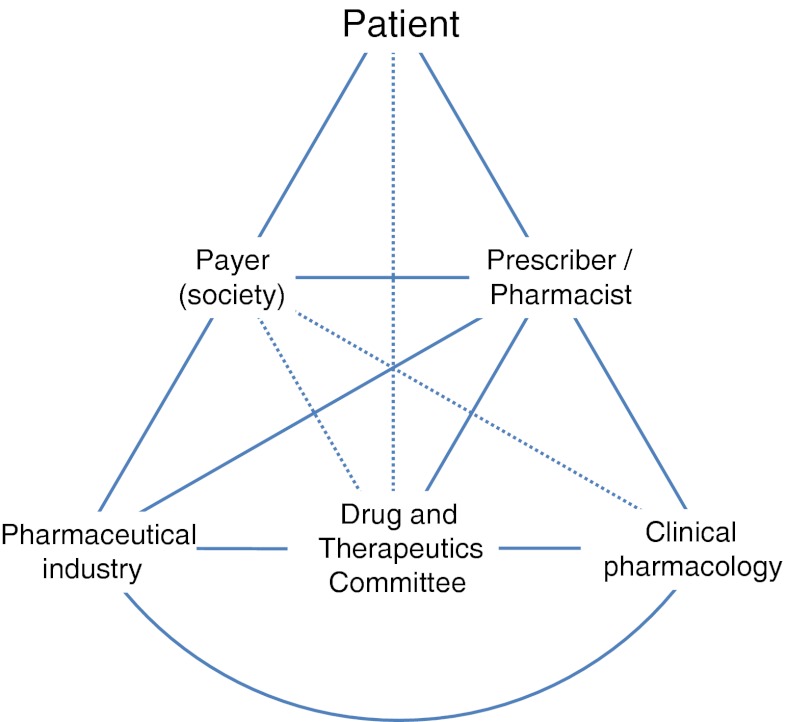
During the last five decades drug and therapeutics committees (DTCs), have evolved from mainly hospital-based groups of experts in pharmacotherapy and drug logistics into an arena for healthcare professionals employing evidence-based methods of promoting rational drug use. The purpose of this study was to suggest a framework for analysing the structure and activities of DTCs.
A literature search was carried out in the Medline, Cinahl and Web of Sciences databases for the period 1993-2012.
A total of 207 articles were included. Based on these articles a framework for the analysis of the DTCs based on the role of the DTC, target groups, budget perspective and type of economic decisions could be suggested.
In order to respond to future demands the DTCs will have to develop their skill in pharmacoeconomics. Their processes will have to be standardised and made more transparent in order to be better adapted to evidence-based decision-making. They will also have to embrace the possibilities created by electronic health records in both influencing the decisions of physicians, and in improving quality assurance programmes and longitudinal follow-up of drug therapy and outcomes. They will have to find new ways of interacting with the public and policy makers in order to get the resources needed for their work. Finally, they will have to handle the conflict among national, regional and local decision-making processes and the relationship between formularies and therapeutic guidelines.
在过去的五十年中,药物治疗学委员会(DTC)已经从主要由药理学和药物物流方面的专家组成的医院为基础的团体演变为一个采用循证方法促进合理用药的医疗保健专业人员的领域。本研究的目的是提出一种分析 DTC 结构和活动的框架。
在 1993 年至 2012 年期间,在 Medline、Cinahl 和 Web of Sciences 数据库中进行了文献检索。
共纳入 207 篇文章。基于这些文章,可以根据 DTC 的作用、目标群体、预算视角和经济决策类型,提出一个分析 DTC 的框架。
为了应对未来的需求,DTC 必须发展其药物经济学方面的技能。他们的流程必须标准化并更加透明,以便更好地适应循证决策。他们还必须接受电子健康记录所带来的可能性,以便影响医生的决策,并改善质量保证计划和药物治疗及结果的纵向随访。他们必须找到与公众和决策者互动的新方式,以获取开展工作所需的资源。最后,他们必须处理国家、地区和地方决策过程之间的冲突,以及处方和治疗指南之间的关系。