Department of Cell and Developmental Biology, University of Illinois at Urbana-Champaign, 601 South Goodwin Avenue, Urbana, Illinois 61801, USA.
Nat Commun. 2013;4:1814. doi: 10.1038/ncomms2811.
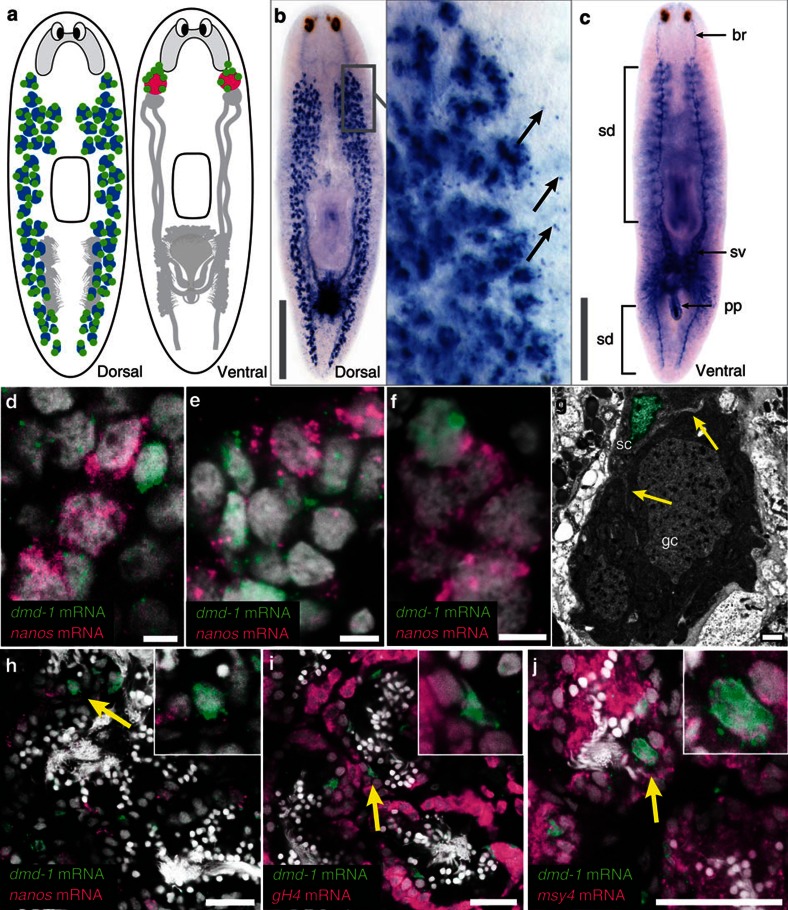
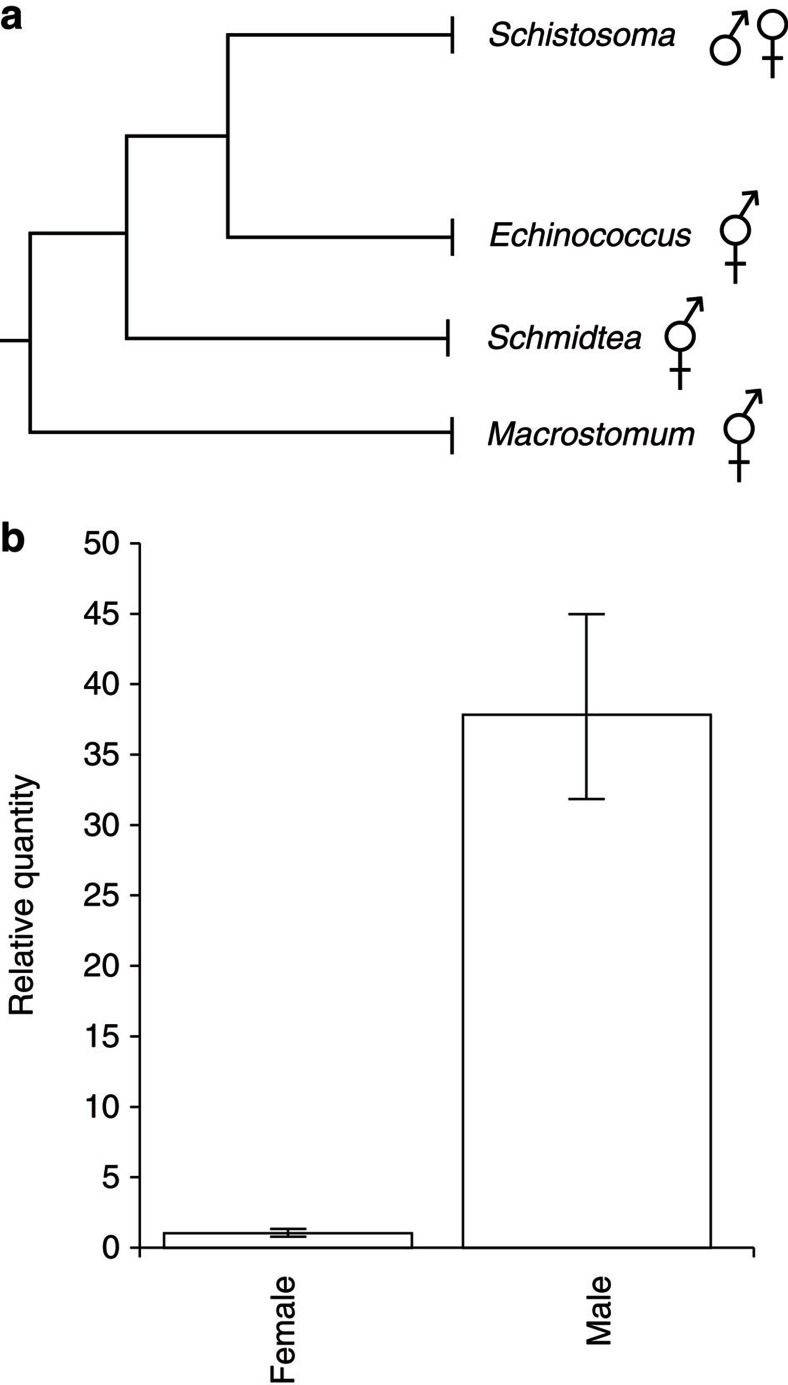
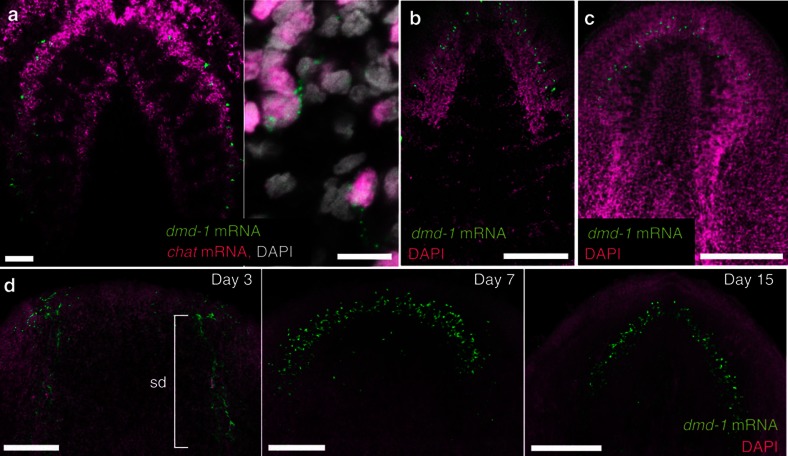
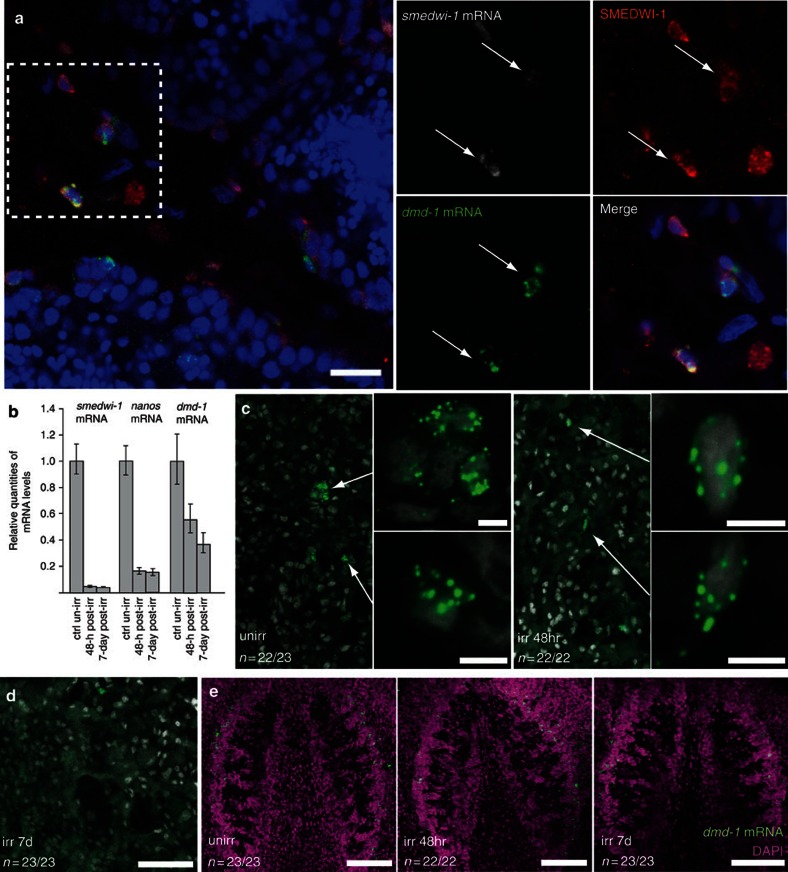
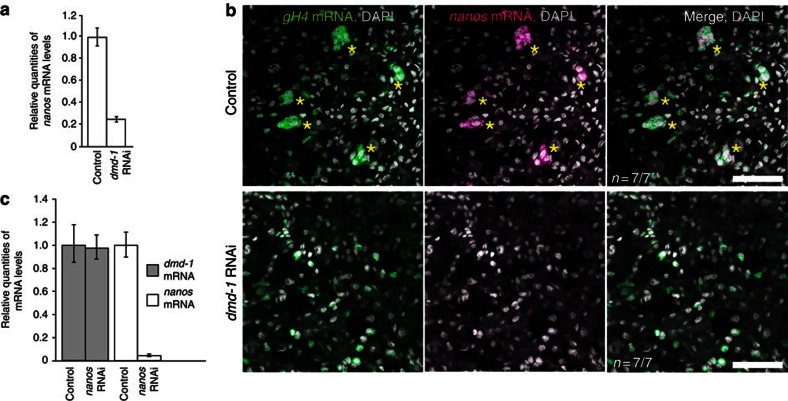
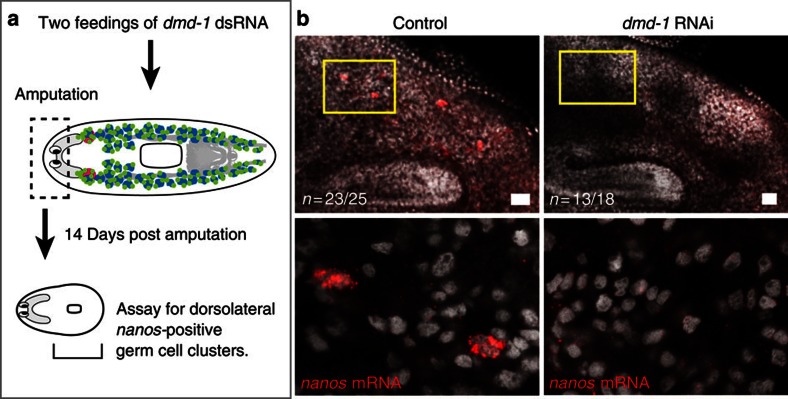
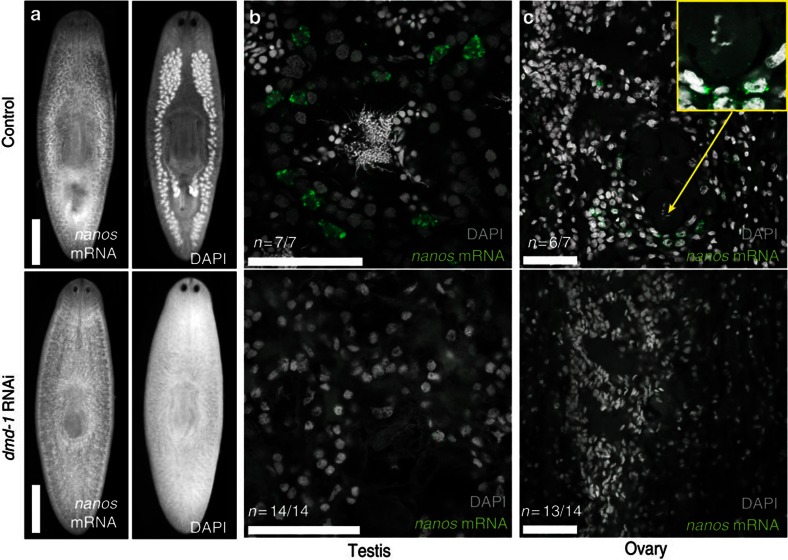
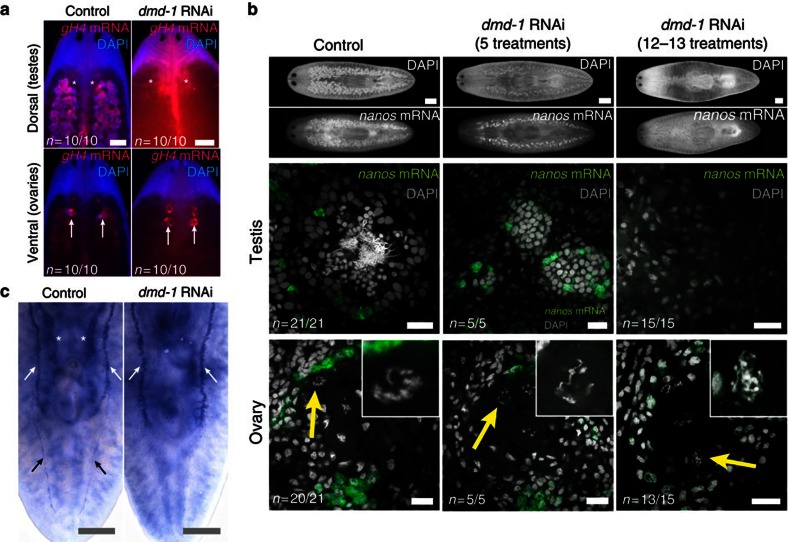
Evolutionary transitions between hermaphroditic and dioecious reproductive states are found in many groups of animals. To understand such transitions, it is important to characterize diverse modes of sex determination utilized by metazoans. Currently, little is known about how simultaneous hermaphrodites specify and maintain male and female organs in a single individual. Here we show that a sex-specific gene, Smed-dmd-1 encoding a predicted doublesex/male-abnormal-3 (DM) domain transcription factor, is required for specification of male germ cells in a simultaneous hermaphrodite, the planarian Schmidtea mediterranea. dmd-1 has a male-specific role in the maintenance and regeneration of the testes and male accessory reproductive organs. In addition, a homologue of dmd-1 exhibits male-specific expression in Schistosoma mansoni, a derived, dioecious flatworm. These results demonstrate conservation of the role of DM domain genes in sexual development in lophotrochozoans and suggest one means by which modulation of sex-specific pathways can drive the transition from hermaphroditism to dioecy.
在许多动物群体中都存在雌雄同体和雌雄异体生殖状态之间的进化转变。为了理解这些转变,了解后生动物利用的不同性别决定模式非常重要。目前,对于雌雄同体如何在单个个体中指定和维持雄性和雌性器官知之甚少。在这里,我们表明,一个性别特异性基因 Smed-dmd-1 编码一个预测的双性异常 3(DM)结构域转录因子,对于扁形动物地中海涡虫的雄性生殖细胞的指定是必需的。dmd-1 在睾丸和雄性附属性生殖器官的维持和再生中具有雄性特异性作用。此外,dmd-1 的同源物在衍生的雌雄异体扁形动物曼氏血吸虫中表现出雄性特异性表达。这些结果表明 DM 结构域基因在有轮动物的性发育中的作用是保守的,并表明调节性别特异性途径可以驱动从雌雄同体到雌雄异体的转变的一种方式。