Department of Life Science and Medical Bioscience, Waseda University, 2–2 Wakamatsu-cho, Shinjuku-ku, Tokyo 162–8480, Japan.
Microbes Environ. 2013;28(2):236-43. doi: 10.1264/jsme2.me12209. Epub 2013 May 9.
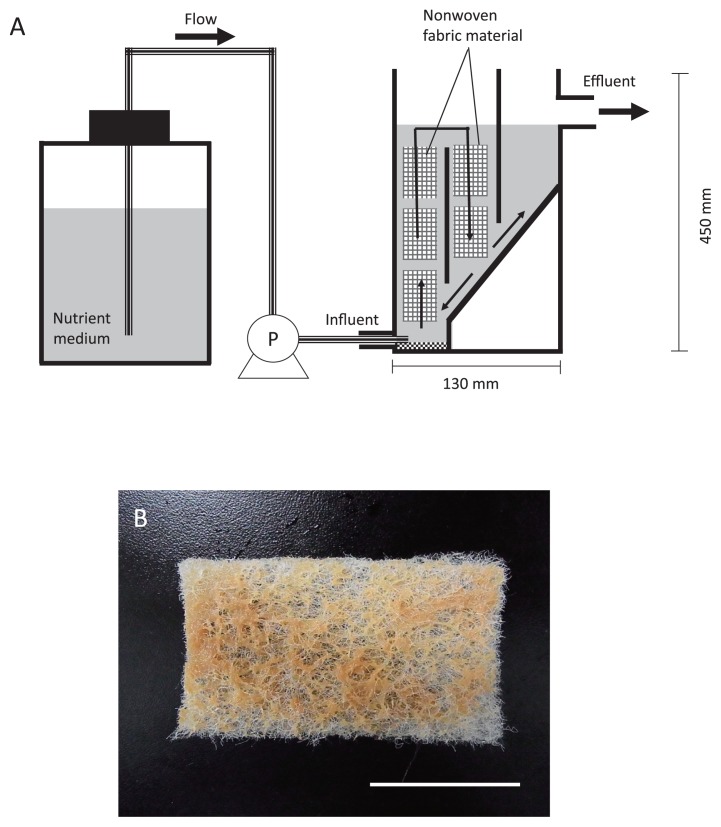
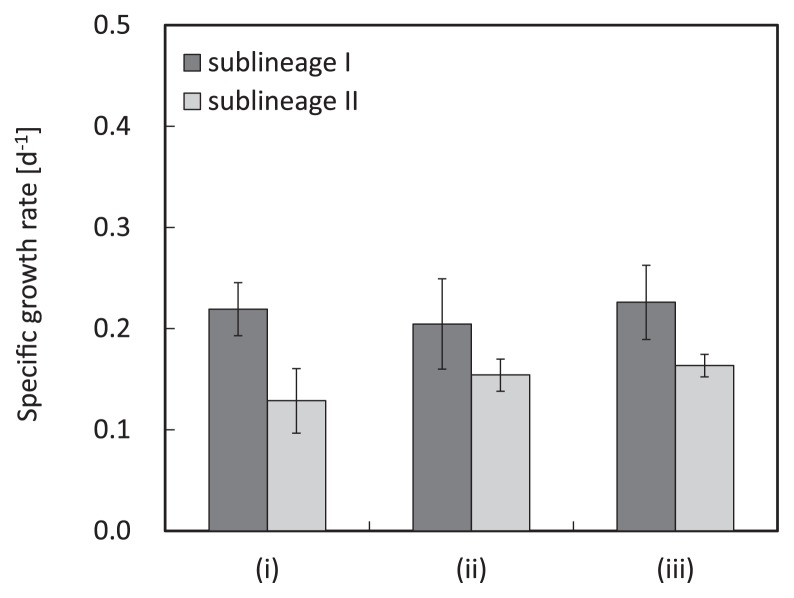
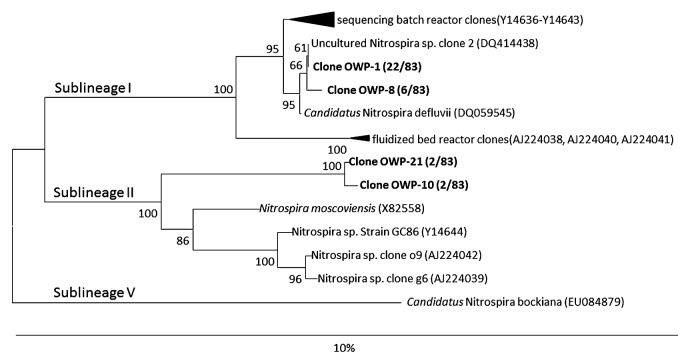
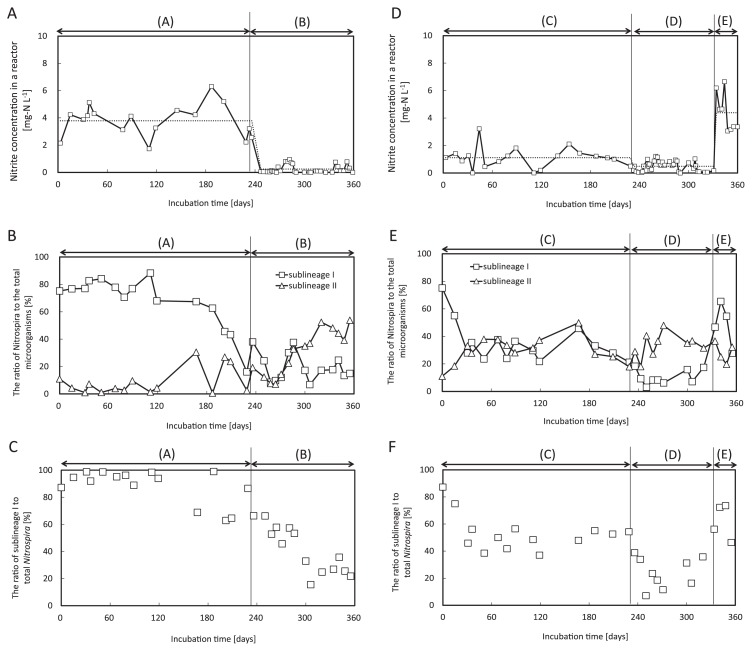
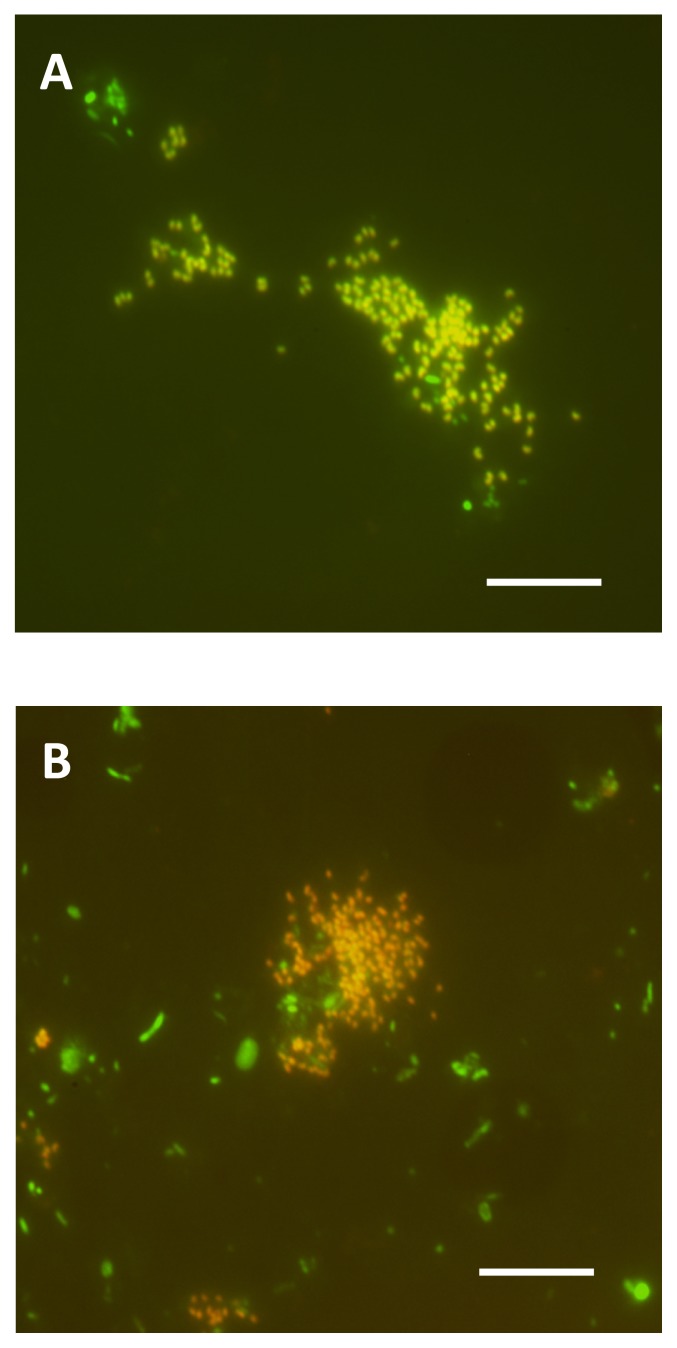
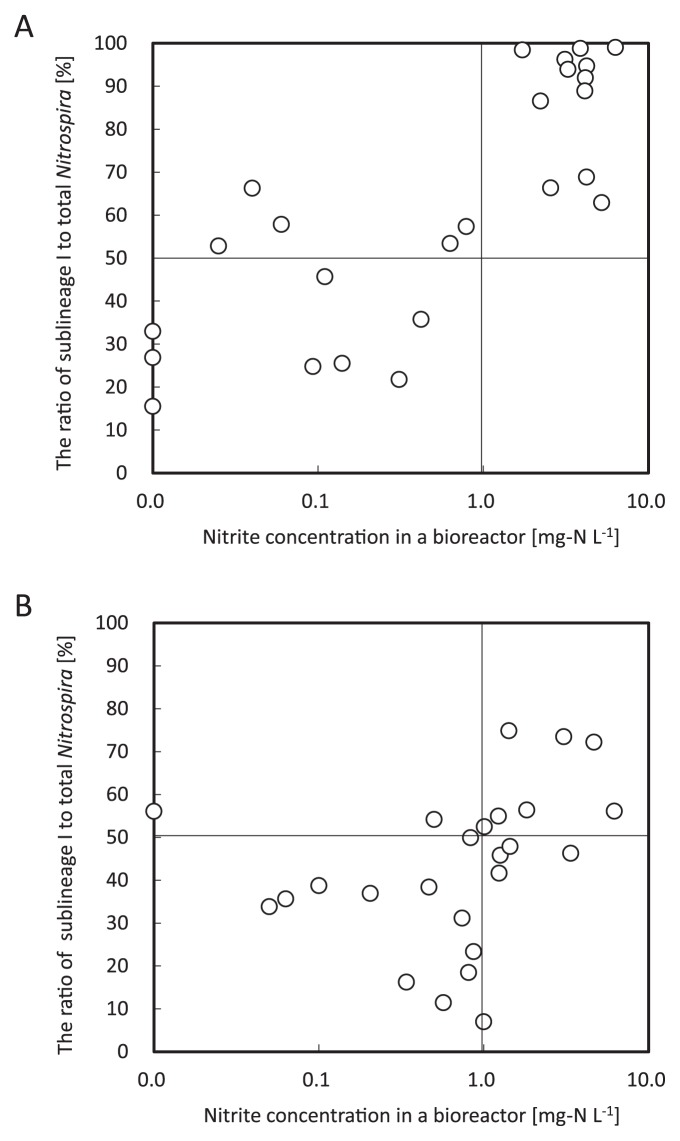
Nitrification is an important step in nitrogen removal in biological wastewater treatment processes. Recently, Nitrospira have been recognized as the numerically dominant nitrite-oxidizing bacterial genus primarily responsible for the second step of aerobic nitrification; however, Nitrospira usually resist cultivation under laboratory conditions and only one species enriched from activated sludge has been described. In this study, a novel enrichment method for Nitrospira was successfully developed using continuous feeding bioreactors. By controlling nitrite concentrations strictly in the bioreactor at low levels below 10 mg-N L(-1), coexisting members of sublineages I and II of the genus Nitrospira were enriched selectively. The maximum ratios of sublineages I and II to total microbial cells achieved 88.3% and 53.8%, respectively. This enrichment method is potentially applicable to other uncultured Nitrospira.
硝化作用是生物废水处理过程中脱氮的重要步骤。最近,硝化螺旋菌被认为是数量上占优势的亚硝酸盐氧化细菌属,主要负责有氧硝化的第二步;然而,硝化螺旋菌通常在实验室条件下难以培养,并且仅从活性污泥中描述了一个物种。在这项研究中,成功地开发了一种使用连续进料生物反应器富集硝化螺旋菌的新方法。通过严格控制生物反应器中低于 10mg-N L(-1)的亚硝酸盐浓度,可以有选择地富集属硝化螺旋菌的亚谱系 I 和 II 的共存成员。达到的亚谱系 I 和 II 与总微生物细胞的最大比例分别为 88.3%和 53.8%。这种富集方法可能适用于其他未培养的硝化螺旋菌。