Centre for Physical Activity and Nutrition Research, School of Exercise and Nutrition Sciences, Deakin University, Melbourne Burwood Campus, 221 Burwood Highway, Burwood, Melbourne 3125, Australia.
Int J Behav Nutr Phys Act. 2013 May 14;10:56. doi: 10.1186/1479-5868-10-56.
Cross-country differences in dietary behaviours and obesity rates have been previously reported. Consumption of energy-dense snack foods and soft drinks are implicated as contributing to weight gain, however little is known about how the availability of these items within supermarkets varies internationally. This study assessed variations in the display of snack foods and soft drinks within a sample of supermarkets across eight countries.
Within-store audits were used to evaluate and compare the availability of potato chips (crisps), chocolate, confectionery and soft drinks. Displays measured included shelf length and the proportion of checkouts and end-of-aisle displays containing these products. Audits were conducted in a convenience sample of 170 supermarkets across eight developed nations (Australia, Canada, Denmark, Netherlands, New Zealand, Sweden, United Kingdom (UK), and United States of America (US)).
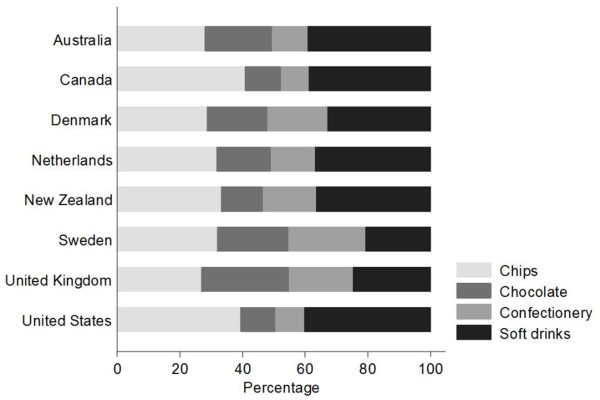
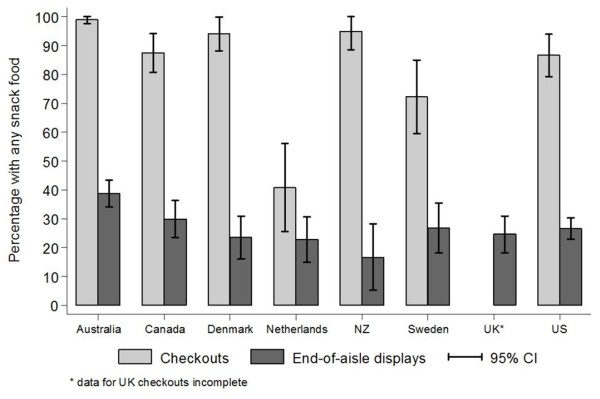
The mean total aisle length of snack foods (adjusted for store size) was greatest in supermarkets from the UK (56.4 m) and lowest in New Zealand (21.7 m). When assessed by individual item, the greatest aisle length devoted to chips, chocolate and confectionery was found in UK supermarkets while the greatest aisle length dedicated to soft drinks was in Australian supermarkets. Only stores from the Netherlands (41%) had less than 70% of checkouts featuring displays of snack foods or soft drinks.
Whilst between-country variations were observed, overall results indicate high levels of snack food and soft drinks displays within supermarkets across the eight countries. Exposure to snack foods is largely unavoidable within supermarkets, increasing the likelihood of purchases and particularly those made impulsively.
先前已有研究报道,不同国家的饮食行为和肥胖率存在差异。摄入高能量的零食和软饮料被认为是导致体重增加的原因之一,但对于超市中这些商品的供应情况在国际上存在怎样的差异却知之甚少。本研究评估了八个国家的超市中零食和软饮料的展示情况。
采用店内审计的方法来评估和比较薯片(薯条)、巧克力、糖果和软饮料的供应情况。测量的展示内容包括货架长度以及结账处和端架展示这些产品的比例。在八个发达国家(澳大利亚、加拿大、丹麦、荷兰、新西兰、瑞典、英国和美国)的便利抽样超市中进行了 170 家超市的审计。
(调整后的)零食总货架长度(按商店规模计算)平均值最高的是英国超市(56.4 米),最低的是新西兰超市(21.7 米)。按单个项目评估时,英国超市的薯片、巧克力和糖果货架长度最长,而澳大利亚超市的软饮料货架长度最长。只有荷兰超市(41%)少于 70%的结账处有零食或软饮料的展示。
尽管存在国家间的差异,但总体结果表明,八个国家的超市中都有大量的零食和软饮料展示。在超市中,接触到零食的情况在很大程度上是不可避免的,这增加了购买的可能性,尤其是冲动购买的可能性。