Department of Biology of Physical Activity, University of Jyväskylä Jyväskylä, Finland.
Front Physiol. 2013 May 10;4:99. doi: 10.3389/fphys.2013.00099. eCollection 2013.
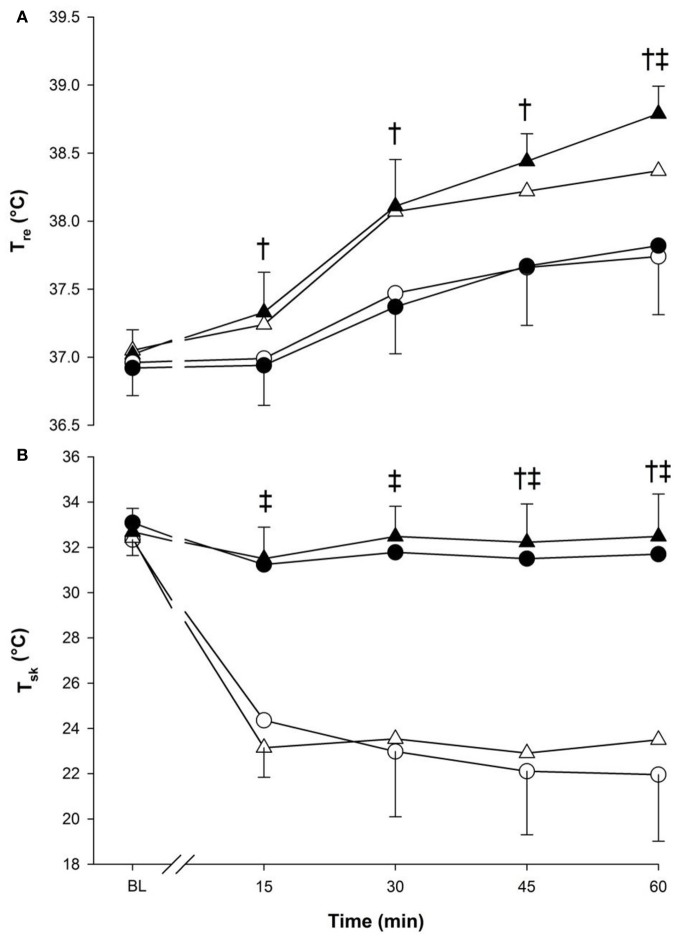
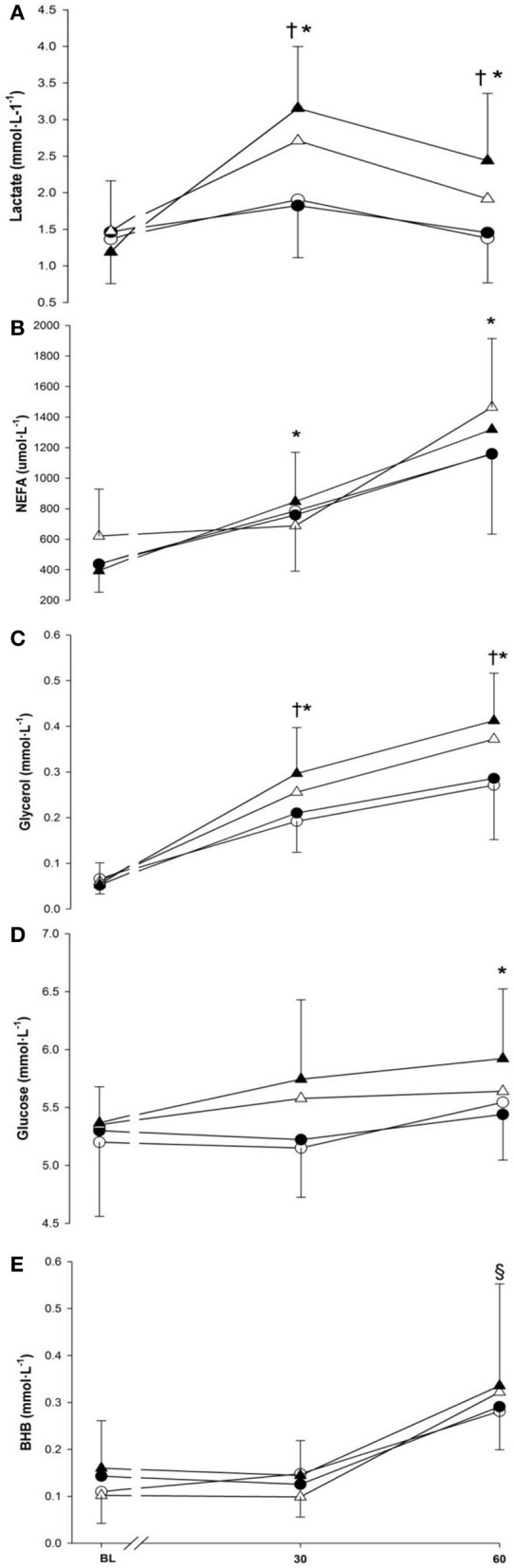
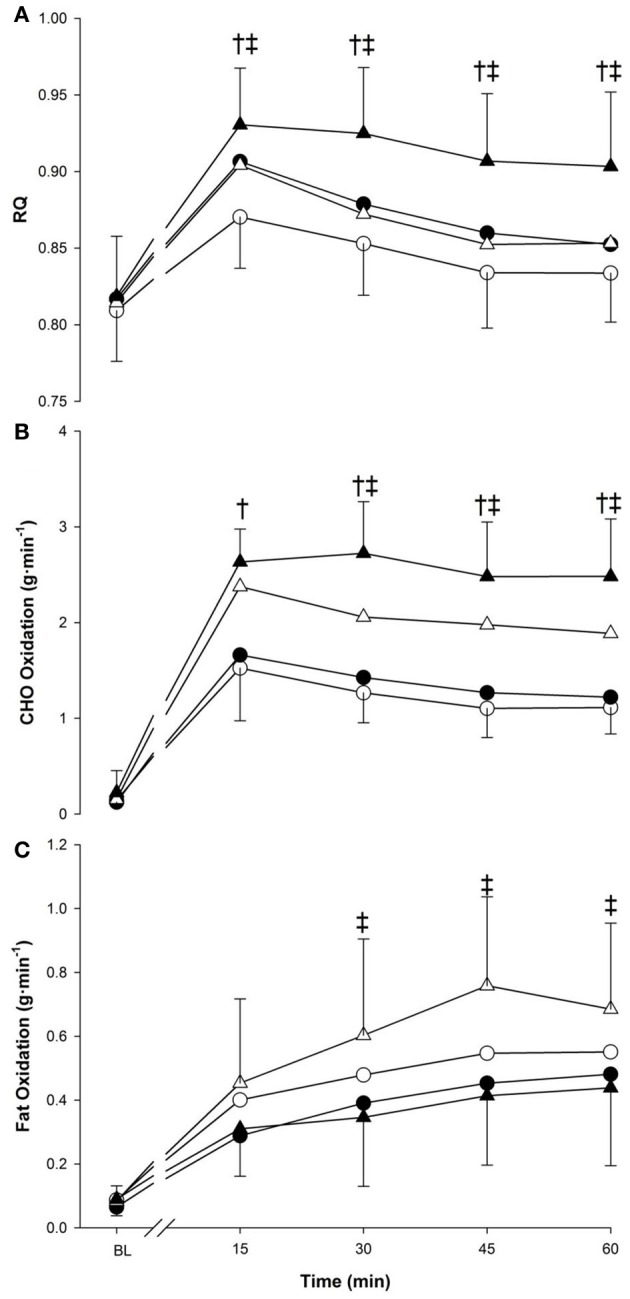
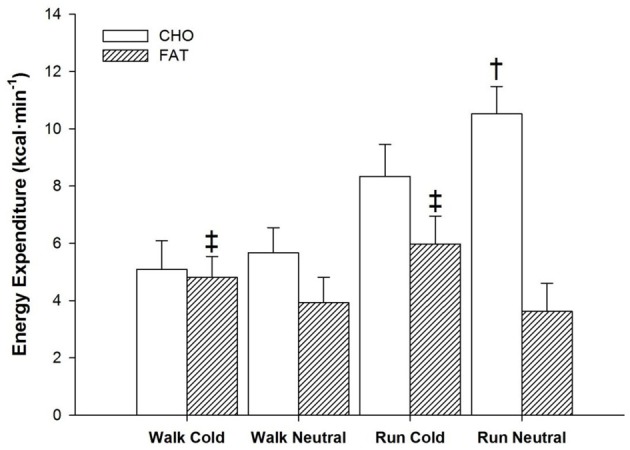
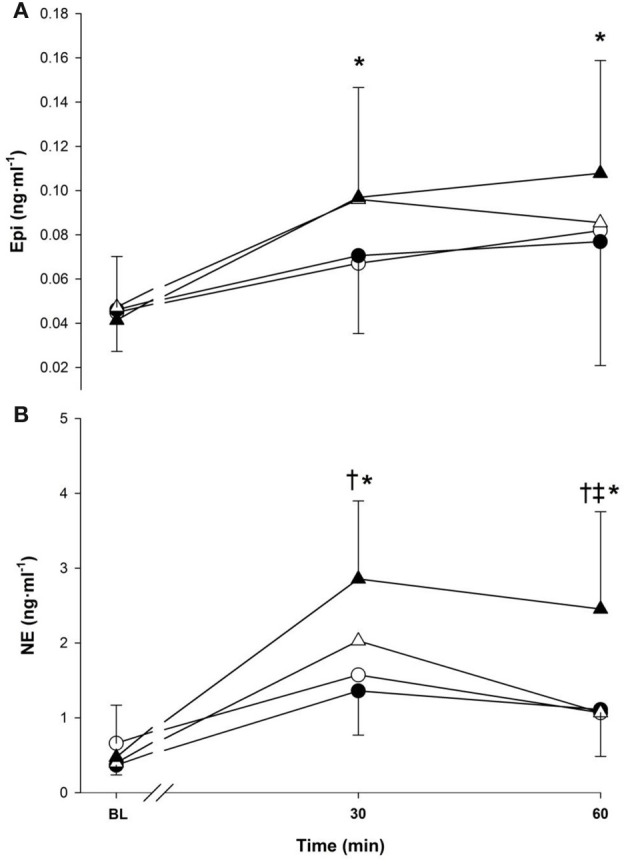
Cold exposure modulates the use of carbohydrates (CHOs) and fat during exercise. This phenomenon has mostly been observed in controlled cycling studies, but not during walking and running when core temperature and oxygen consumption are controlled, as both may alter energy metabolism. This study aimed at examining energy substrate availability and utilization during walking and running in the cold when core temperature and oxygen consumption are maintained. Ten lightly clothed male subjects walked or ran for 60-min, at 50% and 70% of maximal oxygen consumption, respectively, in a climatic chamber set at 0°C or 22°C. Thermal, cardiovascular, and oxidative responses were measured every 15-min during exercise. Blood samples for serum non-esterified fatty acids (NEFAs), glycerol, glucose, beta-hydroxybutyrate (BHB), plasma catecholamines, and serum lipids were collected immediately prior, and at 30- and 60-min of exercise. Skin temperature strongly decreased while core temperature did not change during cold trials. Heart rate (HR) was also lower in cold trials. A rise in fat utilization in the cold was seen through lower respiratory quotient (RQ) (-0.03 ± 0.02), greater fat oxidation (+0.14 ± 0.13 g · min(-1)) and contribution of fat to total energy expenditure (+1.62 ± 1.99 kcal · min(-1)). No differences from cold exposure were observed in blood parameters. During submaximal walking and running, a greater reliance on derived fat sources occurs in the cold, despite the absence of concurrent alterations in NEFAs, glycerol, or catecholamine concentrations. This disparity may suggest a greater reliance on intra-muscular energy sources such as triglycerides during both walking and running.
寒冷暴露会调节运动过程中碳水化合物(CHO)和脂肪的利用。这种现象主要在控制条件下的自行车运动研究中观察到,但在核心温度和耗氧量受到控制的步行和跑步中没有观察到,因为这两者都可能改变能量代谢。本研究旨在研究在核心温度和耗氧量保持不变的情况下,寒冷环境中步行和跑步时能量底物的可利用性和利用情况。10 名穿着轻便的男性受试者分别在 0°C 或 22°C 的气候室内以 50%和 70%的最大耗氧量步行或跑步 60 分钟。在运动过程中,每 15 分钟测量一次热、心血管和氧化反应。在运动前、运动 30 分钟和 60 分钟时采集血液样本,用于检测血清非酯化脂肪酸(NEFAs)、甘油、葡萄糖、β-羟丁酸(BHB)、血浆儿茶酚胺和血清脂质。在寒冷试验中,皮肤温度急剧下降,而核心温度没有变化。寒冷试验中心率(HR)也较低。通过较低的呼吸商(RQ)(-0.03±0.02)、更高的脂肪氧化(+0.14±0.13g·min-1)和脂肪对总能量消耗的贡献(+1.62±1.99kcal·min-1),观察到脂肪利用的增加。与寒冷暴露相比,血液参数没有差异。在亚最大强度的步行和跑步中,尽管 NEFAs、甘油或儿茶酚胺浓度没有同时发生变化,但在寒冷环境中,对衍生脂肪来源的依赖程度更大。这种差异可能表明在步行和跑步过程中,对肌肉内能量来源(如甘油三酯)的依赖更大。