Laboratory of Immunogenetics, National Institute of Allergy and Infectious Diseases, National Institutes of Health, Rockville, Maryland, United States of America.
PLoS One. 2013 May 10;8(5):e62820. doi: 10.1371/journal.pone.0062820. Print 2013.
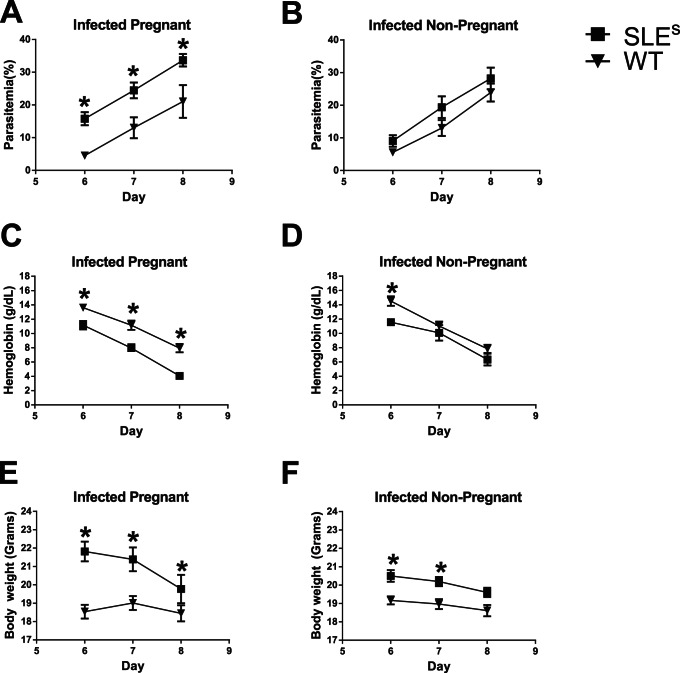
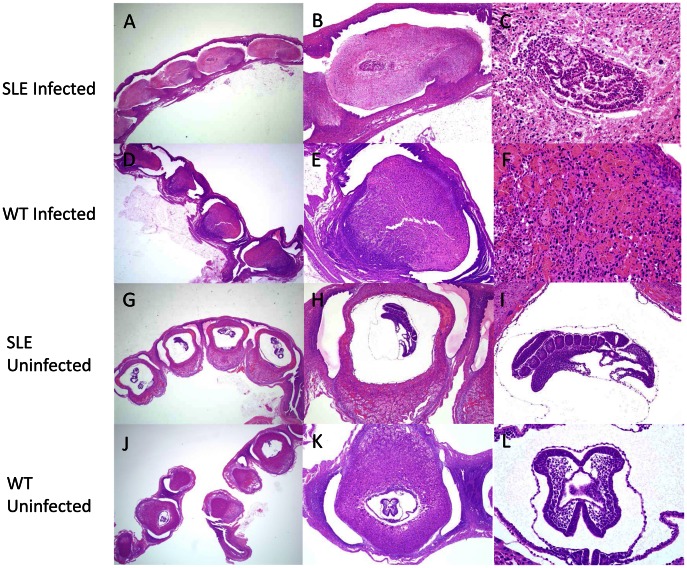
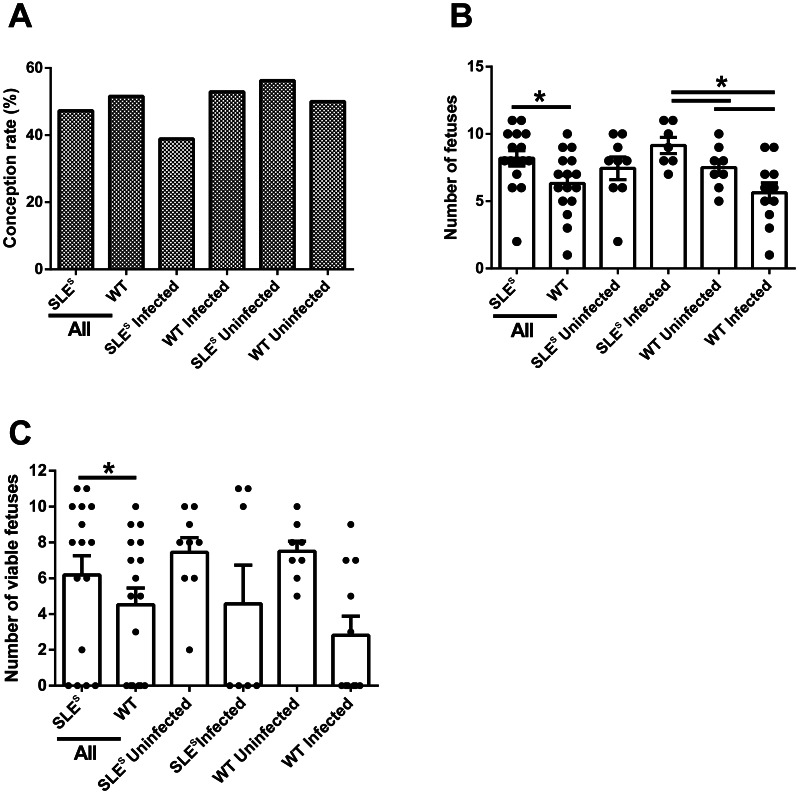
Severe malaria, including cerebral malaria (CM) and placental malaria (PM), have been recognized to have many of the features of uncontrolled inflammation. We recently showed that in mice genetic susceptibility to the lethal inflammatory autoimmune disease, systemic lupus erythematosus (SLE), conferred resistance to CM. Protection appeared to be mediated by immune mechanisms that allowed SLE-prone mice, prior to the onset of overt SLE symptoms, to better control their inflammatory response to Plasmodium infection. Here we extend these findings to ask does SLE susceptibility have 1) a cost to reproductive fitness and/or 2) an effect on PM in mice? The rates of conception for WT and SLE susceptible (SLE(s)) mice were similar as were the number and viability of fetuses in pregnant WT and SLE(s) mice indicating that SLE susceptibility does not have a reproductive cost. We found that Plasmodium chabaudi AS (Pc) infection disrupted early stages of pregnancy before the placenta was completely formed resulting in massive decidual necrosis 8 days after conception. Pc-infected pregnant SLE(s) mice had significantly more fetuses (∼1.8 fold) but SLE did not significantly affect fetal viability in infected animals. This was despite the fact that Pc-infected pregnant SLE(s) mice had more severe symptoms of malaria as compared to Pc-infected pregnant WT mice. Thus, although SLE susceptibility was not protective in PM in mice it also did not have a negative impact on reproductive fitness.
严重疟疾,包括脑型疟疾(CM)和胎盘疟疾(PM),已被认为具有许多不受控制的炎症特征。我们最近发现,在对致命炎症性自身免疫性疾病系统性红斑狼疮(SLE)具有遗传易感性的小鼠中,对 CM 具有抗性。这种保护似乎是通过免疫机制介导的,这些机制使易患 SLE 的小鼠在出现明显的 SLE 症状之前,能够更好地控制对疟原虫感染的炎症反应。在这里,我们将这些发现扩展到以下问题:SLE 易感性是否存在 1)对生殖适应性的代价,和/或 2)对 PM 的影响?WT 和 SLE 易感(SLE(s))小鼠的受孕率相似,WT 和 SLE(s) 怀孕小鼠的胎儿数量和活力也相似,这表明 SLE 易感性不会对生殖产生代价。我们发现,疟原虫 chabaudi AS(Pc)感染在胎盘完全形成之前破坏了妊娠的早期阶段,导致妊娠 8 天后大量蜕膜坏死。感染 Pc 的怀孕 SLE(s) 小鼠的胎儿数量明显增加(约 1.8 倍),但 SLE 并没有显著影响感染动物的胎儿活力。尽管感染 Pc 的怀孕 SLE(s) 小鼠的疟疾症状比感染 Pc 的怀孕 WT 小鼠更严重。因此,尽管 SLE 易感性不能保护 PM 中的小鼠,但它也不会对生殖适应性产生负面影响。