Department of Pharmaceutical Sciences, Skaggs School of Pharmacy and Pharmaceutical Sciences, University of Colorado Anschutz Medical Campus Aurora, CO, USA.
Front Oncol. 2013 May 14;3:119. doi: 10.3389/fonc.2013.00119. eCollection 2013.
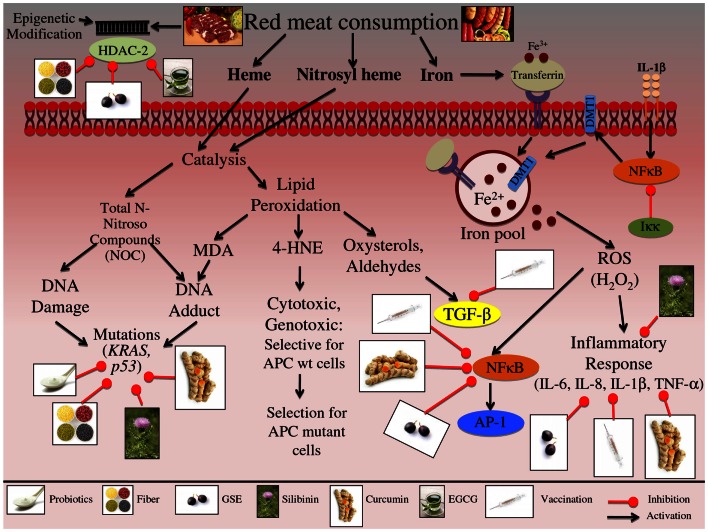
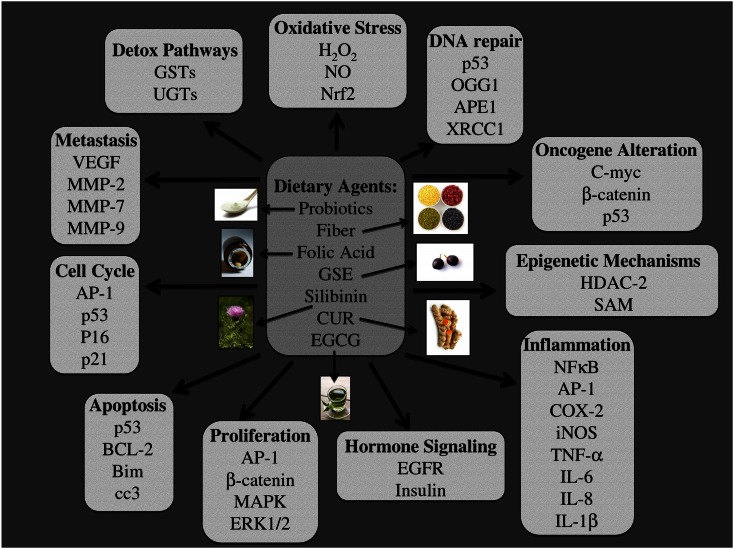
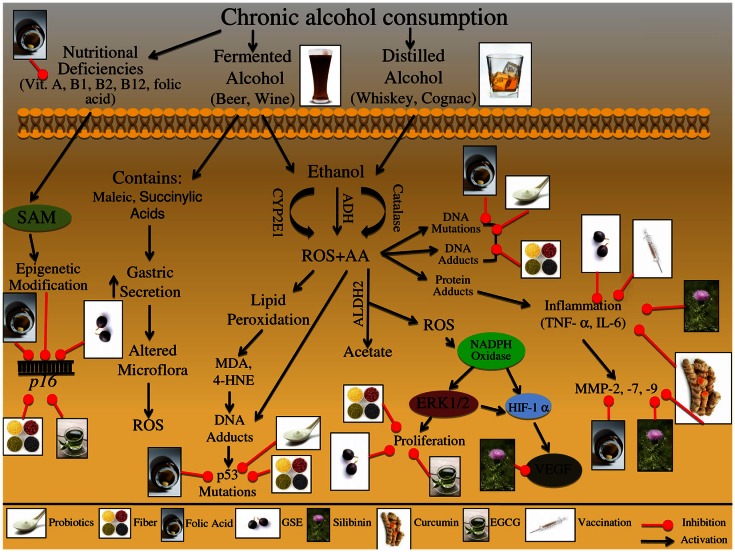
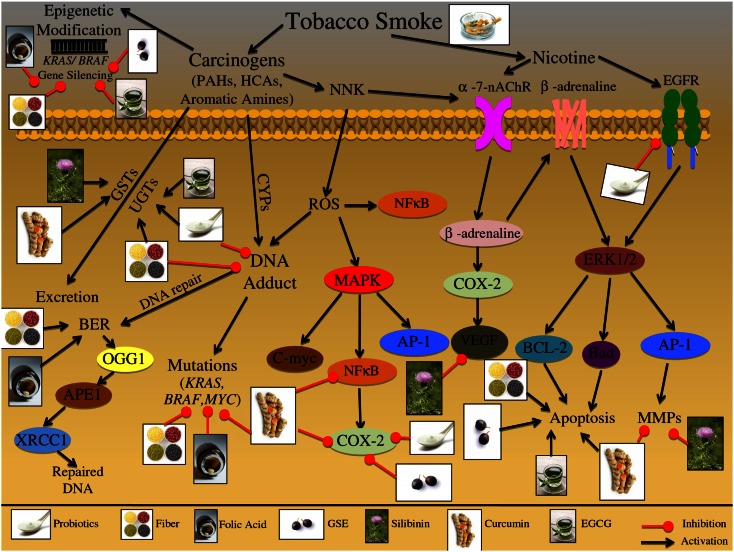
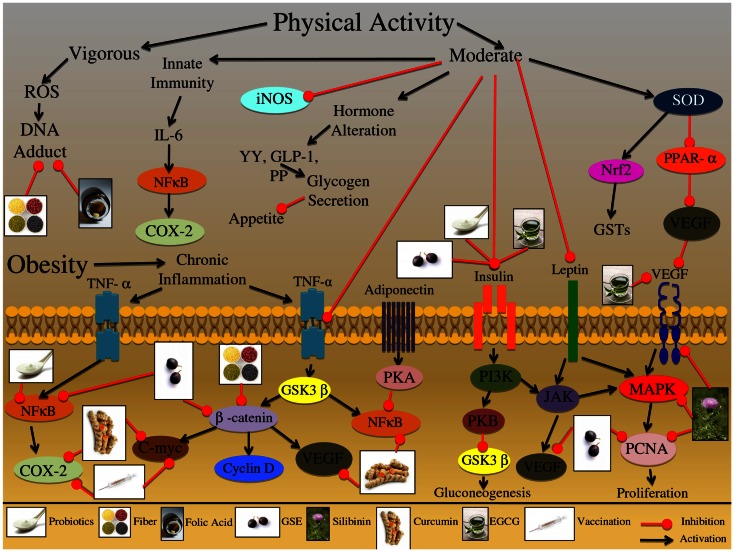
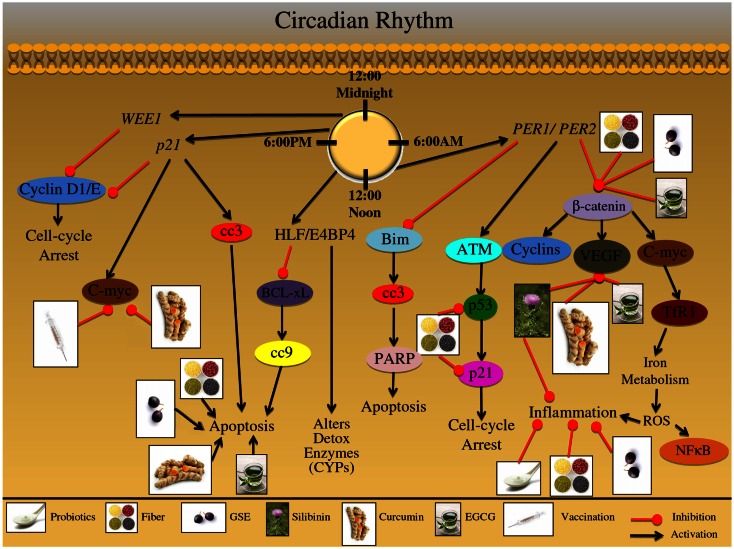
One in four deaths in the United States is cancer-related, and colorectal cancer (CRC) is the second leading cause of cancer-associated deaths. Screening strategies are utilized but have not reduced disease incidence or mortality. In this regard, there is an interest in cancer preventive strategies focusing on lifestyle intervention, where specific etiologic factors involved in cancer initiation, promotion, and progression could be targeted. For example, exposure to dietary carcinogens, such as nitrosamines and polycyclic aromatic hydrocarbons influences colon carcinogenesis. Furthermore, dietary deficiencies could alter sensitivity to genetic damage and influence carcinogen metabolism contributing to CRC. High alcohol consumption increases the risk of mutations including the fact that acetaldehyde, an ethanol metabolite, is classified as a group 1 carcinogen. Tobacco smoke exposure is also a risk factor for cancer development; approximately 20% of CRCs are associated with smoking. Additionally, obese patients have a higher risk of cancer development, which is further supported by the fact that physical activity decreases CRC risk by 55%. Similarly, chronic inflammatory conditions also increase the risk of CRC development. Moreover, the circadian clock alters digestion and regulates other biochemical, physiological, and behavioral processes that could influence CRC. Taken together, colon carcinogenesis involves a number of etiological factors, and therefore, to create effective preventive strategies, molecular targets need to be identified and beleaguered prior to disease progression. With this in mind, the following is a comprehensive review identifying downstream target proteins of the above lifestyle risk factors, which are modulated during colon carcinogenesis and could be targeted for CRC prevention by novel agents including phytochemicals.
美国每四个人的死亡中就有一个与癌症有关,而结直肠癌(CRC)是癌症相关死亡的第二大主要原因。目前已经采用了筛查策略,但并没有降低疾病的发病率或死亡率。在这方面,人们对癌症预防策略很感兴趣,这些策略侧重于生活方式的干预,其中可以针对涉及癌症发生、促进和进展的特定病因因素。例如,接触膳食致癌物,如亚硝胺和多环芳烃,会影响结肠癌的发生。此外,膳食不足可能会改变对遗传损伤的敏感性,并影响致癌物的代谢,从而导致 CRC。大量饮酒会增加包括乙醛(乙醇代谢物)被归类为 1 类致癌物在内的突变风险。吸烟也是癌症发展的一个危险因素;大约 20%的 CRC 与吸烟有关。此外,肥胖患者癌症发展的风险更高,而运动可使 CRC 风险降低 55%,这一事实进一步证实了这一点。同样,慢性炎症状态也会增加 CRC 发展的风险。此外,生物钟会改变消化过程,并调节其他可能影响 CRC 的生化、生理和行为过程。总之,结肠癌变涉及多种病因因素,因此,为了制定有效的预防策略,需要确定分子靶标,并在疾病进展之前对其进行攻击。考虑到这一点,以下是一份全面的综述,确定了上述生活方式风险因素的下游靶蛋白,这些靶蛋白在结肠癌变过程中发生变化,并可通过包括植物化学物质在内的新型制剂来针对 CRC 进行预防。