The Department of Molecular Carcinogenesis, Science Park, The University of Texas MD Anderson Cancer Center, Smithville, TX 78957, USA.
Cancer Prev Res (Phila). 2013 Jul;6(7):675-85. doi: 10.1158/1940-6207.CAPR-13-0064. Epub 2013 May 16.
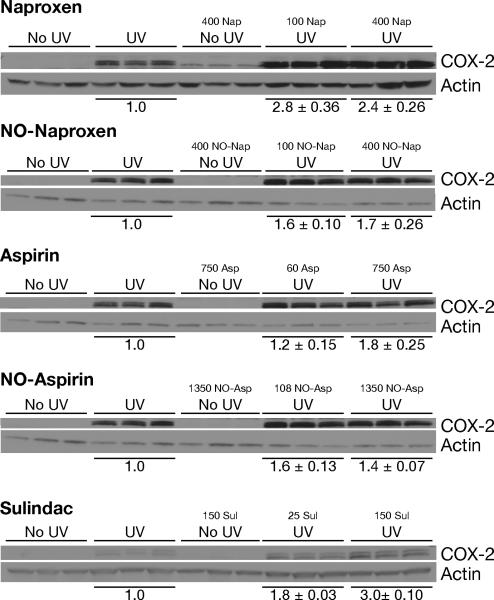
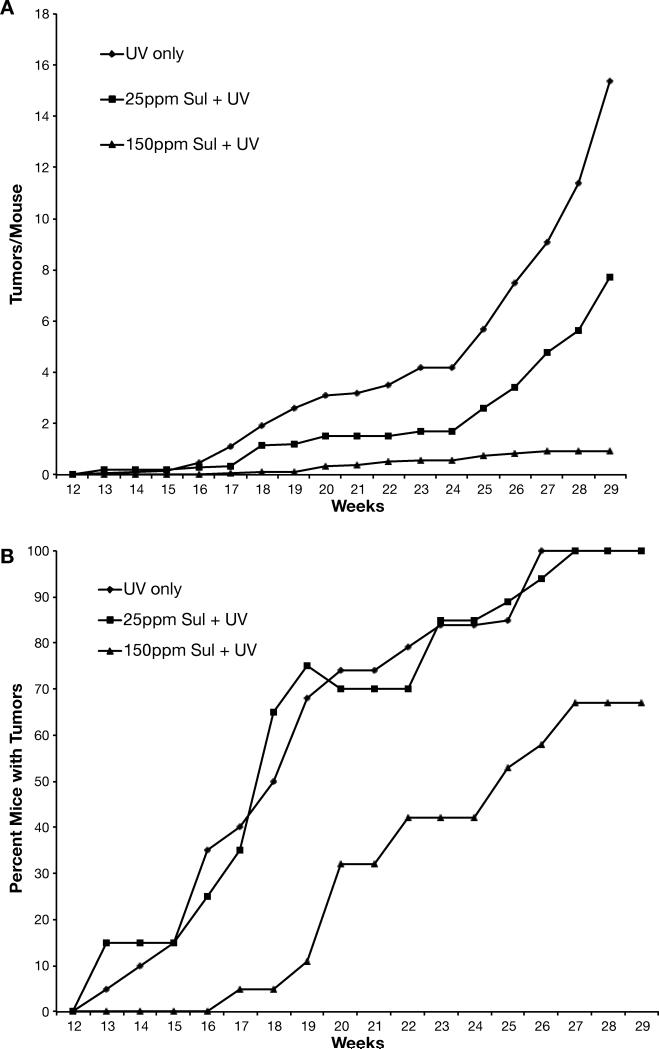
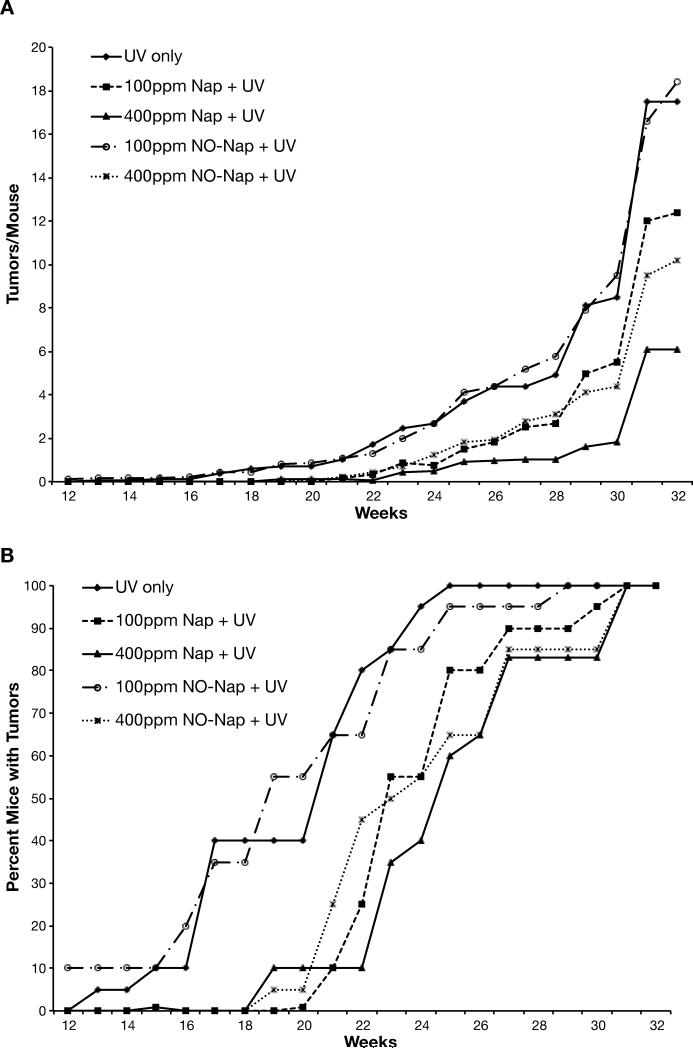
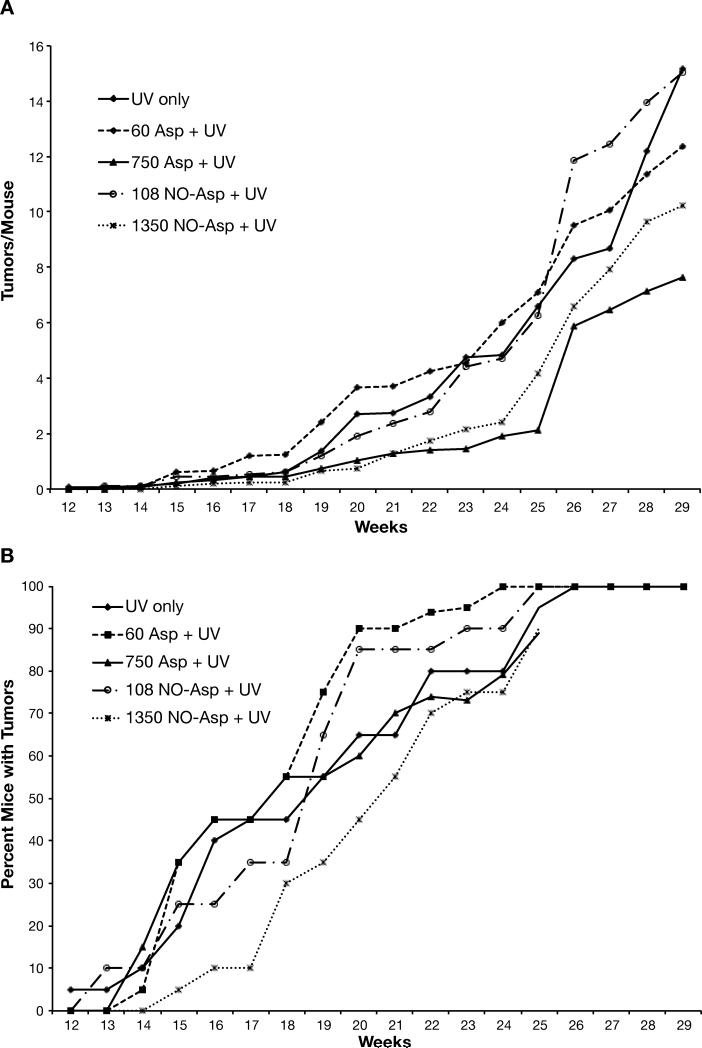
The ultraviolet B (UVB) component of sunlight, which causes DNA damage and inflammation, is the major cause of nonmelanoma skin cancer (NMSC), the most prevalent of all cancers. Nonsteroidal anti-inflammatory drugs (NSAID) and coxibs have been shown to be effective chemoprevention agents in multiple preclinical trials, including NMSC, colon, and urinary bladder cancer. NSAIDs, however, cause gastrointestinal irritation, which led to the recent development of nitric oxide (NO) derivatives that may partially ameliorate this toxicity. This study compared the efficacy of several NSAIDs and NO-NSAIDs on UV-induced NMSC in SKH-1 hairless mice and determined whether various short-term biomarkers were predictive of long-term tumor outcome with these agents. Naproxen at 100 (P = 0.05) and 400 ppm (P < 0.01) in the diet reduced tumor multiplicity by 26% and 63%, respectively. The NO-naproxen at slightly lower molar doses shows similar activities. Aspirin at 60 or 750 ppm in the diet reduced tumor multiplicity by 19% and 50%, whereas the equivalent doses (108 and 1,350 ppm) were slightly less effective. Sulindac at 25 and 150 ppm in the diet, doses far below the human equivalent dose was the most potent NSAID with reductions of 50% and 94%, respectively. In testing short-term biomarkers, we found that agents that reduce UV-induced prostaglandin E2 synthesis and/or inhibit UV-induced keratinocyte proliferation yielded long-term tumor efficacy.
阳光中的紫外线 B(UVB)成分会导致 DNA 损伤和炎症,是导致非黑色素瘤皮肤癌(NMSC)的主要原因,这种癌症是所有癌症中最常见的。非甾体抗炎药(NSAID)和 COX-2 抑制剂已被证明在多个临床前试验中是有效的化学预防剂,包括 NMSC、结肠癌和膀胱癌。然而,NSAID 会引起胃肠道刺激,这导致了最近开发的一氧化氮(NO)衍生物,这些衍生物可能部分减轻这种毒性。本研究比较了几种 NSAID 和 NO-NSAID 在 SKH-1 无毛小鼠中对 UV 诱导的 NMSC 的疗效,并确定了各种短期生物标志物是否可预测这些药物的长期肿瘤结果。饮食中萘普生 100(P = 0.05)和 400 ppm(P < 0.01)分别减少了 26%和 63%的肿瘤多发性。NO-萘普生在略低摩尔剂量下显示出类似的活性。饮食中阿司匹林 60 或 750 ppm 分别减少了 19%和 50%的肿瘤多发性,而等效剂量(108 和 1350 ppm)则稍低。饮食中舒林酸 25 和 150 ppm,剂量远低于人类等效剂量,是最有效的 NSAID,减少了 50%和 94%。在测试短期生物标志物时,我们发现减少 UV 诱导的前列腺素 E2 合成和/或抑制 UV 诱导的角质形成细胞增殖的药物可产生长期的肿瘤疗效。