Department of Medical Microbiology, Faculty of Medicine, University of Malaya, 50603 Kuala Lumpur, Malaysia.
Evid Based Complement Alternat Med. 2013;2013:609581. doi: 10.1155/2013/609581. Epub 2013 Apr 16.
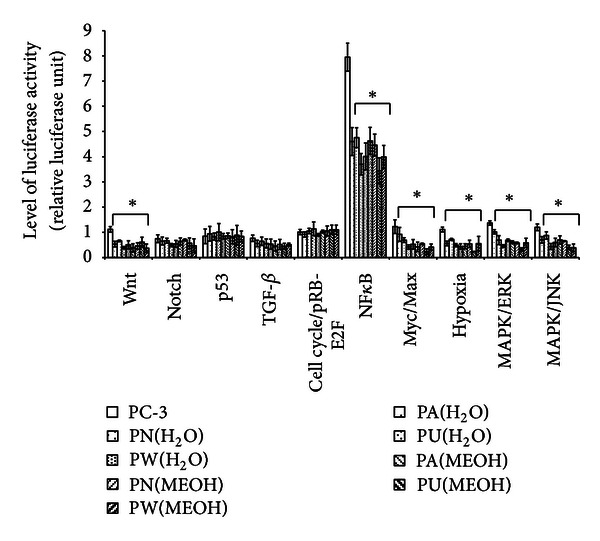
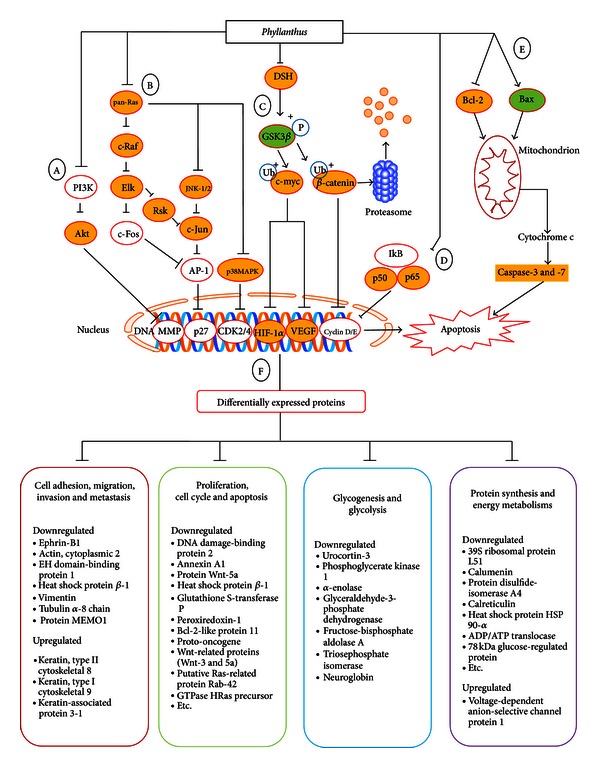
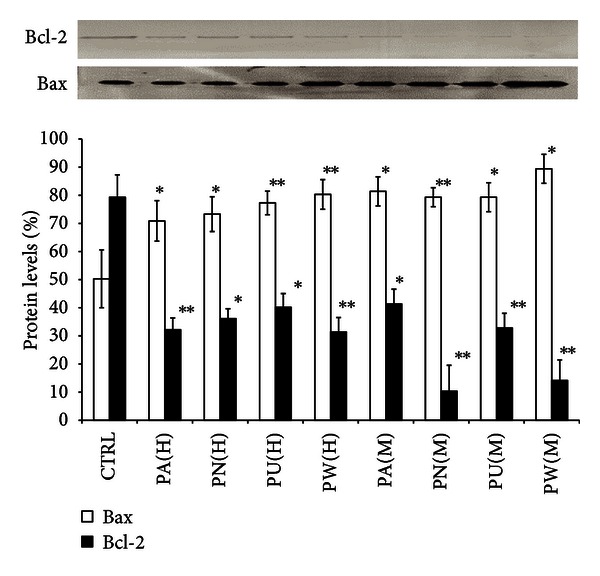
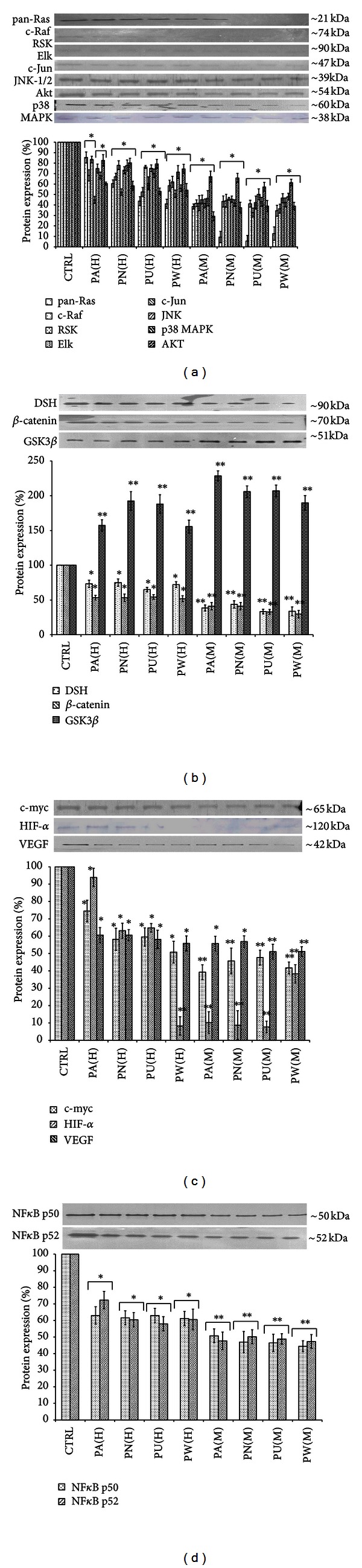
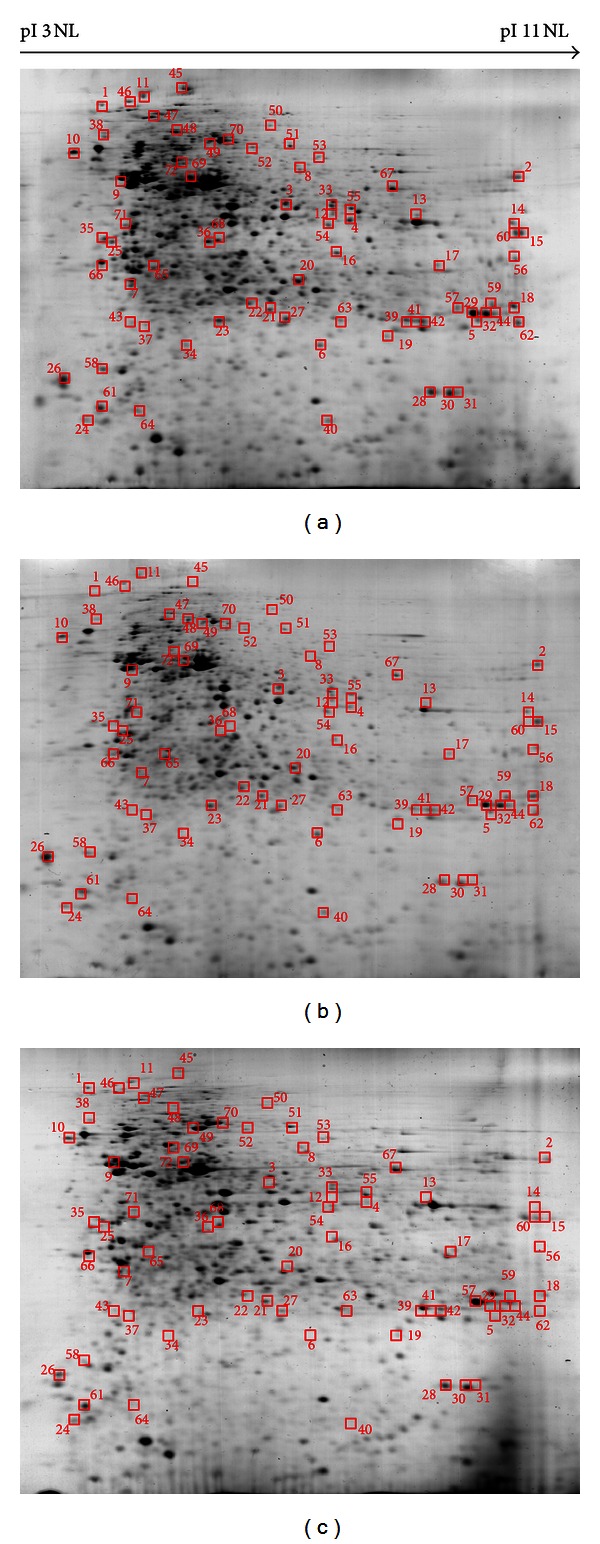
Phyllanthus is a traditional medicinal plant that has been found to have antihepatitis, antibacterial, and anticancer properties. The present studies were to investigate the in vitro molecular mechanisms of anticancer effects of Phyllanthus (P. amarus, P. niruri, P. urinaria, and P. watsonii) plant extracts in human prostate adenocarcinoma. The cancer ten-pathway reporter array was performed and revealed that the expression of six pathway reporters were significantly decreased (Wnt, NFκB, Myc/Max, hypoxia, MAPK/ERK, and MAPK/JNK) in PC-3 cells after treatment with Phyllanthus extracts. Western blot was conducted and identified several signalling molecules that were affected in the signalling pathways including pan-Ras, c-Raf, RSK, Elk1, c-Jun, JNK1/2, p38 MAPK, c-myc, DSH, β-catenin, Akt, HIF-1α, GSK3β, NFκB p50 and p52, Bcl-2, Bax, and VEGF, in treated PC-3 cells. A proteomics-based approach, 2D gel electrophoresis, was performed, and mass spectrometry (MS/MS) results revealed that there were 72 differentially expressed proteins identified in treated PC-3 cells and were involved in tumour cell adhesion, apoptosis, glycogenesis and glycolysis, metastasis, angiogenesis, and protein synthesis and energy metabolism. Overall, these findings suggest that Phyllanthus can interfere with multiple signalling cascades involved in tumorigenesis and be used as a potential therapeutic candidate for treatment of cancer.
叶下珠是一种传统的药用植物,已被发现具有抗肝炎、抗菌和抗癌特性。本研究旨在探讨叶下珠(印度叶下珠、显脉叶下珠、利尿叶下珠和沃森叶下珠)植物提取物在人前列腺腺癌中的体外抗癌作用的分子机制。进行了癌症十通路报告基因阵列实验,结果表明,叶下珠提取物处理后 PC-3 细胞中六种通路报告基因的表达显著降低(Wnt、NFκB、Myc/Max、缺氧、MAPK/ERK 和 MAPK/JNK)。进行 Western blot 实验,鉴定出受信号通路影响的几种信号分子,包括泛 Ras、c-Raf、RSK、Elk1、c-Jun、JNK1/2、p38 MAPK、c-myc、DSH、β-catenin、Akt、HIF-1α、GSK3β、NFκB p50 和 p52、Bcl-2、Bax 和 VEGF。采用基于蛋白质组学的 2D 凝胶电泳技术,通过质谱(MS/MS)结果鉴定出 72 种在处理后的 PC-3 细胞中差异表达的蛋白质,这些蛋白质涉及肿瘤细胞黏附、凋亡、糖生成和糖酵解、转移、血管生成以及蛋白质合成和能量代谢。总的来说,这些发现表明叶下珠可以干扰肿瘤发生过程中的多个信号级联,可作为癌症治疗的潜在治疗候选药物。