One Health Institute, School of Veterinary Medicine, University of California Davis, Davis, California, United States of America.
PLoS One. 2013 May 15;8(5):e62259. doi: 10.1371/journal.pone.0062259. Print 2013.
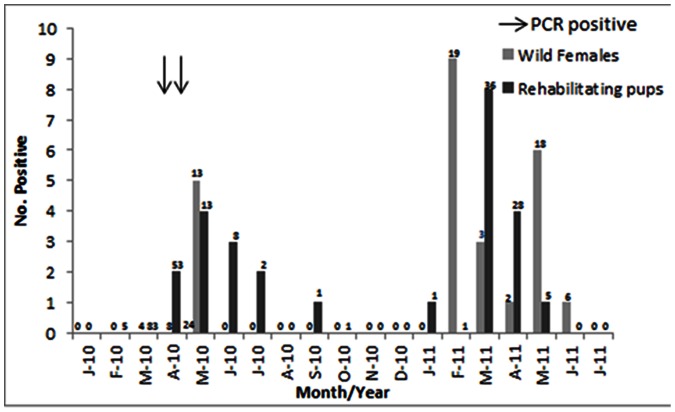
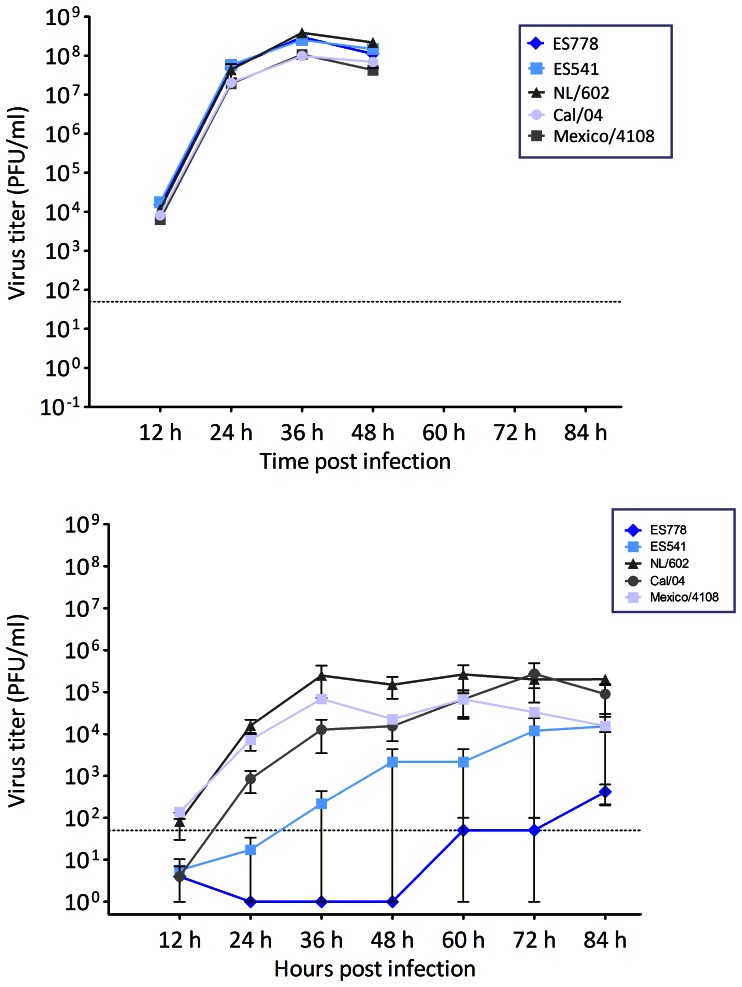
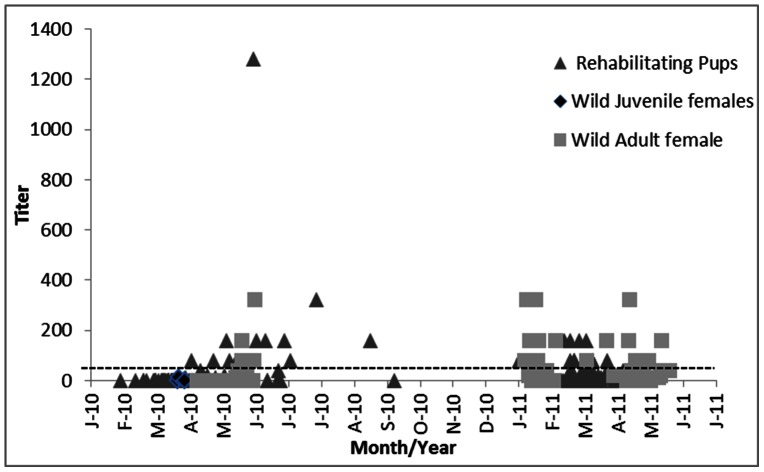
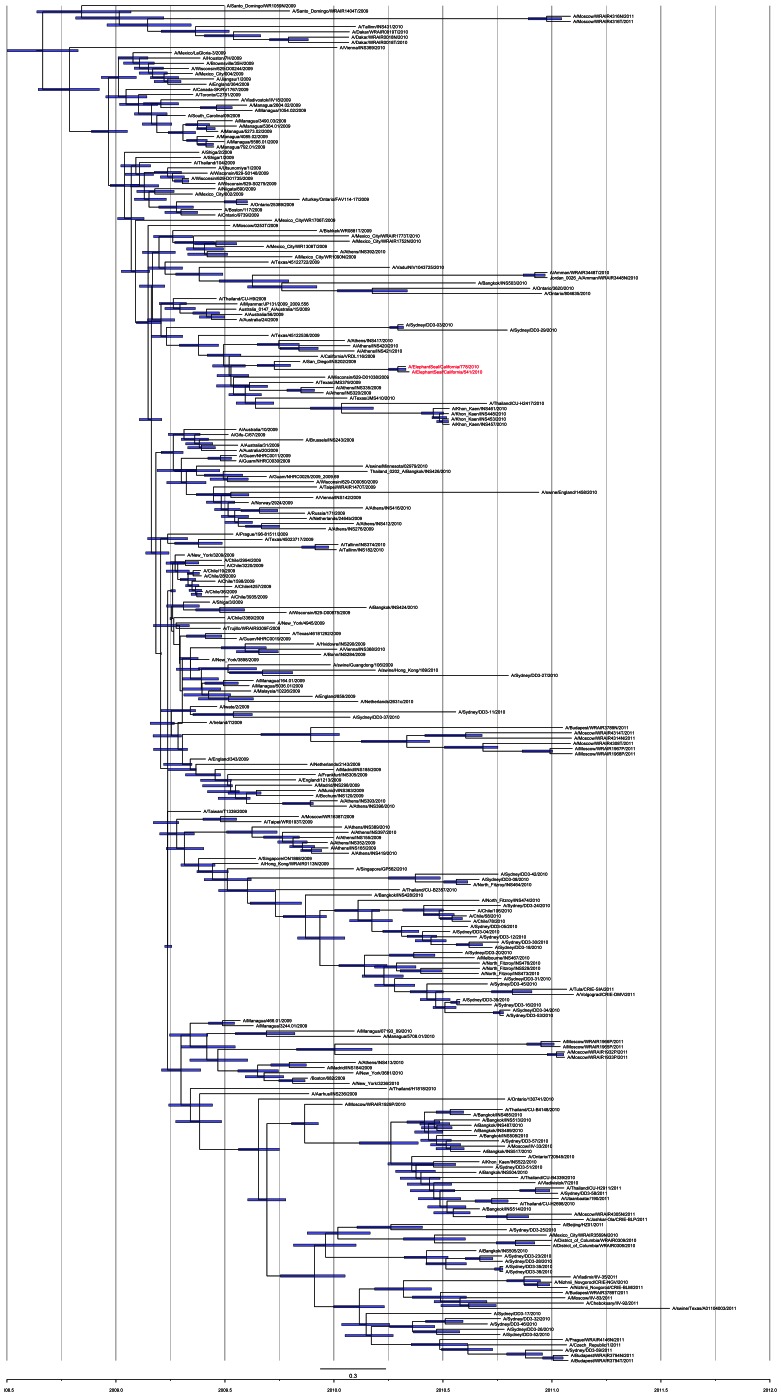
Interspecies transmission of influenza A is an important factor in the evolution and ecology of influenza viruses. Marine mammals are in contact with a number of influenza reservoirs, including aquatic birds and humans, and this may facilitate transmission among avian and mammalian hosts. Virus isolation, whole genome sequencing, and hemagluttination inhibition assay confirmed that exposure to pandemic H1N1 influenza virus occurred among free-ranging Northern Elephant Seals (Mirounga angustirostris) in 2010. Nasal swabs were collected from 42 adult female seals in April 2010, just after the animals had returned to the central California coast from their short post-breeding migration in the northeast Pacific. Swabs from two seals tested positive by RT-PCR for the matrix gene, and virus was isolated from each by inoculation into embryonic chicken eggs. Whole genome sequencing revealed greater than 99% homology with A/California/04/2009 (H1N1) that emerged in humans from swine in 2009. Analysis of more than 300 serum samples showed that samples collected early in 2010 (n = 100) were negative and by April animals began to test positive for antibodies against the pH1N1 virus (HI titer of ≥1∶40), supporting the molecular findings. In vitro characterizations studies revealed that viral replication was indistinguishable from that of reference strains of pH1N1 in canine kidney cells, but replication was inefficient in human epithelial respiratory cells, indicating these isolates may be elephant seal adapted viruses. Thus findings confirmed that exposure to pandemic H1N1 that was circulating in people in 2009 occurred among free-ranging Northern Elephant Seals in 2010 off the central California coast. This is the first report of pH1N1 (A/Elephant seal/California/1/2010) in any marine mammal and provides evidence for cross species transmission of influenza viruses in free-ranging wildlife and movement of influenza viruses between humans and wildlife.
物种间的流感病毒传播是流感病毒进化和生态学的一个重要因素。海洋哺乳动物与多种流感病毒宿主接触,包括水禽和人类,这可能促进了禽和哺乳动物宿主之间的传播。病毒分离、全基因组测序和血凝抑制试验证实,2010 年在自由活动的北象海豹(Mirounga angustirostris)中发生了大流行性 H1N1 流感病毒暴露。2010 年 4 月,在这些动物从东北太平洋短暂的繁殖后迁徙回到加利福尼亚中部海岸后,从 42 只成年雌性海豹中采集了鼻拭子。通过 RT-PCR 对基质基因检测,有 2 只海豹的拭子检测出病毒呈阳性,通过接种鸡胚从每只海豹中分离出病毒。全基因组测序显示,与 2009 年在人类中从猪中出现的 A/加利福尼亚/04/2009(H1N1)病毒的同源性大于 99%。对 300 多份血清样本的分析表明,2010 年初采集的样本(n=100)为阴性,到 4 月,动物开始对 pH1N1 病毒产生抗体(HI 滴度≥1∶40),支持分子发现。体外特性研究表明,病毒复制与犬肾细胞中 pH1N1 参考株的复制无法区分,但在人上皮呼吸道细胞中的复制效率较低,表明这些分离株可能是象海豹适应的病毒。因此,研究结果证实,2009 年在人类中流行的大流行性 H1N1 于 2010 年在加利福尼亚中部海岸的自由活动北象海豹中暴露。这是 pH1N1(A/象海豹/加利福尼亚/1/2010)在任何海洋哺乳动物中的首次报告,并为流感病毒在自由活动野生动物中的跨物种传播以及流感病毒在人类和野生动物之间的传播提供了证据。