Key Laboratory of Molecular Imaging and Functional Imaging, Institute of Automation, Chinese Academy of Sciences, Beijing, China.
PLoS One. 2013 May 17;8(5):e64509. doi: 10.1371/journal.pone.0064509. Print 2013.
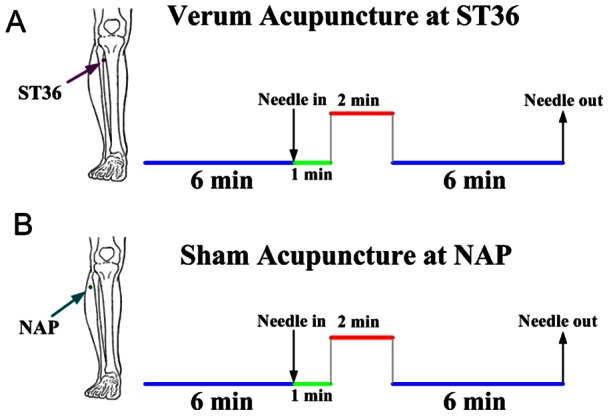
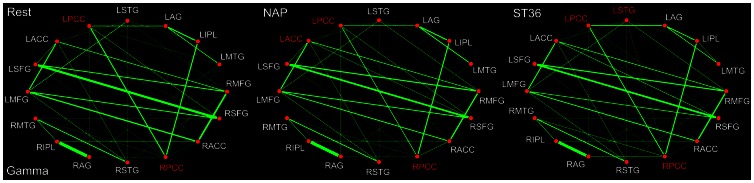
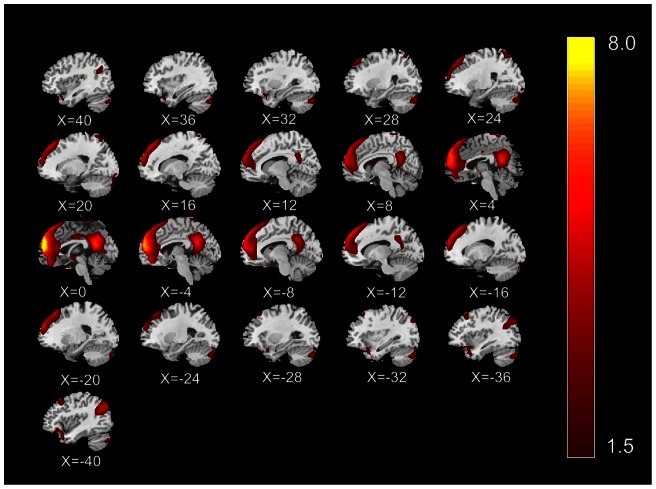
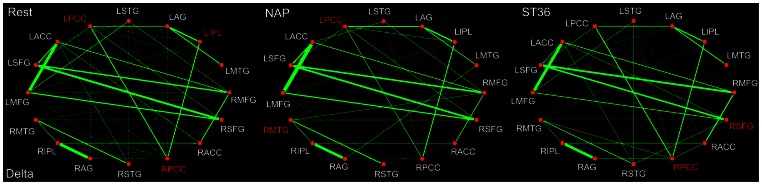
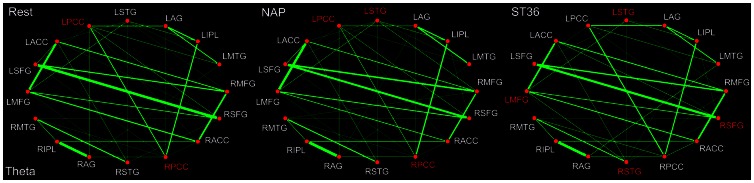
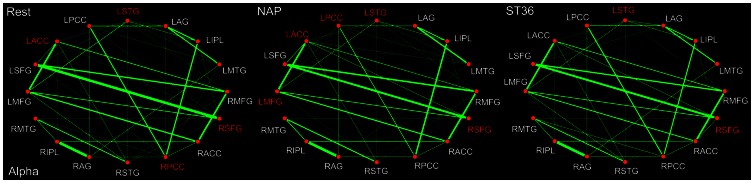
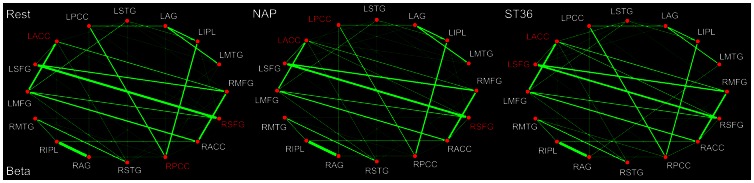
Acupuncture, an externally somatosensory stimulation in the Traditional Chinese Medicine, has been proposed about its modulations on the brain's default mode network (DMN). However, it is still unknown on how the internal brain resting networks are modulated and what inferences can be made about the physiological processes underlying these changes. Combining high spatial resolution of functional magnetic resonance imaging (fMRI) with high temporal resolution of magnetoencephalography (MEG), in the current multimodal study, we sought to explore spatiotemporally whether or not band-specific DMN hub configurations would be induced by verum acupuncture, compared with sham control. Spatial independent component analysis was applied to fMRI data, followed by the discrete regional sources seeded into MEG data. Partial correlation analysis was further adopted to estimate the intrinsic functional connectivity and network hub configurations. One of the most striking findings is that the posterior cingulate cortex is not only validated as a robust DMN hub, but served as a hub only within the delta and gamma bands following the verum acupuncture, compared with its consistently being a DMN hub in sham control group. Our preliminary results may provide a new perspective to lend support for the specificity of neural mechanism underlying acupuncture.
针刺作为一种中医的外部躯体感觉刺激,其对大脑默认模式网络(DMN)的调节作用已被提出。然而,目前尚不清楚内部大脑静息网络是如何被调节的,以及这些变化背后的生理过程可以得出什么推论。在当前的多模态研究中,我们结合功能磁共振成像(fMRI)的高空间分辨率和脑磁图(MEG)的高时间分辨率,旨在探索针刺是否会引起特定频段的 DMN 中枢结构的变化,并与假刺激对照组进行比较。我们对 fMRI 数据进行空间独立成分分析,然后将离散的区域源种子放入 MEG 数据中。进一步采用偏相关分析来估计内在功能连接和网络中枢结构。最引人注目的发现之一是,后扣带回不仅被验证为一个强大的 DMN 中枢,而且在针刺后仅在 delta 和 gamma 频段作为中枢,而在假刺激对照组中则一直是 DMN 中枢。我们的初步结果可能为针刺的神经机制特异性提供了一个新的视角。