Radiation Protection Bureau, Health Canada, 2720 Riverside Drive, Ottawa, ON K1A 0K9, Canada.
Int J Environ Res Public Health. 2013 May 8;10(5):1916-26. doi: 10.3390/ijerph10051916.
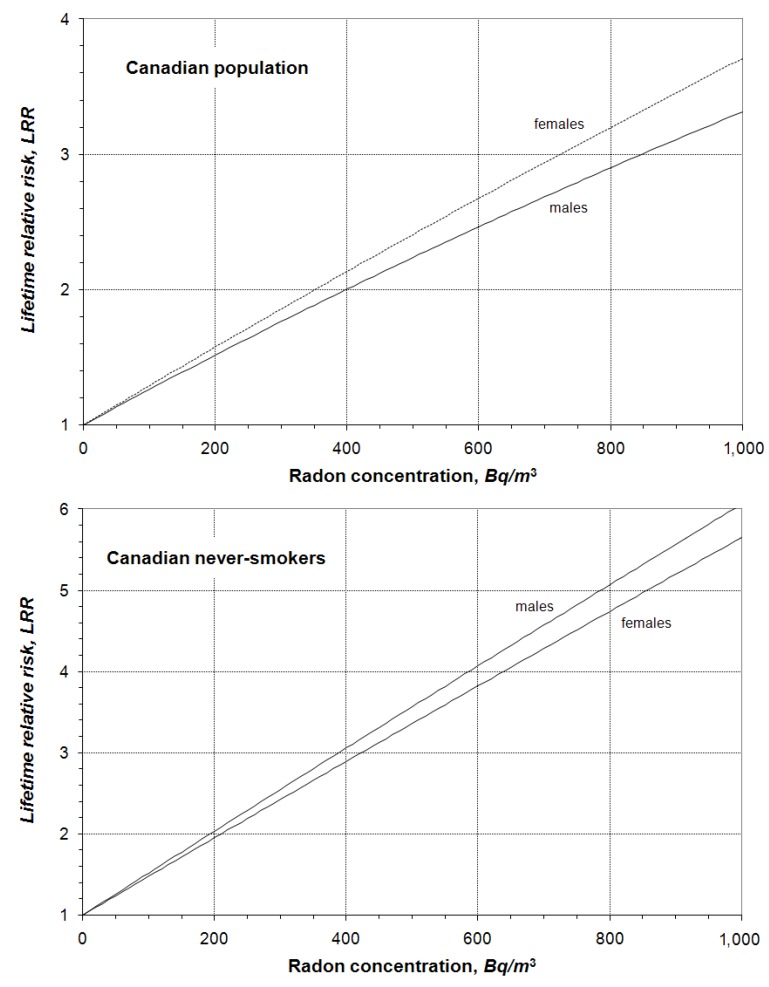
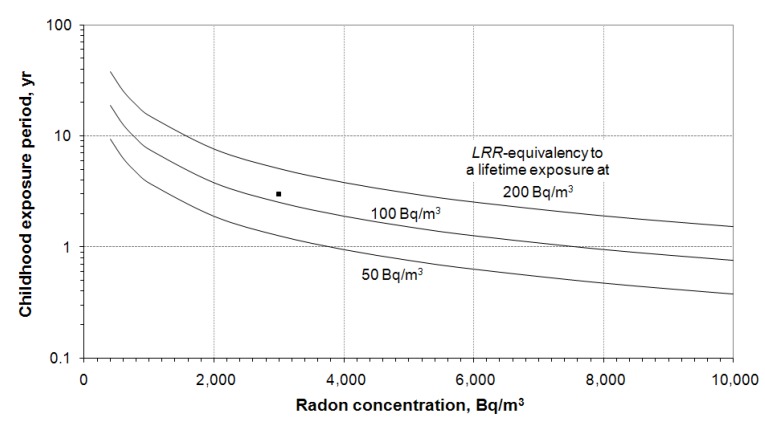
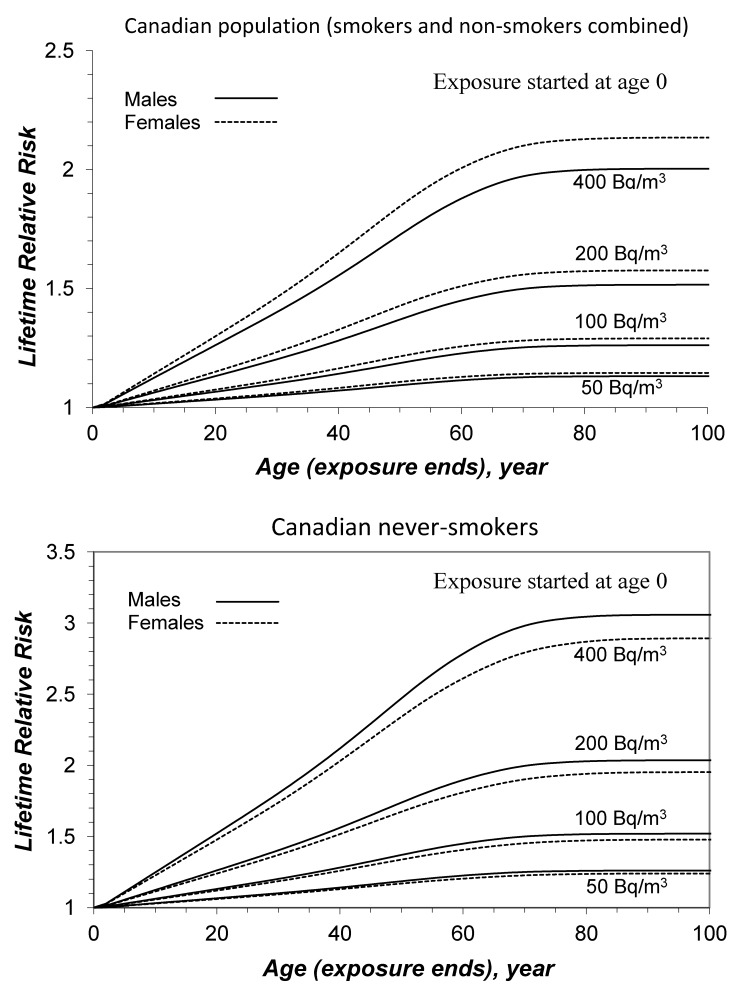
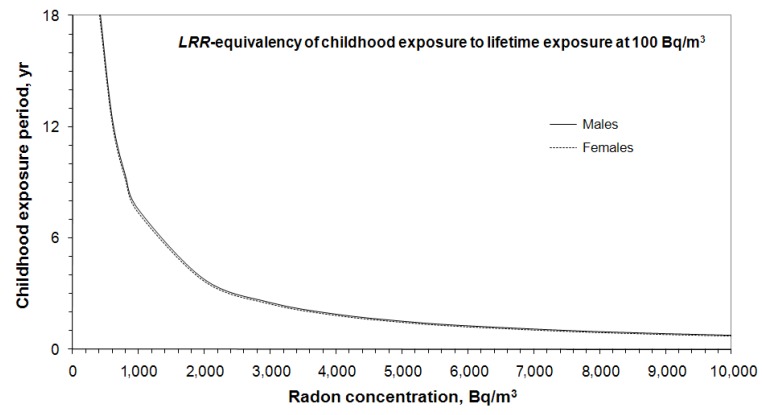
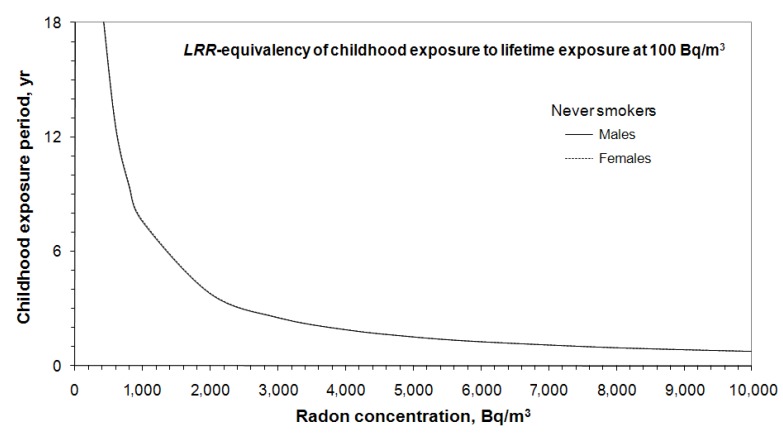
Long-term exposure to elevated indoor radon concentrations has been determined to be the second leading cause of lung cancer in adults after tobacco smoking. With the establishment of a National Radon Program in Canada in 2007 thousands of homes across the country have been tested for radon. Although the vast majority of people are exposed to low or moderate radon concentrations; from time to time; there are homes found with very high concentrations of radon. Among those living in homes with very high radon concentrations, it is typically parents of young children that demonstrate a great deal of concern. They want to know the equivalent risk in terms of the lifetime relative risk of developing lung cancer when a child has lived in a home with high radon for a few years. An answer to this question of risk equivalency is proposed in this paper. The results demonstrate clearly that the higher the radon concentration; the sooner remedial measures should be undertaken; as recommended by Health Canada in the Canadian radon guideline.
长期暴露于室内氡浓度升高会导致肺癌,这是继吸烟之后导致成年人患肺癌的第二大主要原因。加拿大于 2007 年建立国家氡计划后,全国数千户家庭都进行了氡测试。尽管绝大多数人接触的氡浓度较低或处于中等水平,但偶尔也会发现氡浓度非常高的房屋。在那些居住在氡浓度非常高的房屋中的人中,通常是幼儿的父母非常担心。他们想知道当孩子在高氡房屋中居住几年时,患肺癌的终生相对风险的等效风险。本文提出了对这种风险等效性的回答。结果清楚地表明,氡浓度越高,应越快采取补救措施,这是加拿大健康署在加拿大氡准则中建议的。