Agricultural Ministry Key Lab of Plant Nutrition and Fertilization in Low-Middle Reaches of the Yangtze River, Jiangsu Key Lab and Engineering Center for Solid Organic Waste Utilization, Nanjing Agricultural University, Nanjing, Jiangsu, China.
PLoS One. 2013 May 20;8(5):e63383. doi: 10.1371/journal.pone.0063383. Print 2013.
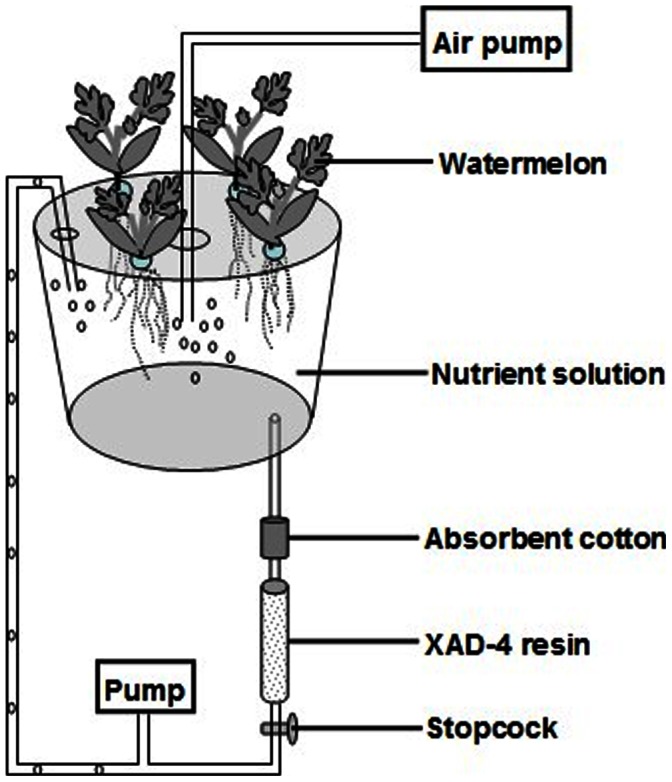
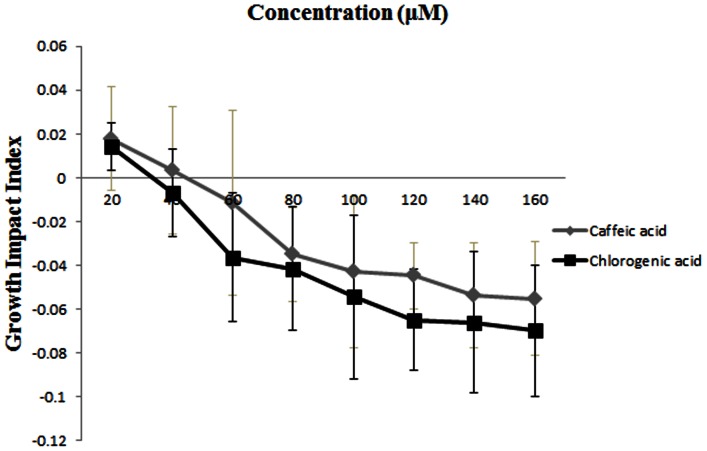
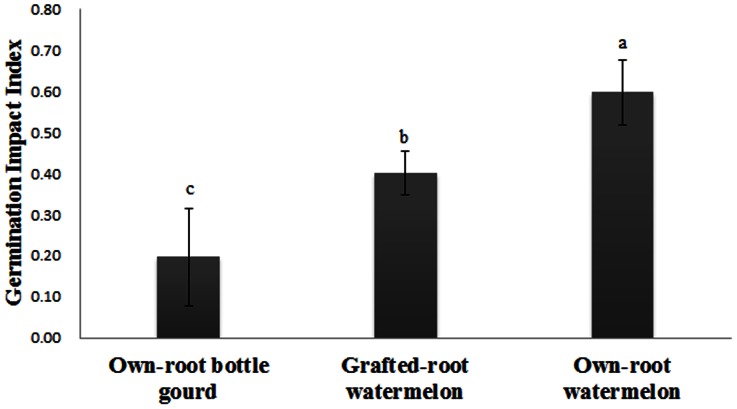
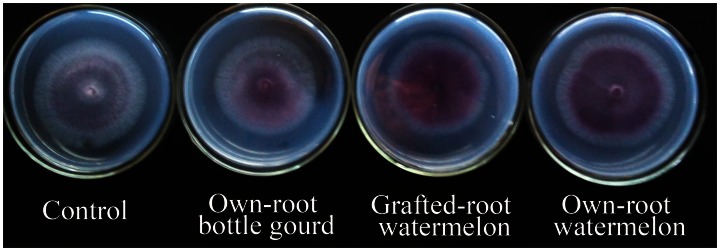
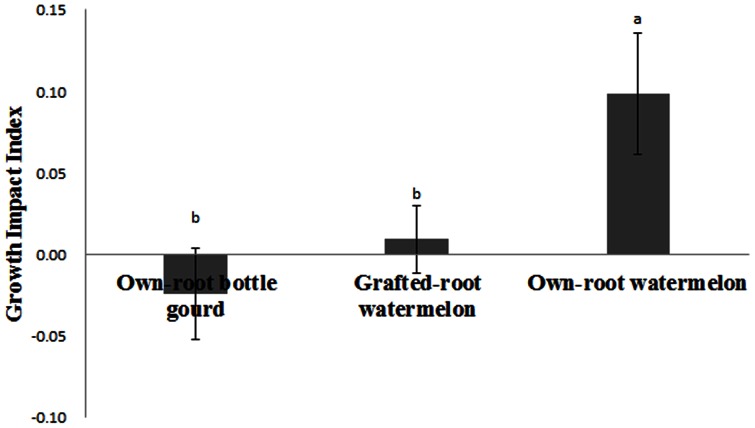
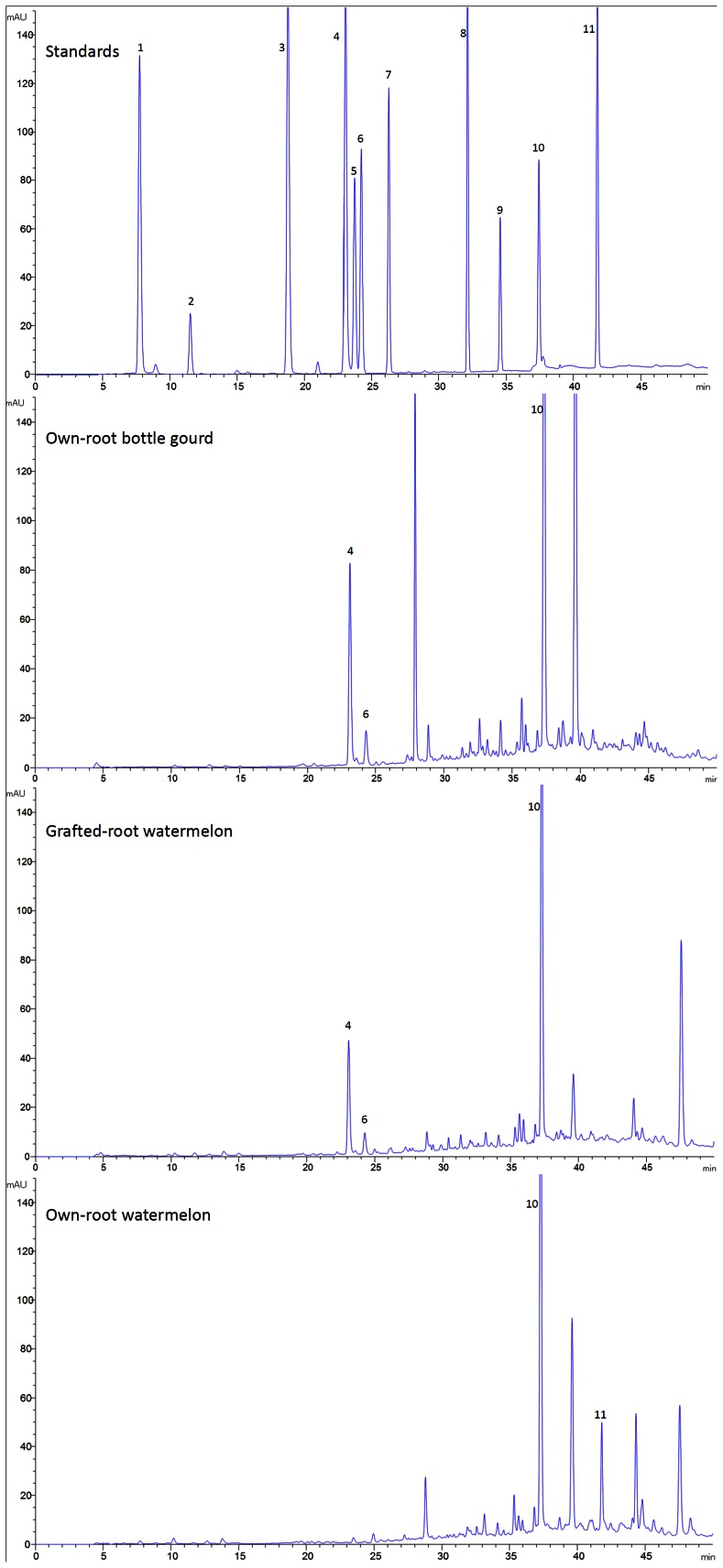
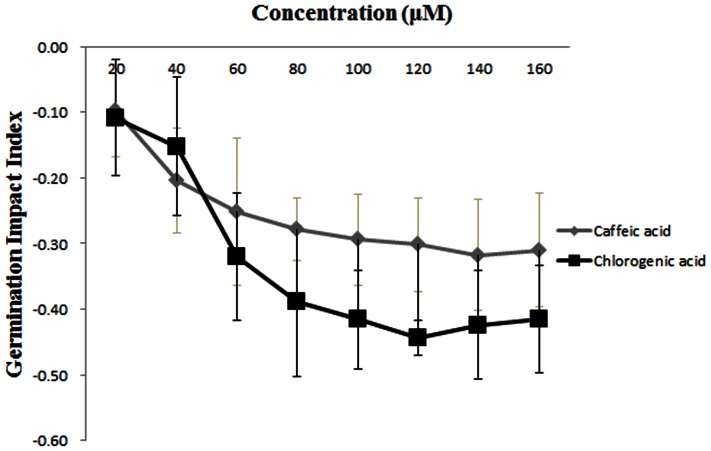
Grafting watermelon onto bottle gourd rootstock is commonly used method to generate resistance to Fusarium oxysporum f. sp. niveum (FON), but knowledge of the effect of the root exudates of grafted watermelon on this soil-borne pathogen in rhizosphere remains limited. To investigate the root exudate profiles of the own-root bottle gourd, grafted-root watermelon and own-root watermelon, recirculating hydroponic culture system was developed to continuously trap these root exudates. Both conidial germination and growth of FON were significantly decreased in the presence of root exudates from the grafted-root watermelon compared with the own-root watermelon. HPLC analysis revealed that the composition of the root exudates released by the grafted-root watermelon differed not only from the own-root watermelon but also from the bottle gourd rootstock plants. We identified salicylic acid in all 3 root exudates, chlorogenic acid and caffeic acid in root exudates from own-root bottle gourd and grafted-root watermelon but not own-root watermelon, and abundant cinnamic acid only in own-root watermelon root exudates. The chlorogenic and caffeic acid were candidates for potentiating the enhanced resistance of the grafted watermelon to FON, therefore we tested the effects of the two compounds on the conidial germination and growth of FON. Both phenolic acids inhibited FON conidial germination and growth in a dose-dependent manner, and FON was much more susceptible to chlorogenic acid than to caffeic acid. In conclusion, the key factor in attaining the resistance to Fusarium wilt is grafting on the non-host root stock, however, the root exudates profile also showed some contribution in inhibiting FON. These results will help to better clarify the disease resistance mechanisms of grafted-root watermelon based on plant-microbe communication and will guide the improvement of strategies against Fusarium-mediated wilt of watermelon plants.
将西瓜嫁接到葫芦砧木上是一种常用的方法,可以产生对尖孢镰刀菌(FON)的抗性,但对于嫁接西瓜根系分泌物对根际土壤中这种土传病原菌的影响知之甚少。为了研究嫁接西瓜、自根葫芦和自根西瓜的根系分泌物特征,开发了循环水培培养系统来连续捕获这些根系分泌物。与自根西瓜相比,嫁接西瓜根系分泌物的存在显著降低了 FON 的孢子萌发和生长。HPLC 分析表明,嫁接西瓜根系分泌物的组成不仅与自根西瓜不同,而且与葫芦砧木植物也不同。我们在 3 种根系分泌物中均鉴定出水杨酸,在自根葫芦和嫁接西瓜的根系分泌物中鉴定出绿原酸和咖啡酸,但在自根西瓜的根系分泌物中没有,而丰富的肉桂酸仅存在于自根西瓜的根系分泌物中。绿原酸和咖啡酸可能是增强嫁接西瓜对 FON 抗性的原因,因此我们测试了这两种化合物对 FON 孢子萌发和生长的影响。两种酚酸均以剂量依赖的方式抑制 FON 孢子的萌发和生长,而且 FON 对绿原酸的敏感性明显高于咖啡酸。总之,获得枯萎病抗性的关键因素是在非寄主砧木上嫁接,然而,根系分泌物特征也显示出一些抑制 FON 的作用。这些结果将有助于更好地阐明基于植物-微生物通讯的嫁接西瓜的抗病机制,并指导针对西瓜植株由尖孢镰刀菌引起的枯萎病的防治策略的改进。