Chen You-Fang, Ma Gang, Cao Xun, Luo Rong-Zhen, He Li-Ru, He Jie-Hua, Huang Zhi-Liang, Zeng Mu-Sheng, Wen Zhe-Sheng
State Key Laboratory of Oncology in South China, Cancer Center, Sun Yet-Sen University, Guangzhou, China.
BMC Surg. 2013 May 28;13:15. doi: 10.1186/1471-2482-13-15.
Cystatin SN is a secreted protein and a cysteine proteinase inhibitor. It has been considered to be a tumor marker for gastrointestinal tract cancer in several functional researches. However, the clinicopathological and prognostic significance of Cystatin SN expression in esophageal squamous cell carcinoma (ESCC) has not been elucidated.
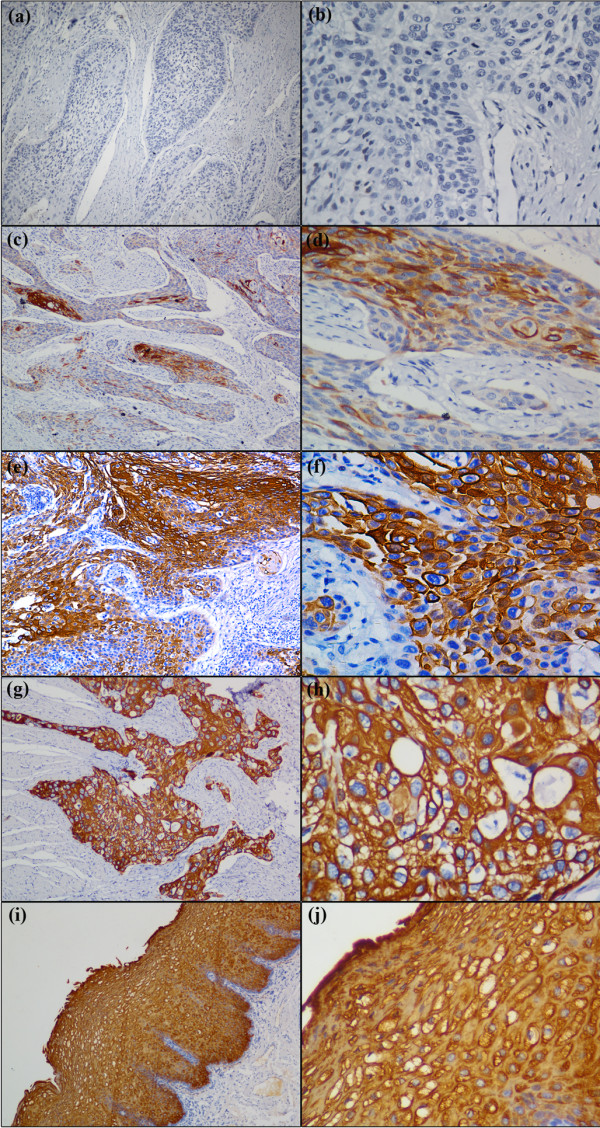
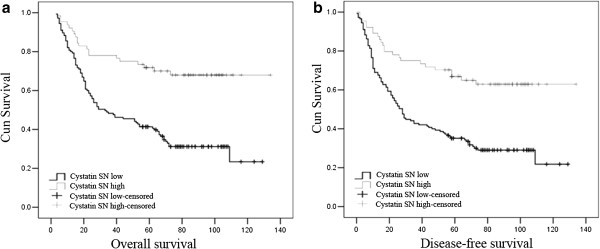
In our study, the expression of Cystatin SN was detected in 209 surgically resected ESCC tissues and 170 peritumoral normal esophageal mucosae by immunohistochemistry. The prognostic significance of Cystatin SN expression was analysed with Kaplan-Meier plots and the Cox proportional hazards regression models.
The results showed that the immunostaining of Cystatin SN in ESCC tissues was less intense than that in the normal control tissue (P < 0.001). Compared with patients with low tumoral Cystatin SN expression, ESCC patients with tumors high-expression Cystatin SN exhibited increased disease-free survival (DFS) and overall survival (OS) (P < 0.001 and P < 0.001, respectively). Furthermore, the expression level of Cystatin SN could further stratify the ESCC patients by survival (DFS and OS) in the stage II subgroup (P < 0.001 and P < 0.001, respectively). Multivariate analyses showed that Cystatin SN expression, N status and differentiation were independent and significant predictors of survival.
We concluded that ESCC patients whose tumors express high levels of Cystatin SN have favourable survival compared with those patients with low Cystatin SN expression. Tumoral Cystatin SN expression may be an independent predictor of survival for patients with resectable ESCCs.
胱抑素SN是一种分泌蛋白,也是一种半胱氨酸蛋白酶抑制剂。在多项功能研究中,它被认为是胃肠道癌的肿瘤标志物。然而,胱抑素SN在食管鳞状细胞癌(ESCC)中的临床病理及预后意义尚未阐明。
在我们的研究中,采用免疫组织化学法检测了209例手术切除的ESCC组织及170例癌旁正常食管黏膜中胱抑素SN的表达。采用Kaplan-Meier曲线和Cox比例风险回归模型分析胱抑素SN表达的预后意义。
结果显示,ESCC组织中胱抑素SN的免疫染色强度低于正常对照组织(P<0.001)。与肿瘤胱抑素SN低表达的患者相比,肿瘤胱抑素SN高表达的ESCC患者无病生存期(DFS)和总生存期(OS)均增加(分别为P<0.001和P<0.001)。此外,在II期亚组中,胱抑素SN的表达水平可根据生存情况(DFS和OS)进一步对ESCC患者进行分层(分别为P<0.001和P<0.001)。多因素分析显示,胱抑素SN表达、N分期和分化是生存的独立且显著的预测因素。
我们得出结论,与胱抑素SN低表达的患者相比,肿瘤表达高水平胱抑素SN的ESCC患者生存情况良好。肿瘤胱抑素SN表达可能是可切除ESCC患者生存的独立预测因素。