Eskildsen Tilde V, Jeppesen Pia L, Schneider Mikael, Nossent Anne Y, Sandberg Maria B, Hansen Pernille B L, Jensen Charlotte H, Hansen Maria L, Marcussen Niels, Rasmussen Lars M, Bie Peter, Andersen Ditte C, Sheikh Søren P
Department of Cardiovascular and Renal Research, Institute of Molecular Medicine, University of Southern Denmark, DK-5000 Odense, Denmark.
Int J Mol Sci. 2013 May 27;14(6):11190-207. doi: 10.3390/ijms140611190.
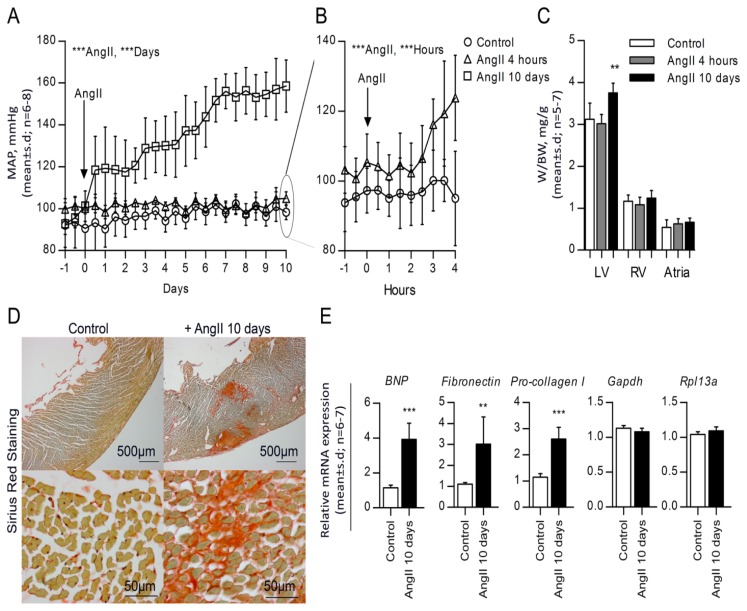
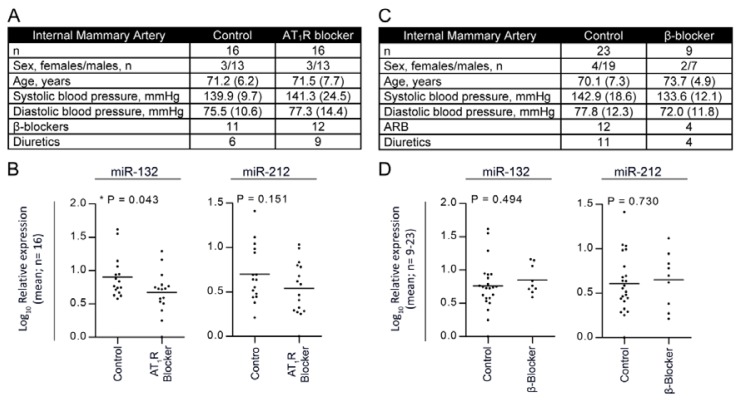
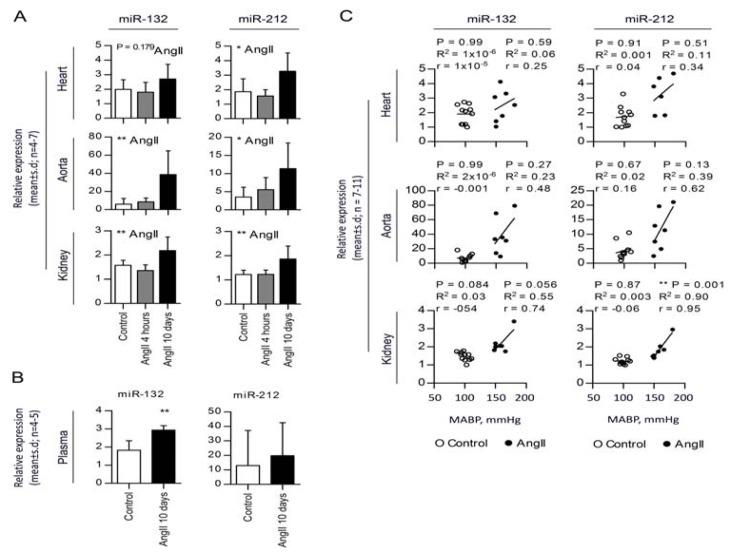
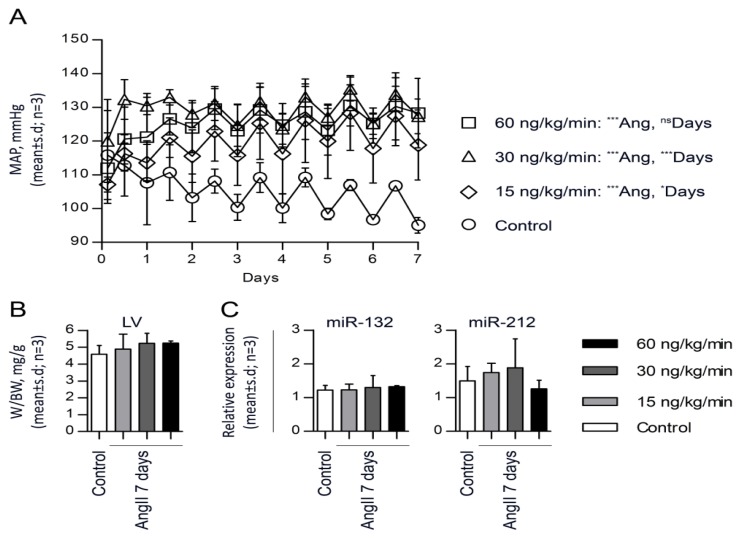
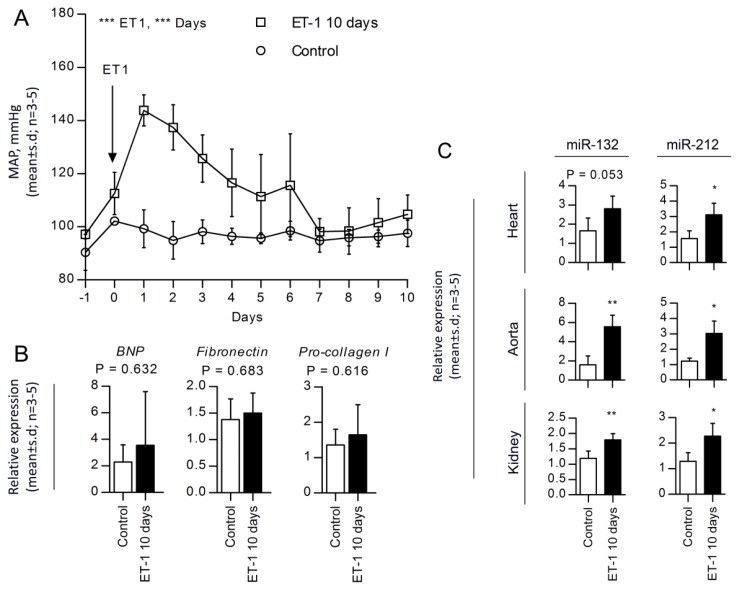
MicroRNAs (miRNAs), a group of small non-coding RNAs that fine tune translation of multiple target mRNAs, are emerging as key regulators in cardiovascular development and disease. MiRNAs are involved in cardiac hypertrophy, heart failure and remodeling following cardiac infarction; however, miRNAs involved in hypertension have not been thoroughly investigated. We have recently reported that specific miRNAs play an integral role in Angiotensin II receptor (AT1R) signaling, especially after activation of the Gαq signaling pathway. Since AT1R blockers are widely used to treat hypertension, we undertook a detailed analysis of potential miRNAs involved in Angiotensin II (AngII) mediated hypertension in rats and hypertensive patients, using miRNA microarray and qPCR analysis. The miR-132 and miR-212 are highly increased in the heart, aortic wall and kidney of rats with hypertension (159 ± 12 mm Hg) and cardiac hypertrophy following chronic AngII infusion. In addition, activation of the endothelin receptor, another Gαq coupled receptor, also increased miR-132 and miR-212. We sought to extend these observations using human samples by reasoning that AT1R blockers may decrease miR-132 and miR-212. We analyzed tissue samples of mammary artery obtained from surplus arterial tissue after coronary bypass operations. Indeed, we found a decrease in expression levels of miR-132 and miR-212 in human arteries from bypass-operated patients treated with AT1R blockers, whereas treatment with β-blockers had no effect. Taken together, these data suggest that miR-132 and miR-212 are involved in AngII induced hypertension, providing a new perspective in hypertensive disease mechanisms.
微小RNA(miRNA)是一类可微调多个靶标mRNA翻译的小型非编码RNA,正逐渐成为心血管发育和疾病的关键调节因子。miRNA参与心肌肥大、心力衰竭以及心肌梗死后的重塑过程;然而,参与高血压的miRNA尚未得到充分研究。我们最近报道,特定的miRNA在血管紧张素II受体(AT1R)信号传导中起不可或缺的作用,尤其是在Gαq信号通路激活后。由于AT1R阻滞剂被广泛用于治疗高血压,我们使用miRNA微阵列和qPCR分析,对大鼠和高血压患者中参与血管紧张素II(AngII)介导的高血压的潜在miRNA进行了详细分析。在慢性输注AngII后出现高血压(159±12毫米汞柱)和心肌肥大的大鼠的心脏、主动脉壁和肾脏中,miR-132和miR-212显著增加。此外,内皮素受体(另一种与Gαq偶联的受体)的激活也增加了miR-132和miR-212。我们推断AT1R阻滞剂可能会降低miR-132和miR-212,因此试图用人样本扩展这些观察结果。我们分析了冠状动脉搭桥手术后从多余动脉组织中获取的乳腺动脉组织样本。事实上,我们发现接受AT1R阻滞剂治疗的搭桥手术患者的人体动脉中,miR-132和miR-212的表达水平降低,而用β受体阻滞剂治疗则没有效果。综上所述,这些数据表明miR-132和miR-212参与了AngII诱导的高血压,为高血压疾病机制提供了新的视角。