Department of Zoology, University of Oxford, Oxford, United Kingdom.
PLoS One. 2013 May 24;8(5):e63130. doi: 10.1371/journal.pone.0063130. Print 2013.
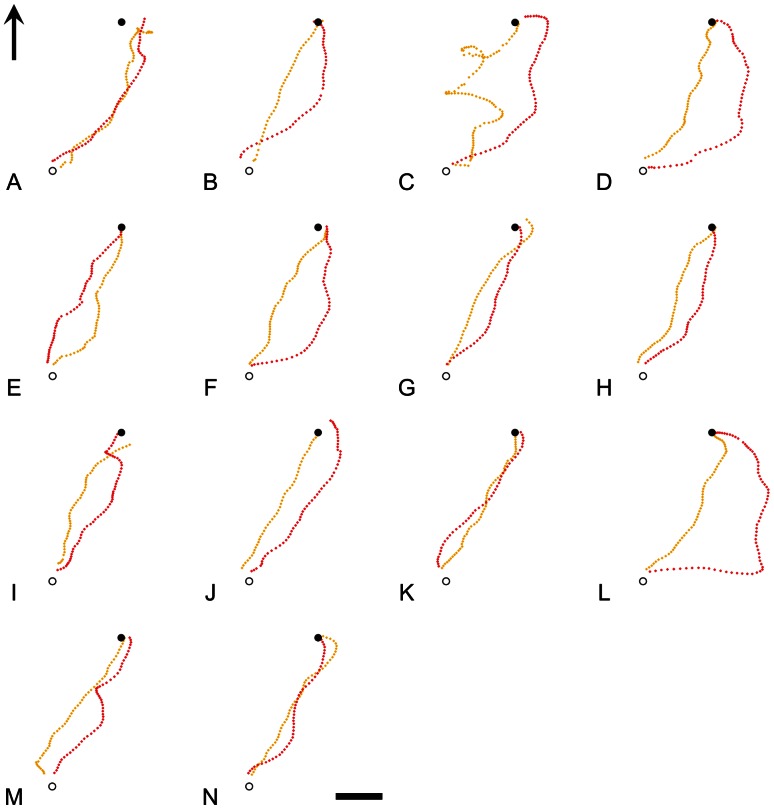
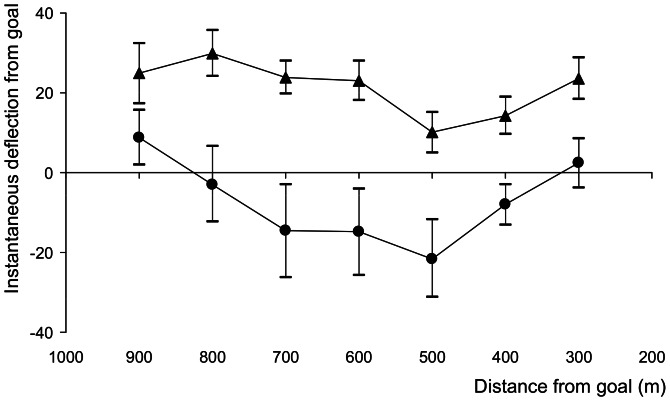
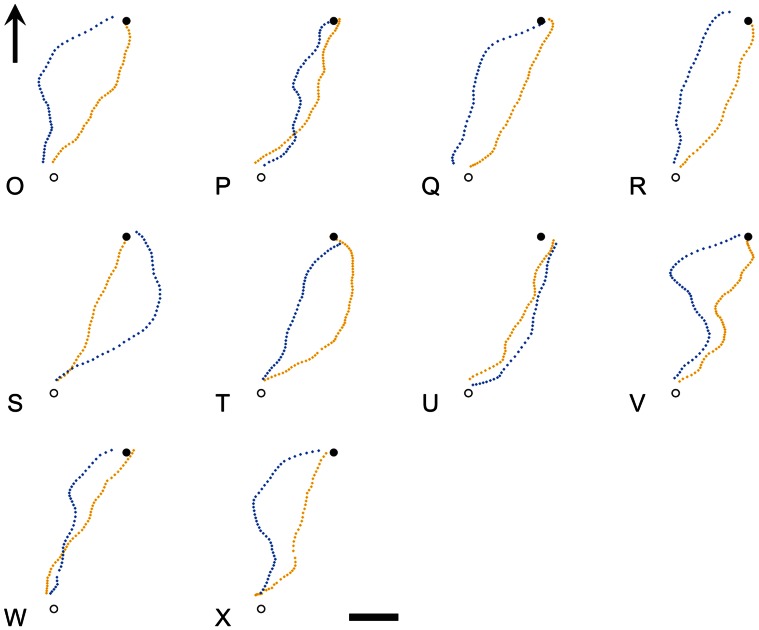
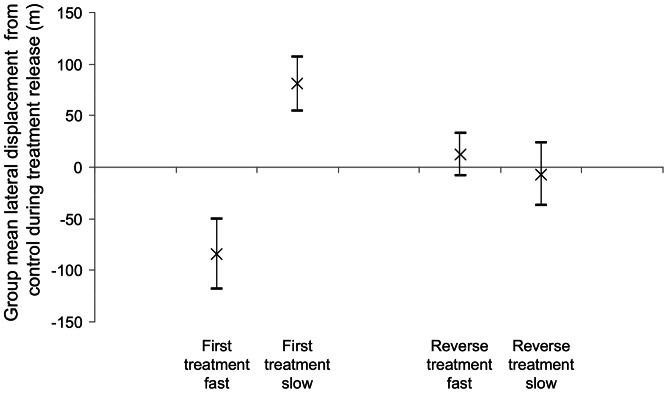
The sun has long been thought to guide bird navigation as the second step in a two-stage process, in which determining position using a map is followed by course setting using a compass, both over unfamiliar and familiar terrain. The animal's endogenous clock time-compensates the solar compass for the sun's apparent movement throughout the day, and this allows predictable deflections in orientation to test for the compass' influence using clock-shift manipulations. To examine the influence of the solar compass during a highly familiar navigational task, 24 clock-shifted homing pigeons were precision-tracked from a release site close to and in sight of their final goal, the colony loft. The resulting trajectories displayed significant partial deflection from the loft direction as predicted by either fast or slow clock-shift treatments. The partial deflection was also found to be stable along the entire trajectory indicating regular updating of orientation via input from the solar compass throughout the final approach flight to the loft. Our results demonstrate that time-compensated solar cues are deeply embedded in the way birds orient during homing flight, are accessed throughout the journey and on a remarkably fine-grained scale, and may be combined effectively simultaneously with direct guidance from familiar landmarks, even when birds are flying towards a directly visible goal.
长期以来,人们一直认为太阳是鸟类导航的第二个引导因素,在这个过程中,鸟类首先利用地图确定位置,然后利用罗盘确定方向,无论是在陌生还是熟悉的地形中。动物的内源性生物钟可以补偿太阳罗盘在一天中太阳的视运动,这使得可以通过时钟移动操作来预测罗盘的影响,从而对定向进行可预测的偏移测试。为了在高度熟悉的导航任务中检验太阳罗盘的影响,对 24 只进行了时钟移动的归巢鸽进行了精密跟踪,它们从靠近且能看到最终目的地鸽舍的释放点出发。结果显示,与快速或慢速时钟移动处理的预测相比,轨迹显示出明显的部分偏离鸽舍方向。这种部分偏差沿着整个轨迹保持稳定,表明通过来自太阳罗盘的输入,在整个最后接近鸽舍的飞行过程中,方向的更新是有规律的。我们的研究结果表明,经过时间补偿的太阳线索深深地嵌入到鸟类在归巢飞行中定向的方式中,在整个旅程中以及非常精细的尺度上都可以被访问,并且即使鸟类飞向一个直接可见的目标,也可以与来自熟悉地标物的直接引导有效地结合起来。