Thoracic Surgery, Key Laboratory of Carcinogenesis and Translational Research Ministry of Education, Peking University School of Oncology, Beijing Cancer Hospital & Institute, Beijing, China.
PLoS One. 2013 May 22;8(5):e63581. doi: 10.1371/journal.pone.0063581. Print 2013.
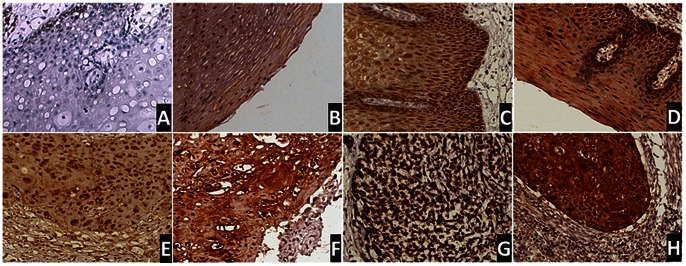
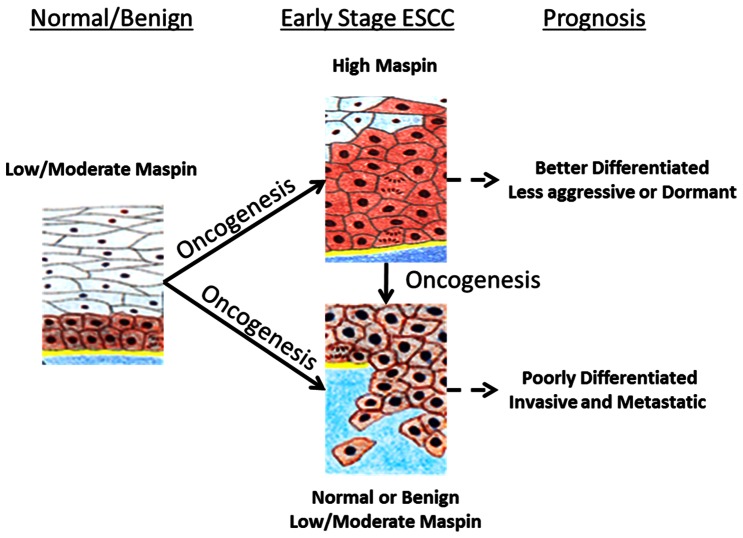
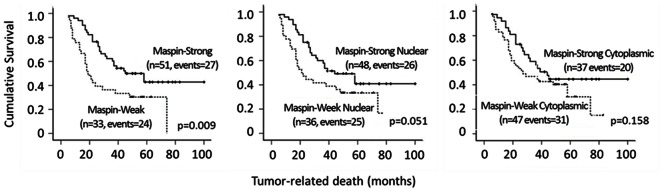
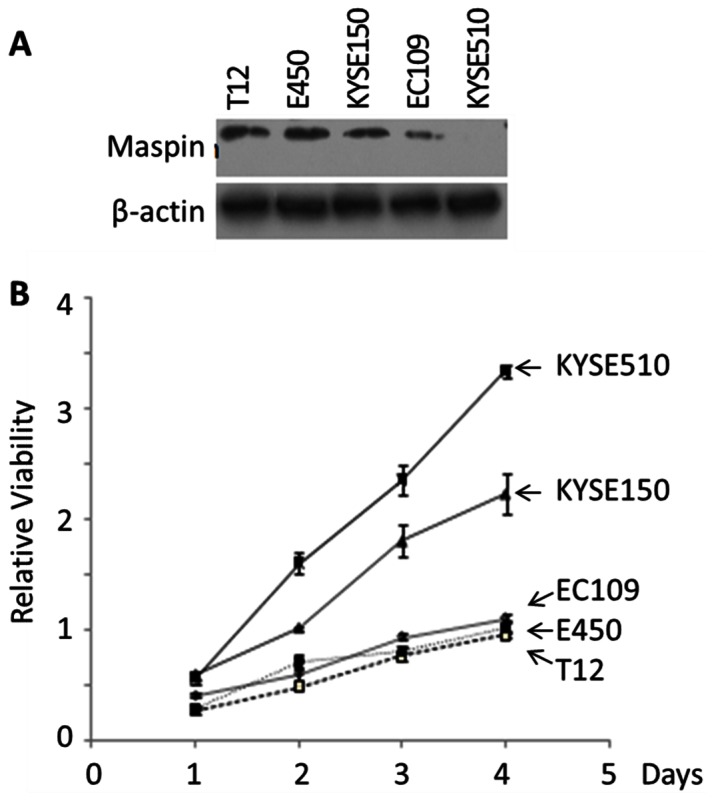
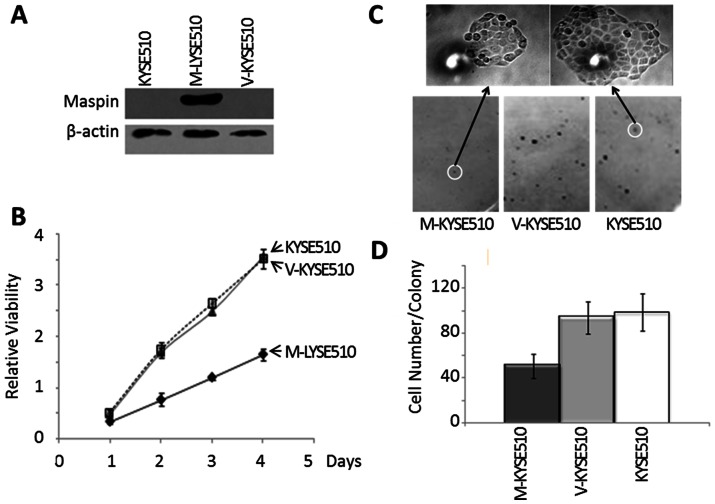
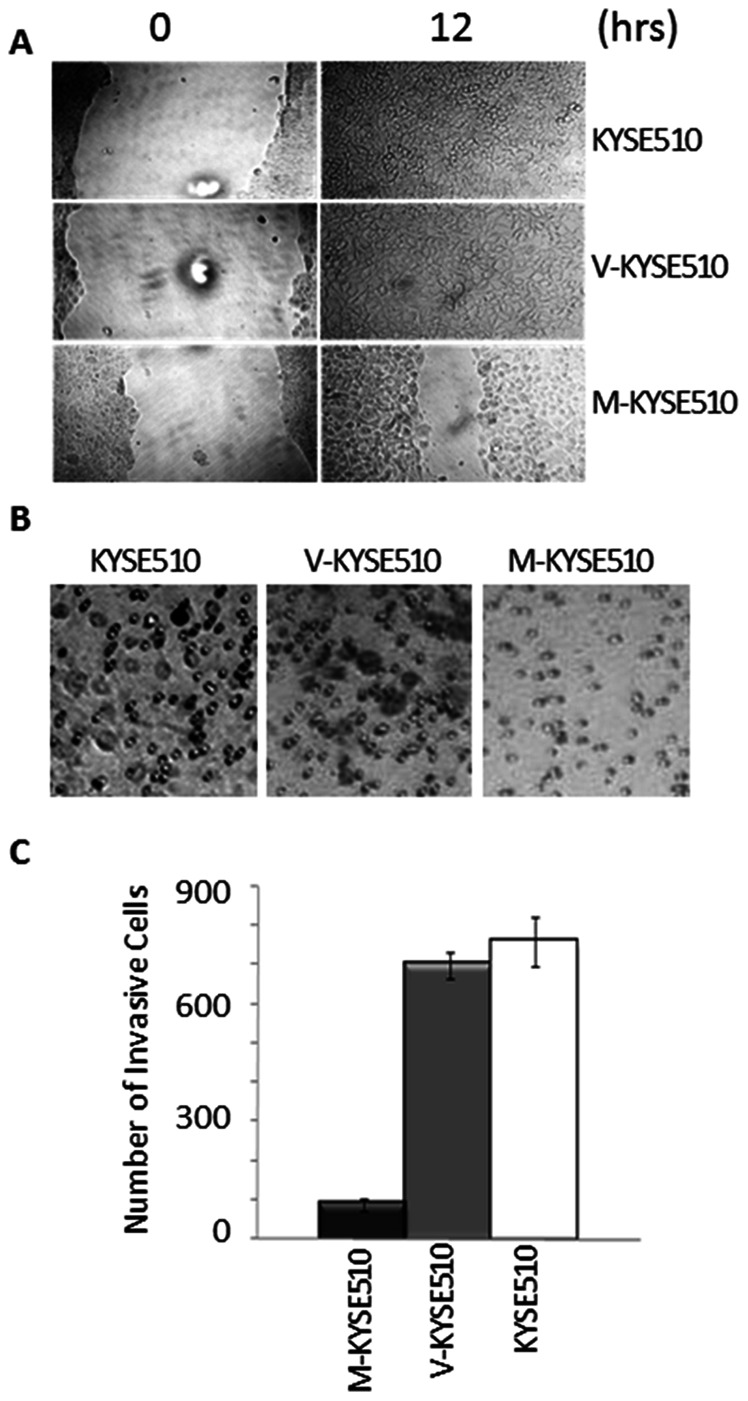
Tumor suppressor maspin is a differentially regulated gene in the progression of many types of cancer. While the biological function of maspin in blocking tumor invasion and metastasis is consistent with the loss of maspin expression at the late stage of tumor progression, the differential expression and the biological significance of maspin in early stage of tumor progression appear to be complex and remain to be elucidated. In the current study, we examined the expression of maspin in 84 esophageal squamous cell carcinoma (ESCC) cases (stages I-III) and 55 non-tumor adjacent esophageal tissue specimens by immunohistochemical (IHC) staining. The correlation of maspin with clinicopathological parameters was analyzed. Compared to normal esophageal squamous tissue where 80% (47/55) of the cases expressed maspin at a low to moderate level, all ESCC specimens (100% (84/84)) were positive for maspin expression at a moderate to high level. ESCC with low or moderate maspin expression had significantly shorter postoperative survival rates compared to those that had high maspin expression (p<0.001). Since the correlation of maspin with ESCC histology and the correlation of maspin with ESCC prognosis seem to be at odds, we further investigated the biological function of maspin in ESCC using the established ESCC cell lines. The expression of maspin in five human esophageal squamous cancer cell lines (T12, E450, KYSE150, EC109, and KYSE510) was examined by the Western blot. ESCC cell line KYSE510 that did not express maspin and was stably transfected by maspin cDNA or an empty vector. The resulting transfected cells were characterized in vitro. Maspin expression significantly inhibited cell proliferation, motility and matrigel invasion. Taken together, our data suggest that the transient up-regulation of maspin in the early development of ESCC may be a defense mechanism against further transition towards more malignant phenotypes, ultimately slowing down ESCC tumor progression.
肿瘤抑制因子 maspin 在多种类型癌症的进展中是一个差异调节基因。虽然 maspin 在阻止肿瘤侵袭和转移方面的生物学功能与肿瘤进展后期 maspin 表达的丧失一致,但 maspin 在肿瘤进展早期的差异表达及其生物学意义似乎较为复杂,仍有待阐明。在本研究中,我们通过免疫组织化学(IHC)染色检测了 84 例食管鳞状细胞癌(ESCC)病例(I-III 期)和 55 例非肿瘤相邻食管组织标本中 maspin 的表达情况,并分析了 maspin 与临床病理参数的相关性。与正常食管鳞状组织中 80%(47/55)的病例低至中度表达 maspin 相比,所有 ESCC 标本(100%(84/84))均呈中至高度表达。低或中度表达 maspin 的 ESCC 患者的术后生存率明显低于高表达 maspin 的患者(p<0.001)。由于 maspin 与 ESCC 组织学的相关性与 maspin 与 ESCC 预后的相关性似乎不一致,我们进一步使用建立的 ESCC 细胞系研究了 maspin 在 ESCC 中的生物学功能。通过 Western blot 检测了 5 个人食管鳞状癌细胞系(T12、E450、KYSE150、EC109 和 KYSE510)中 maspin 的表达。对不表达 maspin 的 ESCC 细胞系 KYSE510 进行稳定转染 maspin cDNA 或空载体。对转染后的细胞进行体外鉴定。结果显示,mpsin 表达显著抑制细胞增殖、运动和基质胶侵袭。综上所述,我们的数据表明,mpsin 在 ESCC 早期发育中的短暂上调可能是一种针对进一步向更恶性表型转变的防御机制,最终减缓 ESCC 肿瘤的进展。