Department of Urology, Xinqiao Hospital, Third Military Medical University, Chongqing, China.
PLoS One. 2013 May 22;8(5):e63827. doi: 10.1371/journal.pone.0063827. Print 2013.
The association of the three Glutathione S-transferases (GSTs) polymorphisms (GSTM1, GSTT1 and GSTP1) genotypes with their individual susceptibilities to renal cell carcinoma (RCC) has not been well established. We performed a quantitative meta-analysis to assess the possible associations between the GSTM1, GSTT1 and GSTP1 genotypes and their individual susceptibilities to renal cell carcinoma.
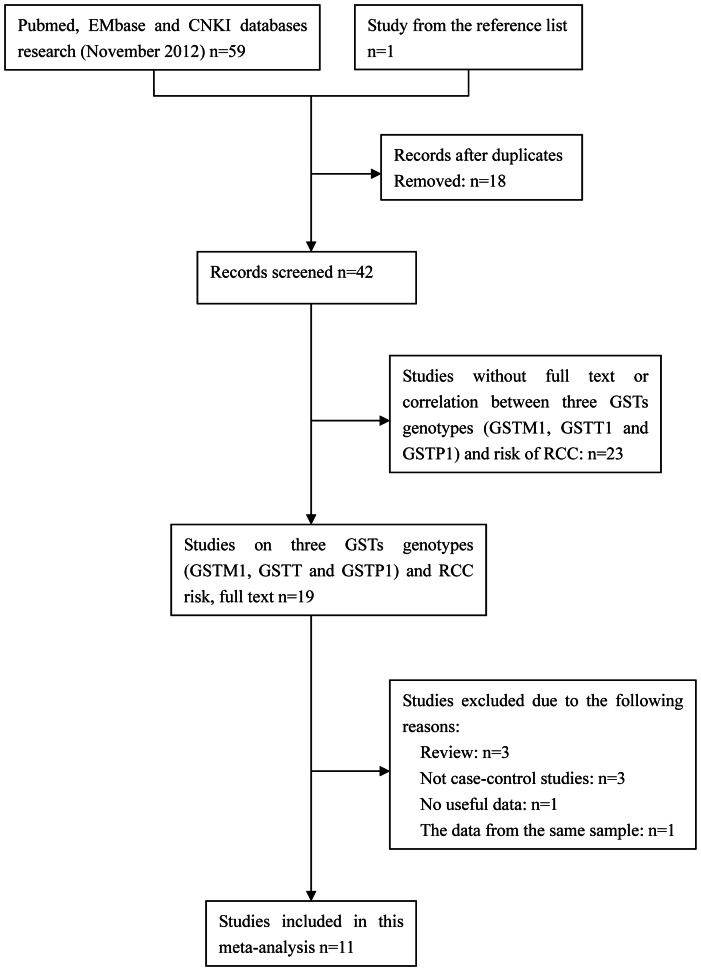
We systematically searched the PubMed, CNKI and Embase databases to identify the relevant studies. Finally, 11 eligible studies were selected. The pooled odds ratios (ORs) with their 95% confidence intervals (CIs) were used to assess the association between the GSTs polymorphisms and the risk of RCC. Multiple subgroup analyses and quality assessment of the included studies were performed based on the available information.
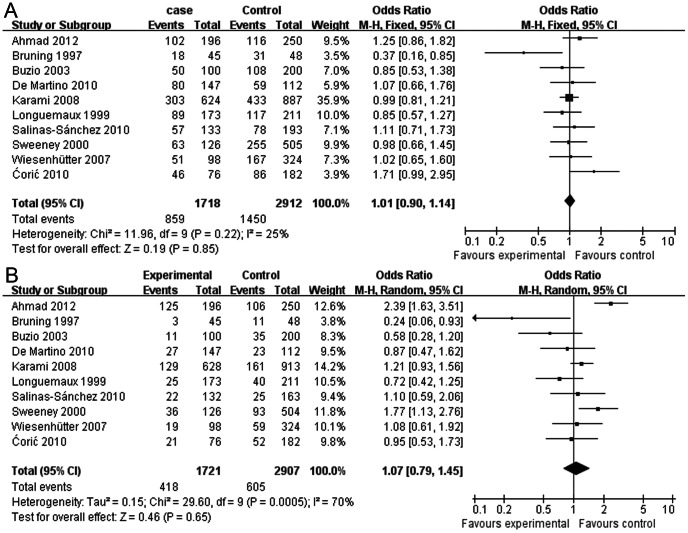
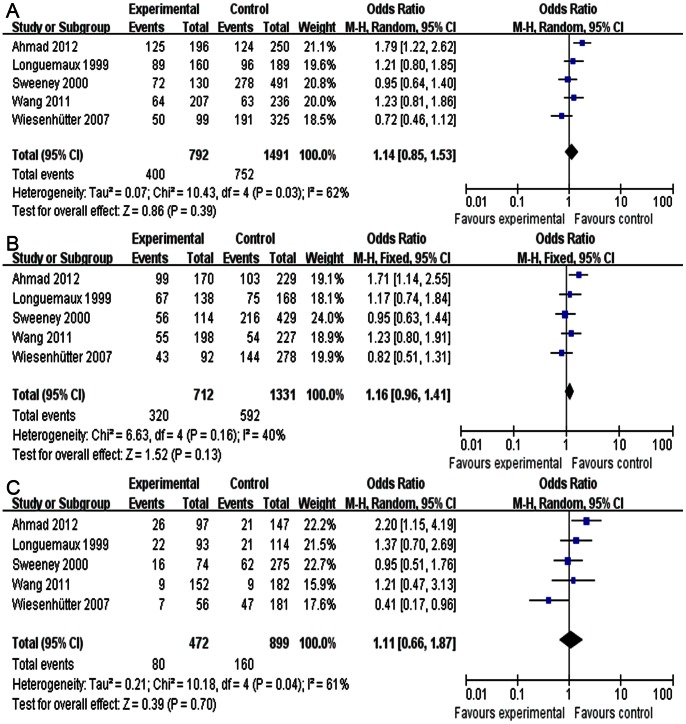
None of the GSTs polymorphisms had a significant association with the RCC risk. Similar results were found in the subgroup analyses, except for the GSTs polymorphisms in the situations described below. The GSTM1 and GSTT1 active genotypes in subjects exposed to pesticides (GSTM1: OR = 3.44; 95% CI, 2.04-5.80; GSTT1: OR = 2.84; 95% CI, 1.75-4.60), most of the GSTs genotypes in Asian populations (GSTT1: OR = 2.39, 95% CI = 1.63-3.51; GSTP1: Dominant model: OR = 1.50, 95% CI = 1.14-1.99; Additive model: OR = 1.39, 95% CI = 1.12-1.73; AG vs. AA: OR = 1.47, 95% CI = 1.10-1.97; GG vs. AA: OR = 1.82, 95% CI = 1.07-3.09) and the dual null genotype of GSTT1-GSTP1 (OR = 2.84, 95% CI = 1.75-4.60) showed positive associations with the RCC risk.
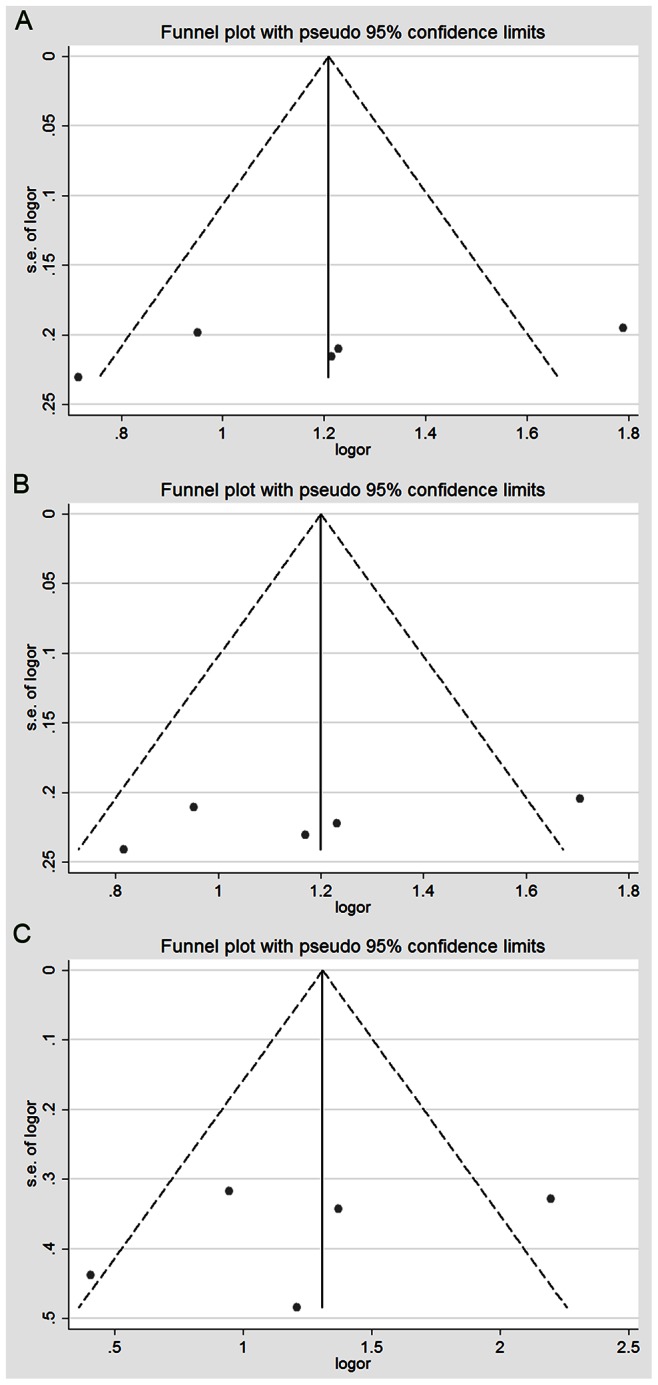
Our present study provides evidence that the GSTM1, GSTT1 and GSTP1 polymorphisms are not associated with the development of RCC. However, more case-control studies are needed for further confirmation.
三种谷胱甘肽 S-转移酶(GSTs)多态性(GSTM1、GSTT1 和 GSTP1)基因型与其个体对肾细胞癌(RCC)的易感性之间的关联尚未得到很好的证实。我们进行了一项定量荟萃分析,以评估 GSTM1、GSTT1 和 GSTP1 基因型与个体对肾细胞癌易感性之间的可能关联。
我们系统地检索了 PubMed、CNKI 和 Embase 数据库,以确定相关研究。最终,选择了 11 项符合条件的研究。使用合并的优势比(OR)及其 95%置信区间(CI)来评估 GSTs 多态性与 RCC 风险之间的关联。根据可用信息进行了多项亚组分析和纳入研究的质量评估。
没有 GSTs 多态性与 RCC 风险有显著关联。在亚组分析中也发现了类似的结果,除了在以下情况下 GSTs 多态性。暴露于杀虫剂的受试者中 GSTM1 和 GSTT1 活性基因型(GSTM1:OR=3.44;95%CI,2.04-5.80;GSTT1:OR=2.84;95%CI,1.75-4.60),亚洲人群的大多数 GSTs 基因型(GSTT1:OR=2.39,95%CI=1.63-3.51;GSTP1:显性模型:OR=1.50,95%CI=1.14-1.99;加性模型:OR=1.39,95%CI=1.12-1.73;AG 与 AA:OR=1.47,95%CI=1.10-1.97;GG 与 AA:OR=1.82,95%CI=1.07-3.09)和 GSTT1-GSTP1 的双重无效基因型(OR=2.84,95%CI=1.75-4.60)与 RCC 风险呈正相关。
本研究提供的证据表明,GSTM1、GSTT1 和 GSTP1 多态性与 RCC 的发生无关。然而,需要更多的病例对照研究来进一步证实。