Department of Applied Biological Chemistry, Graduate School of Agricultural and Life Sciences, The University of Tokyo, Tokyo, Japan.
PLoS One. 2013 May 29;8(5):e64605. doi: 10.1371/journal.pone.0064605. Print 2013.
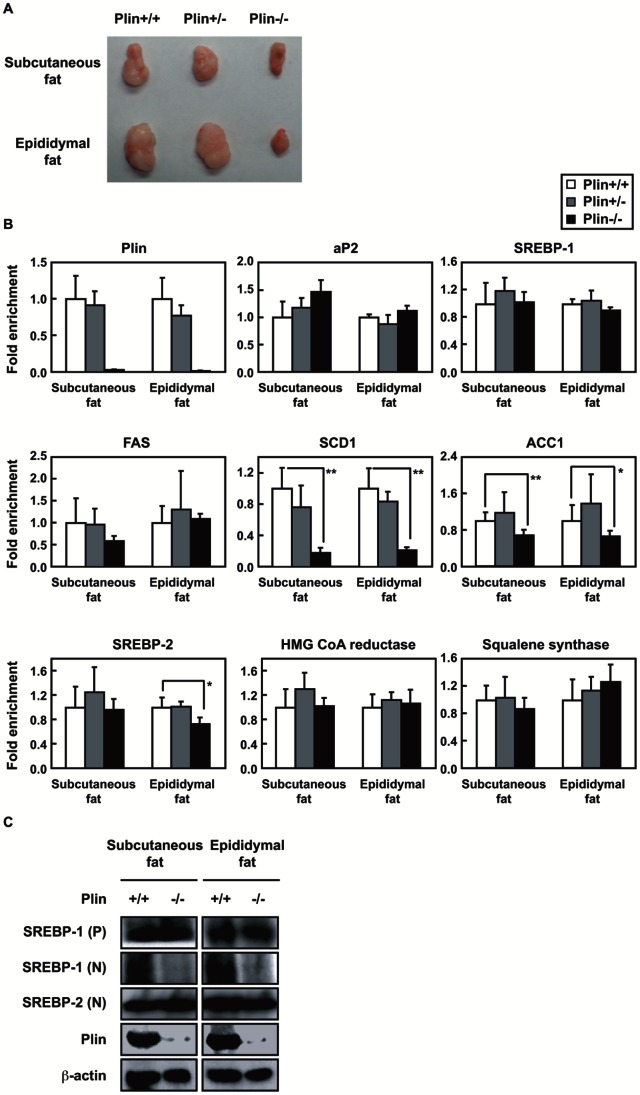
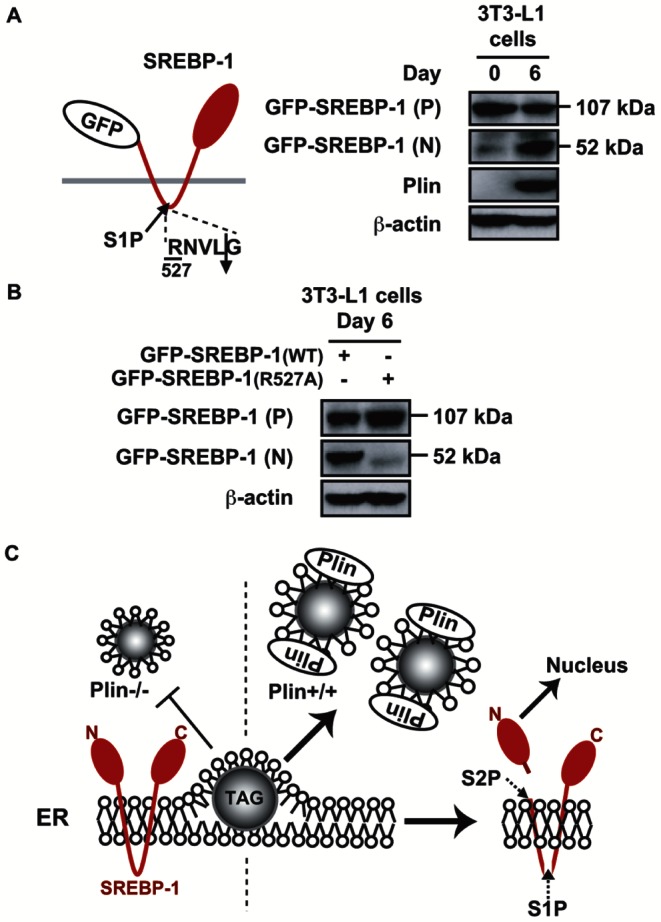
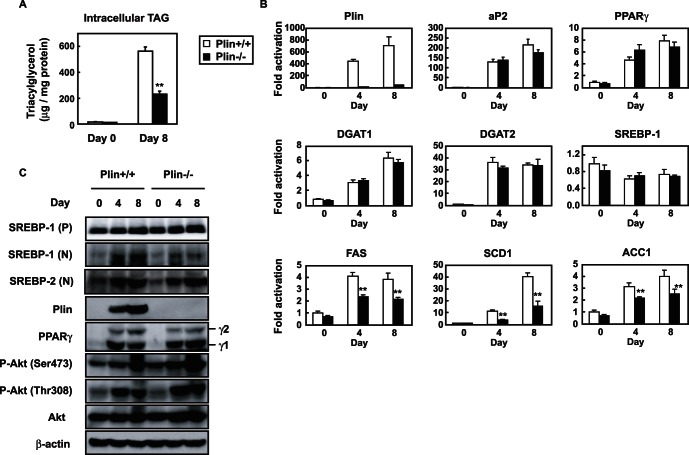
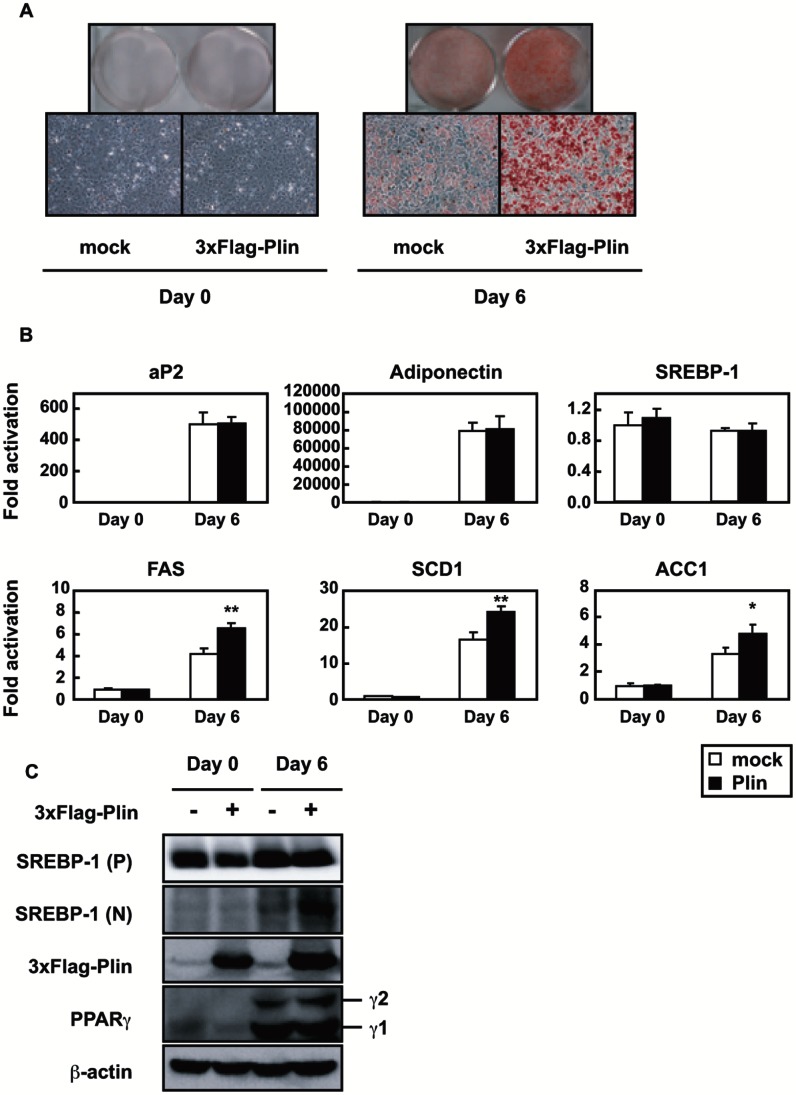
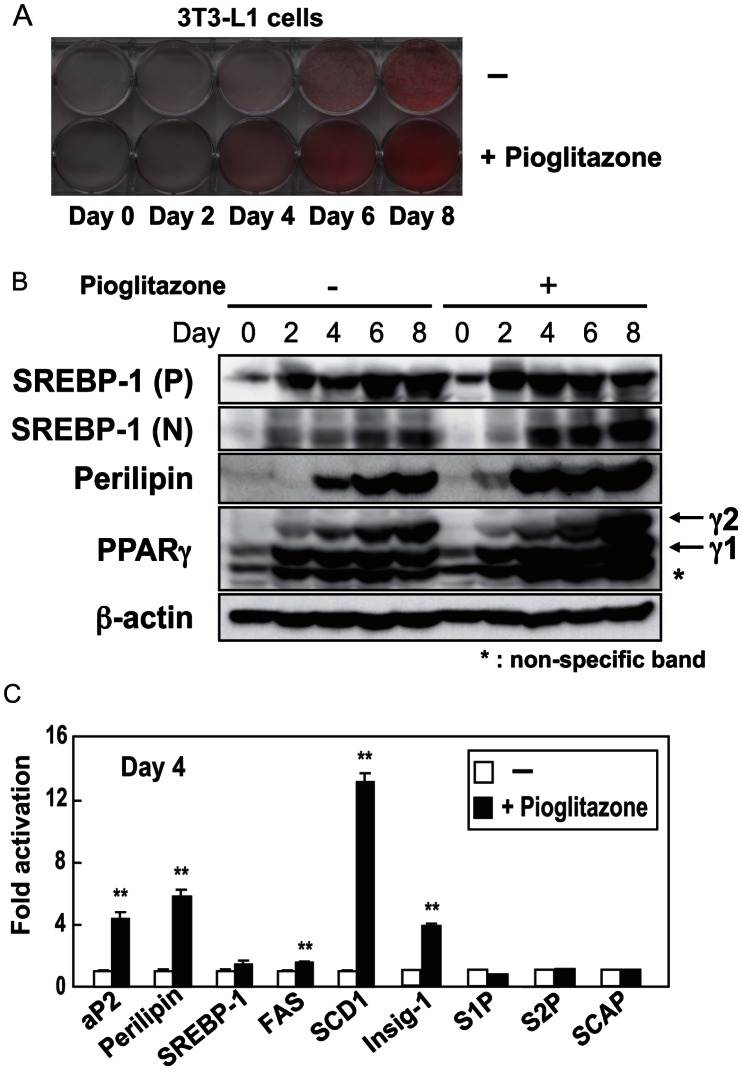
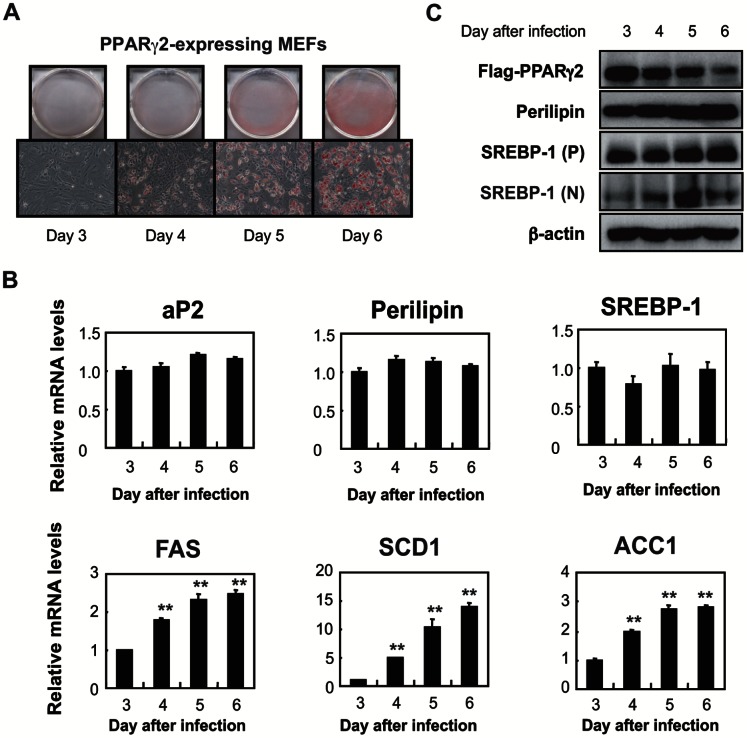
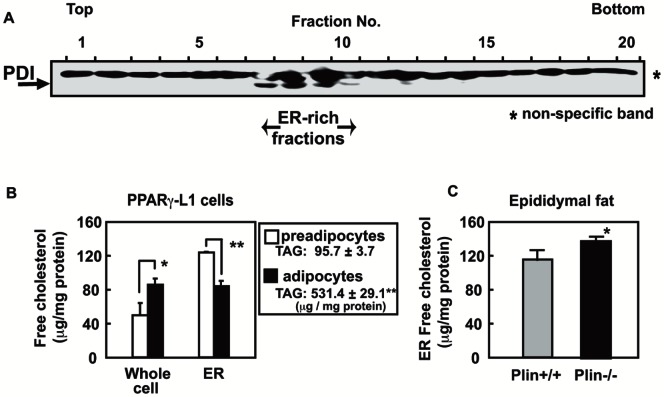
Sterol regulatory element-binding protein-1 (SREBP-1) has been thought to be a critical factor that assists adipogenesis. During adipogenesis SREBP-1 stimulates lipogenic gene expression, and peroxisome proliferator-activated receptor γ (PPARγ) enhances perilipin (plin) gene expression, resulting in generating lipid droplets (LDs) to store triacylglycerol (TAG) in adipocytes. Plin coats adipocyte LDs and protects them from lipolysis. Here we show in white adipose tissue (WAT) of plin-/- mice that nuclear active SREBP-1 and its target gene expression, but not nuclear SREBP-2, significantly decreased on attenuated LD formation. When plin-/- mouse embryonic fibroblasts (MEFs) differentiated into adipocytes, attenuated LDs were formed and nuclear SREBP-1 decreased, but enforced plin expression restored them to their original state. Since LDs are largely derived from the endoplasmic reticulum (ER), alterations in the ER cholesterol content were investigated during adipogenesis of 3T3-L1 cells. The ER cholesterol greatly reduced in differentiated adipocytes. The ER cholesterol level in plin-/- WAT was significantly higher than that of wild-type mice, suggesting that increased LD formation caused a change in ER environment along with a decrease in cholesterol. When GFP-SREBP-1 fusion proteins were exogenously expressed in 3T3-L1 cells, a mutant protein lacking the S1P cleavage site was poorly processed during adipogenesis, providing evidence of the increased canonical pathway for SREBP processing in which SREBP-1 is activated by two cleavage enzymes in the Golgi. Therefore, LD biogenesis may create the ER microenvironment favorable for SREBP-1 activation. We describe the novel interplay between LD formation and SREBP-1 activation through a positive feedback loop.
固醇调节元件结合蛋白-1(SREBP-1)被认为是辅助脂肪生成的关键因素。在脂肪生成过程中,SREBP-1 刺激脂肪生成基因的表达,而过氧化物酶体增殖物激活受体γ(PPARγ)增强 perilipin(plin)基因的表达,导致产生脂滴(LDs)以在脂肪细胞中储存三酰基甘油(TAG)。Plin 包裹脂肪细胞的 LDs 并保护它们免受脂肪分解。在这里,我们在 plin-/- 小鼠的白色脂肪组织(WAT)中表明,减弱的 LD 形成导致核活性 SREBP-1 及其靶基因的表达,但核 SREBP-2 没有明显减少。当 plin-/- 小鼠胚胎成纤维细胞(MEFs)分化为脂肪细胞时,形成了减弱的 LDs,核 SREBP-1 减少,但强制表达 plin 使其恢复到原始状态。由于 LDs 主要来自内质网(ER),因此在 3T3-L1 细胞的脂肪生成过程中研究了 ER 胆固醇含量的变化。分化的脂肪细胞中 ER 胆固醇大大减少。plin-/- WAT 的 ER 胆固醇水平明显高于野生型小鼠,表明 LD 形成增加导致 ER 环境发生变化,胆固醇减少。当 GFP-SREBP-1 融合蛋白在 3T3-L1 细胞中外源表达时,缺乏 S1P 切割位点的突变蛋白在脂肪生成过程中处理不佳,这为 SREBP 加工的增加的经典途径提供了证据,其中 SREBP-1 在高尔基体内被两种切割酶激活。因此,LD 生物发生可能会产生有利于 SREBP-1 激活的 ER 微环境。我们描述了 LD 形成与 SREBP-1 激活之间通过正反馈环的新相互作用。