Institute for Maternal and Child Health-IRCCS Burlo Garofolo of Trieste, Via dell'Istria 65/1, 34137 Trieste, Italy.
Biomed Res Int. 2013;2013:297501. doi: 10.1155/2013/297501. Epub 2013 May 8.
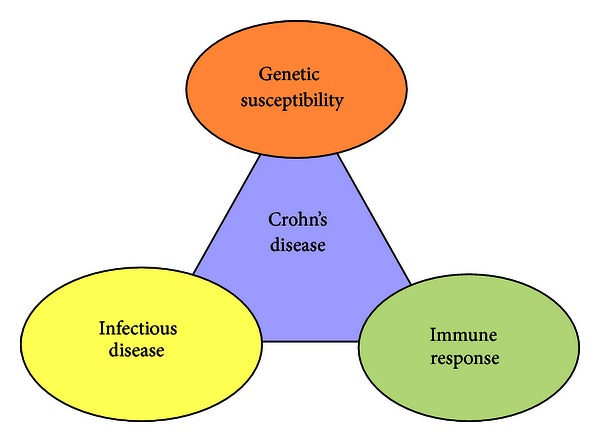
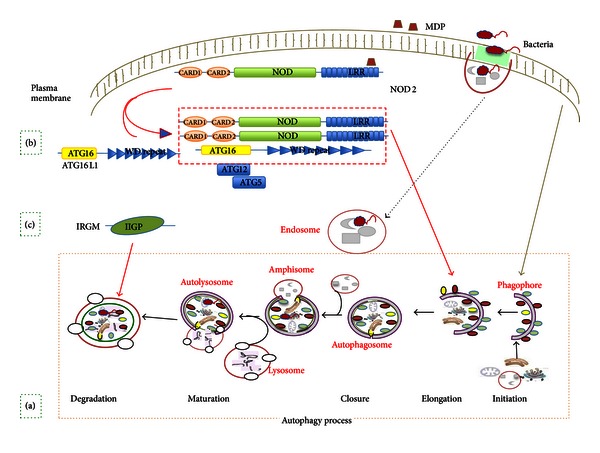
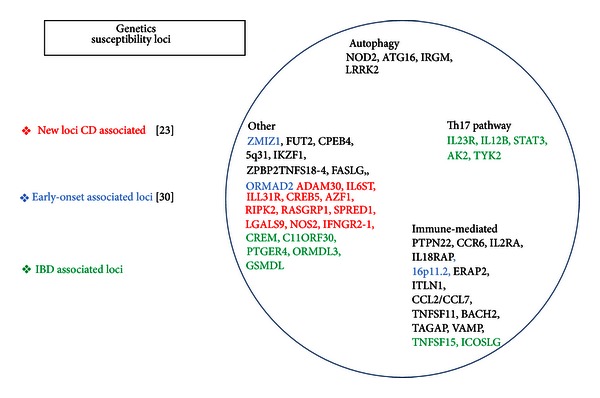
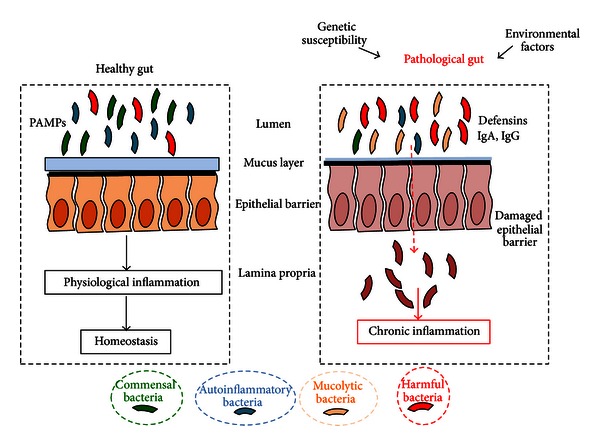
Crohn's disease is a complex disease in which genome, microbiome, and environment interact to produce the immunological background of the disease. Disease in childhood is more extensive and characterized by a rapid progression, leading to severe repercussions in the course of the disorder. Several genetic variations have been associated with an increased risk of developing the disease and most of these are also implicated in other autoimmune disorders. The gut has many tiers of defense against incursion by luminal microbes, including the epithelial barrier and the innate and adaptive immune responses. Moreover, recent evidence shows that bacterial and viral infections, as well as inflammasome genes and genes involved in the autophagy process, are implicated in Crohn's disease pathogenesis. The aim of this review is to establish how much the diagnostic system can improve, thus increasing the success of Crohn's disease diagnosis. The major expectation for the near future is to be able to anticipate the possible consequences of the disease already in childhood, thus preventing associated complications, and to choose the best treatment for each patient.
克罗恩病是一种复杂的疾病,其基因组、微生物组和环境相互作用,产生疾病的免疫学背景。儿童时期的疾病更为广泛,其特征是迅速进展,导致疾病过程中的严重后果。已经发现了几种与疾病发生风险增加相关的遗传变异,其中大多数也与其他自身免疫性疾病有关。肠道有许多层次的防御机制来抵御腔微生物的入侵,包括上皮屏障和先天及适应性免疫反应。此外,最近的证据表明,细菌和病毒感染,以及炎症小体基因和参与自噬过程的基因,都与克罗恩病的发病机制有关。本综述的目的是确定诊断系统能够在多大程度上得到改善,从而提高克罗恩病的诊断成功率。近期的主要期望是能够在儿童时期就预测到疾病的可能后果,从而预防相关并发症,并为每个患者选择最佳的治疗方法。