Riva Silvia, Monti Marco, Antonietti Alessandro
Department of Psychology, Catholic University of the Sacred Heart of Milan, Milan, Italy ; Department for Adaptive Behaviour and Cognition, Max Planck Institute for Human Development Berlin, Germany ; Department of Medicine and Medical Specialities, ABB Centre, University of Milan and IRCCS Ca' Granda Foundation, Maggiore Hospital, Milan, Italy.
Adv Med Educ Pract. 2011 Feb 16;2:59-70. doi: 10.2147/AMEP.S13004. Print 2011.
Over-the-counter (OTC) drugs are widely available and often purchased by consumers without advice from a health care provider. Many people rely on self-management of medications to treat common medical conditions. Although OTC medications are regulated by the National and the International Health and Drug Administration, many people are unaware of proper dosing, side effects, adverse drug reactions, and possible medication interactions.
This study examined how subjects make their decisions to select an OTC drug, evaluating the role of cognitive heuristics which are simple and adaptive rules that help the decision-making process of people in everyday contexts.
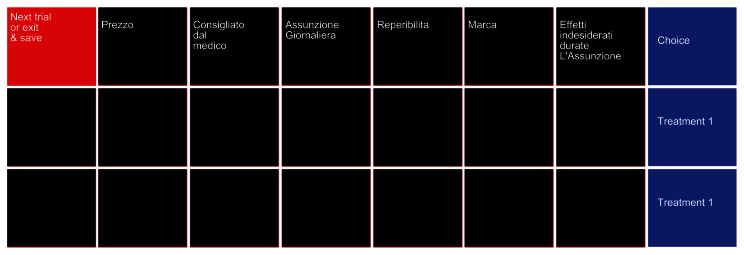
By analyzing 70 subjects' information-search and decision-making behavior when selecting OTC drugs, we examined the heuristics they applied in order to assess whether simple decision-making processes were also accurate and relevant. Subjects were tested with a sequence of two experimental tests based on a computerized Java system devised to analyze participants' choices in a virtual environment.
We found that subjects' information-search behavior reflected the use of fast and frugal heuristics. In addition, although the heuristics which correctly predicted subjects' decisions implied significantly fewer cues on average than the subjects did in the information-search task, they were accurate in describing order of information search. A simple combination of a fast and frugal tree and a tallying rule predicted more than 78% of subjects' decisions.
The current emphasis in health care is to shift some responsibility onto the consumer through expansion of self medication. To know which cognitive mechanisms are behind the choice of OTC drugs is becoming a relevant purpose of current medical education. These findings have implications both for the validity of simple heuristics describing information searches in the field of OTC drug choices and for current medical education, which has to prepare competent health specialists to orientate and support the choices of their patients.
非处方药(OTC)广泛可得,消费者常常在没有医疗保健人员建议的情况下自行购买。许多人依靠自我用药来治疗常见疾病。尽管非处方药受到国家和国际卫生与药品管理部门的监管,但许多人并不了解正确的剂量、副作用、药物不良反应以及可能的药物相互作用。
本研究考察了受试者如何做出选择非处方药的决策,评估了认知启发法的作用,认知启发法是简单且适应性强的规则,有助于人们在日常情境中的决策过程。
通过分析70名受试者在选择非处方药时的信息搜索和决策行为,我们考察了他们应用的启发法,以评估简单的决策过程是否也准确且相关。受试者通过基于计算机化Java系统的一系列两个实验测试进行测试,该系统旨在分析参与者在虚拟环境中的选择。
我们发现受试者的信息搜索行为反映了快速节俭启发法的使用。此外,尽管正确预测受试者决策的启发法平均所隐含的线索明显少于受试者在信息搜索任务中的线索,但它们在描述信息搜索顺序方面是准确的。快速节俭树和计数规则的简单组合预测了超过78%的受试者决策。
当前医疗保健的重点是通过扩大自我用药将部分责任转移到消费者身上。了解非处方药选择背后的认知机制正成为当前医学教育的一个相关目标。这些发现对于描述非处方药选择领域信息搜索的简单启发法的有效性以及对于当前医学教育都具有启示意义,当前医学教育必须培养有能力的健康专家来指导和支持患者的选择。