Koenig Harold G
Departments of Medicine and Psychiatry, Duke University Medical Center, P.O. Box 3400, Durham, NC 27705, USA ; Department of Medicine, King Abdulaziz University, Jeddah 21413, Saudi Arabia.
ISRN Psychiatry. 2012 Dec 16;2012:278730. doi: 10.5402/2012/278730. Print 2012.
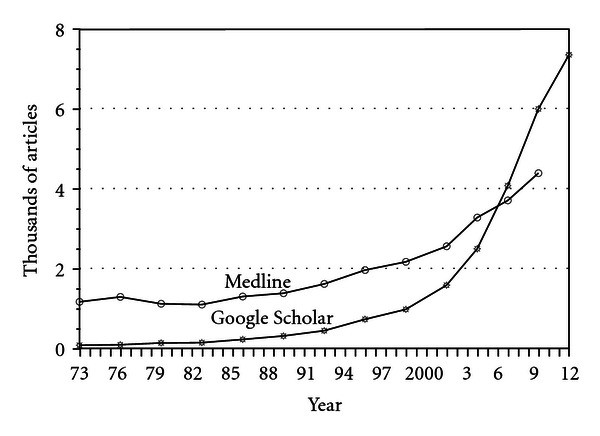
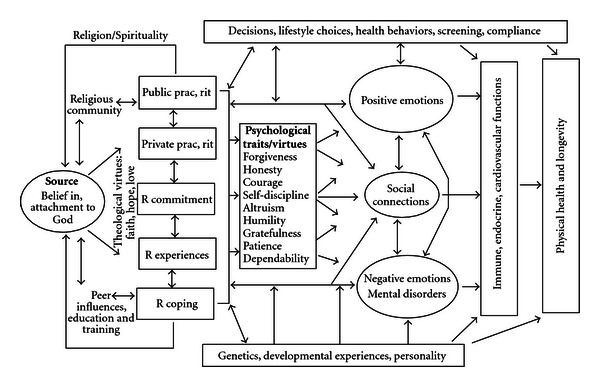
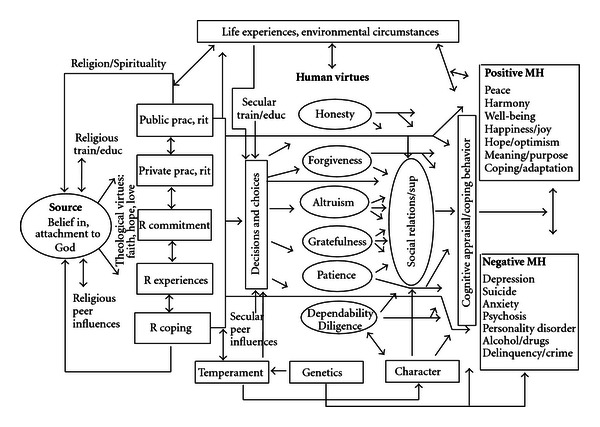
This paper provides a concise but comprehensive review of research on religion/spirituality (R/S) and both mental health and physical health. It is based on a systematic review of original data-based quantitative research published in peer-reviewed journals between 1872 and 2010, including a few seminal articles published since 2010. First, I provide a brief historical background to set the stage. Then I review research on R/S and mental health, examining relationships with both positive and negative mental health outcomes, where positive outcomes include well-being, happiness, hope, optimism, and gratefulness, and negative outcomes involve depression, suicide, anxiety, psychosis, substance abuse, delinquency/crime, marital instability, and personality traits (positive and negative). I then explain how and why R/S might influence mental health. Next, I review research on R/S and health behaviors such as physical activity, cigarette smoking, diet, and sexual practices, followed by a review of relationships between R/S and heart disease, hypertension, cerebrovascular disease, Alzheimer's disease and dementia, immune functions, endocrine functions, cancer, overall mortality, physical disability, pain, and somatic symptoms. I then present a theoretical model explaining how R/S might influence physical health. Finally, I discuss what health professionals should do in light of these research findings and make recommendations in this regard.
本文对宗教/精神信仰(R/S)与心理健康及身体健康方面的研究进行了简洁而全面的综述。它基于对1872年至2010年间发表在同行评审期刊上的基于原始数据的定量研究的系统综述,其中包括2010年以来发表的一些重要文章。首先,我提供一个简要的历史背景来搭建框架。然后我回顾R/S与心理健康的研究,考察其与积极和消极心理健康结果的关系,其中积极结果包括幸福感、快乐、希望、乐观和感恩,消极结果涉及抑郁、自杀、焦虑、精神病、药物滥用、违法犯罪、婚姻不稳定以及人格特质(积极和消极)。接着我解释R/S如何以及为何可能影响心理健康。接下来,我回顾R/S与健康行为如体育活动、吸烟、饮食和性行为方面的研究,随后是对R/S与心脏病、高血压、脑血管疾病、阿尔茨海默病和痴呆症、免疫功能、内分泌功能、癌症、总体死亡率、身体残疾、疼痛和躯体症状之间关系的综述。然后我提出一个理论模型来解释R/S如何可能影响身体健康。最后,我讨论健康专业人员鉴于这些研究发现应该做些什么,并在这方面提出建议。