Department of Surgery, University of California, Los Angeles, California 90095, USA.
J Surg Res. 2013 Jul;183(1):18-26. doi: 10.1016/j.jss.2013.01.005. Epub 2013 Feb 1.
One of the greatest challenges in scaffold-based tissue engineering remains poor and inefficient penetration of cells into scaffolds to generate thick vascularized and cellular tissues. Electrospinning has emerged as a preferred method for producing scaffolds with high surface area-to-volume ratios and resemblance to extracellular matrix. However, cellular infiltration and vascular ingrowth are insufficient because of lack of macropore interconnectivity in electrospun scaffolds with high-fiber density. In this study, we report a novel two-step electrospinning and laser cutting fabrication method to enhance the macroporosity of electrospun scaffolds.
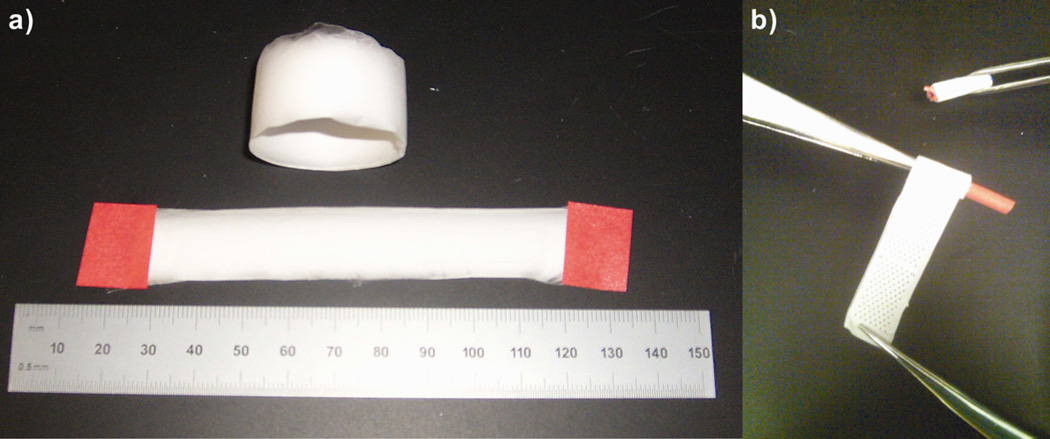
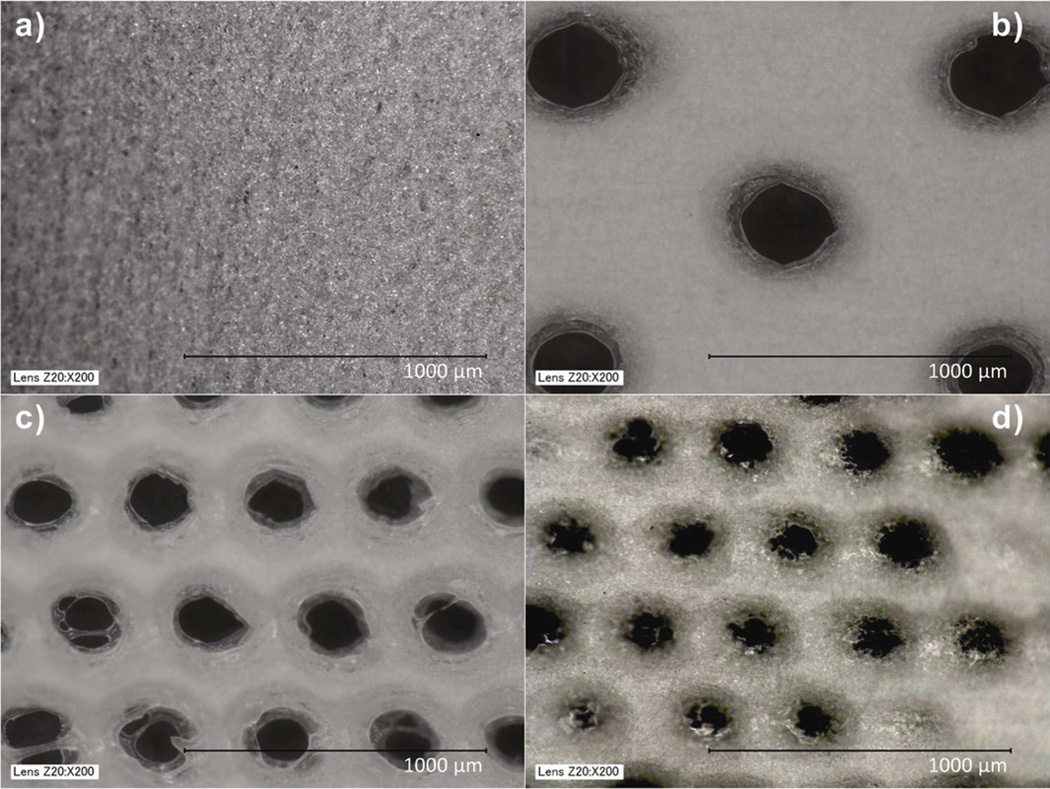
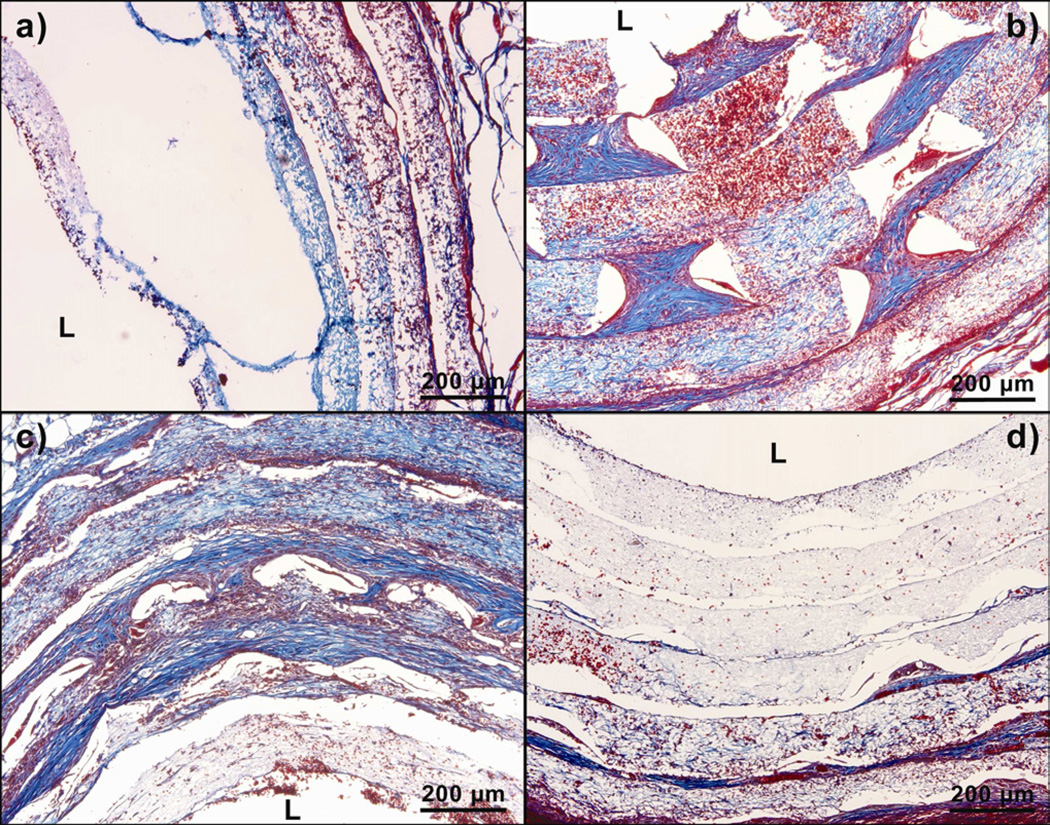
Polycaprolactone dissolved in hexafluoroisopropanol was electrospun at 25 kV to create uniform 100-120 μm sheets of polycaprolactone fiber mats (1- to 5-μm fiber diameter) with an array of pores created using VERSA LASER CUTTER 2.3. Three groups of fiber mats with three distinct pore diameters (300, 160, and 80 μm, all with 15% pore area) were fabricated and compared with a control group without laser cut pores. After laser cutting, all mats were collagen coated and manually wrapped around a catheter six times to form six concentric layers before implantation into the omentum of Lewis rats. Cellular infiltration and vascular ingrowth were examined after 2 wk.
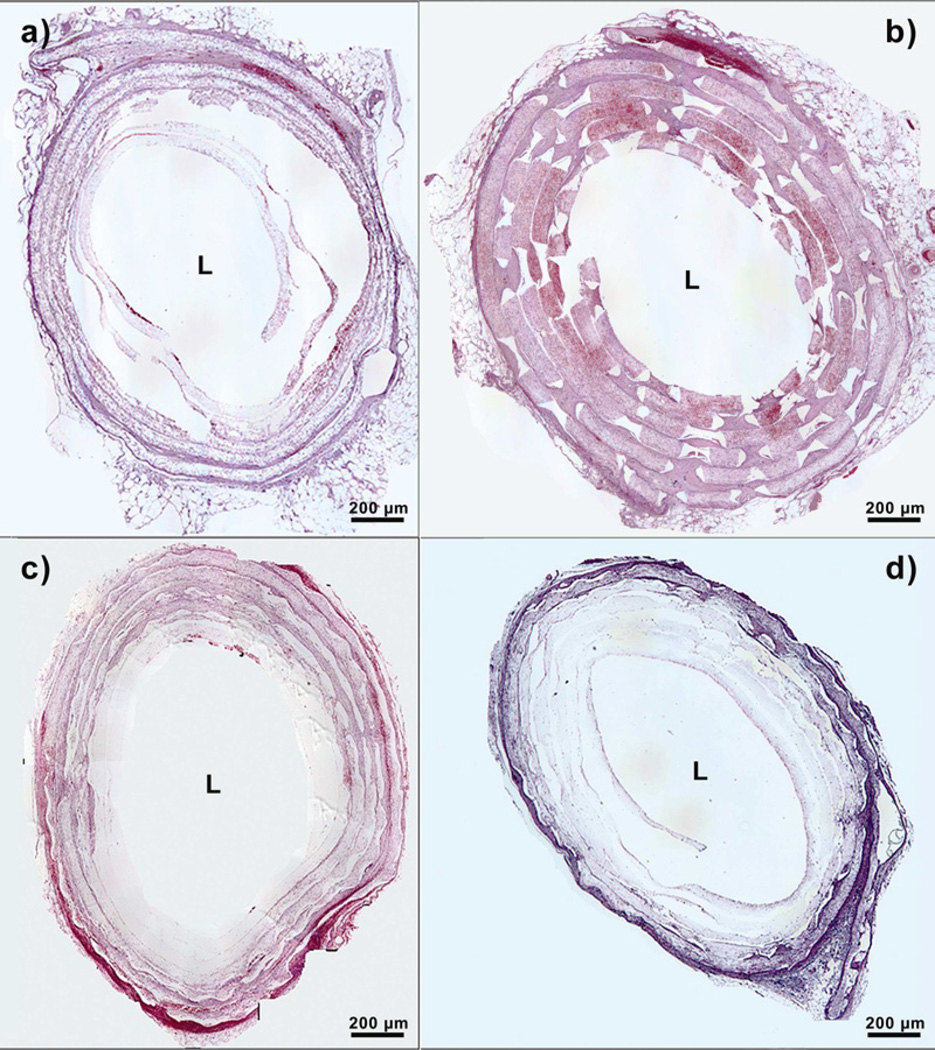
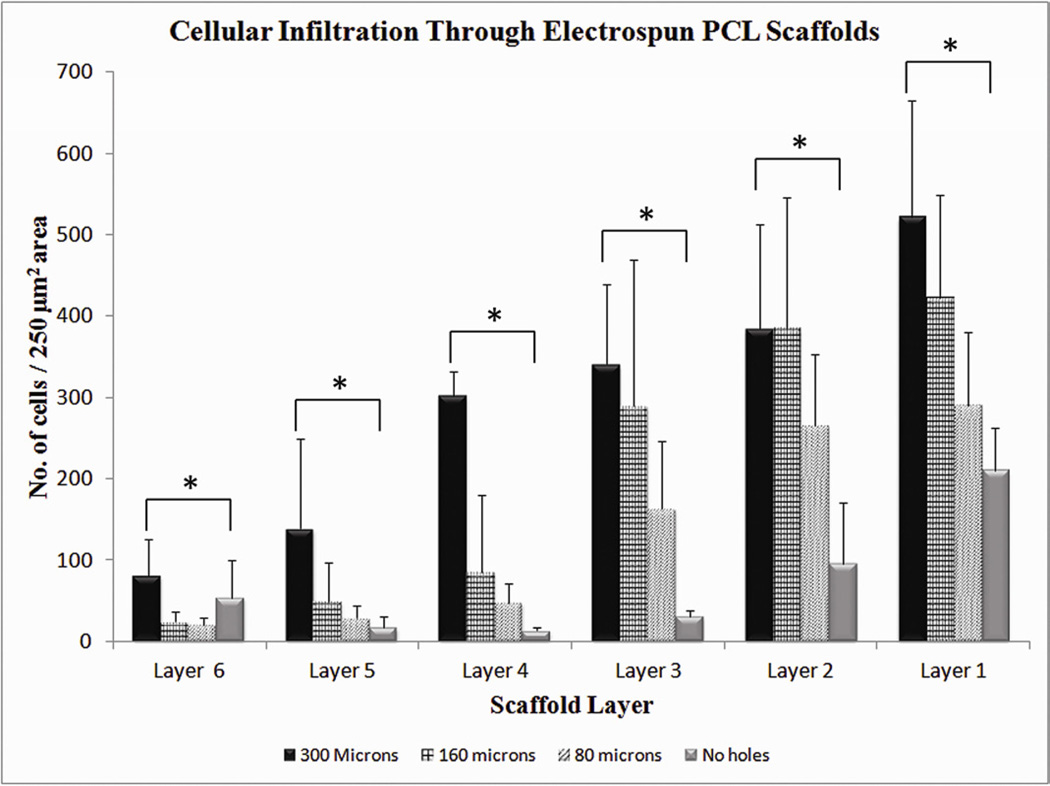
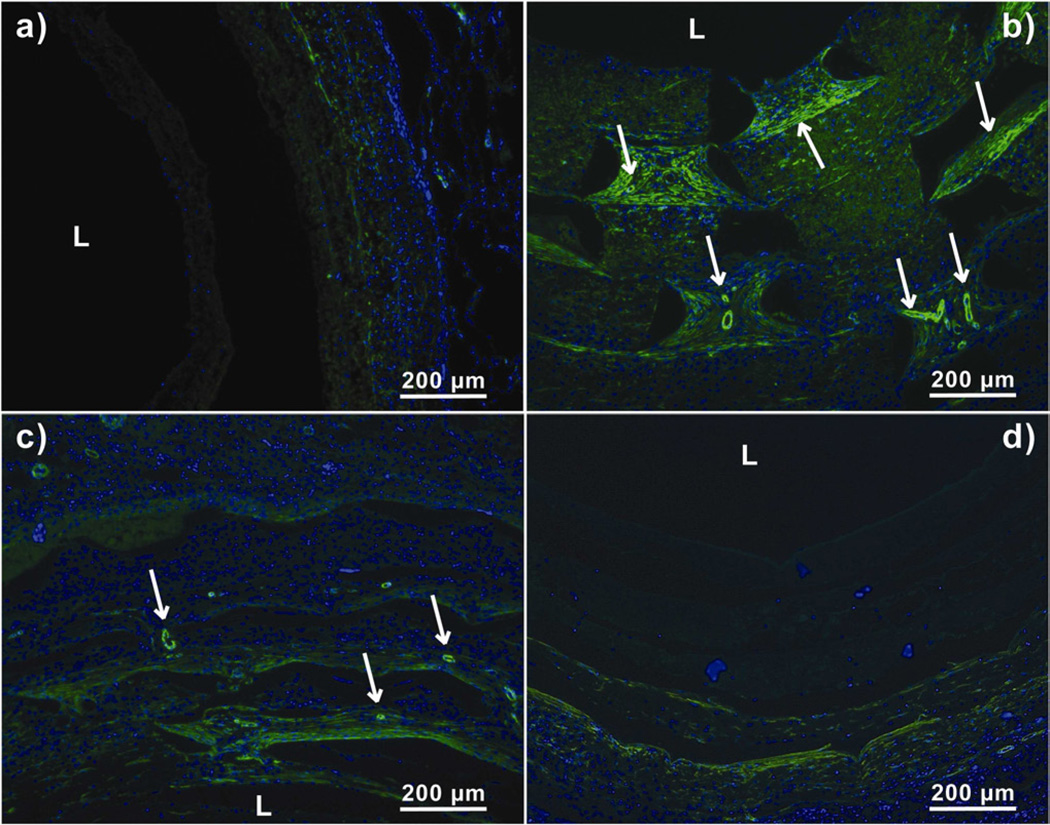
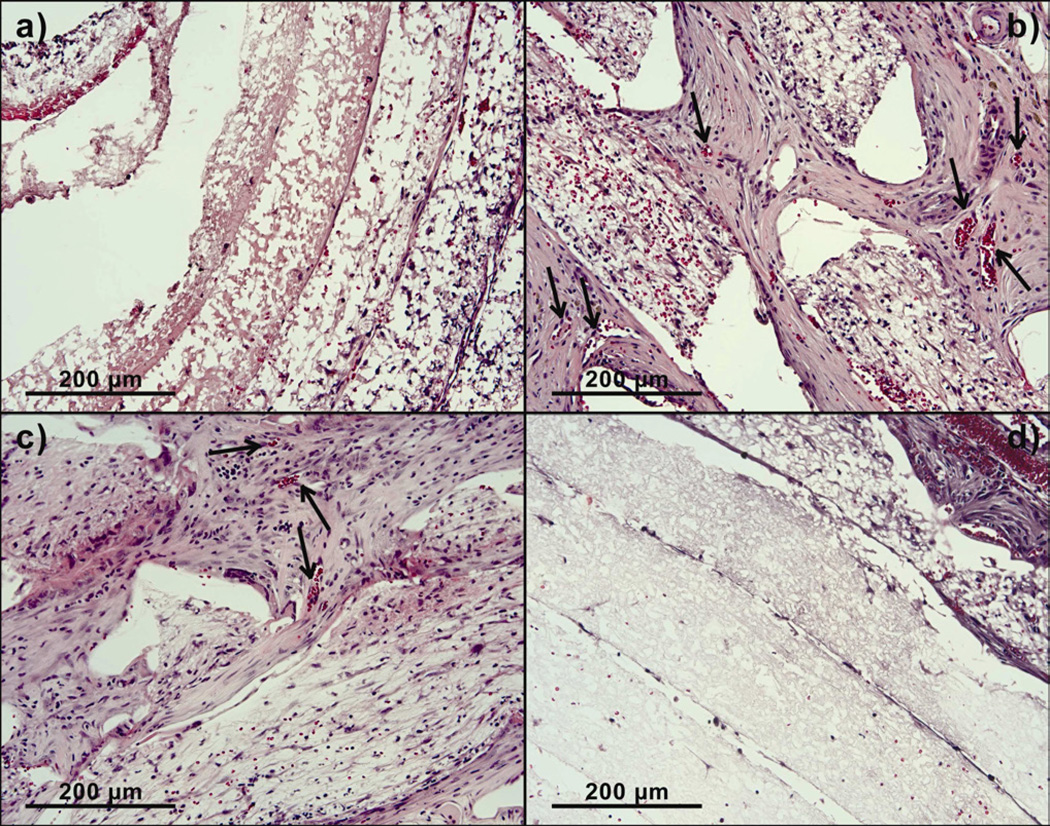
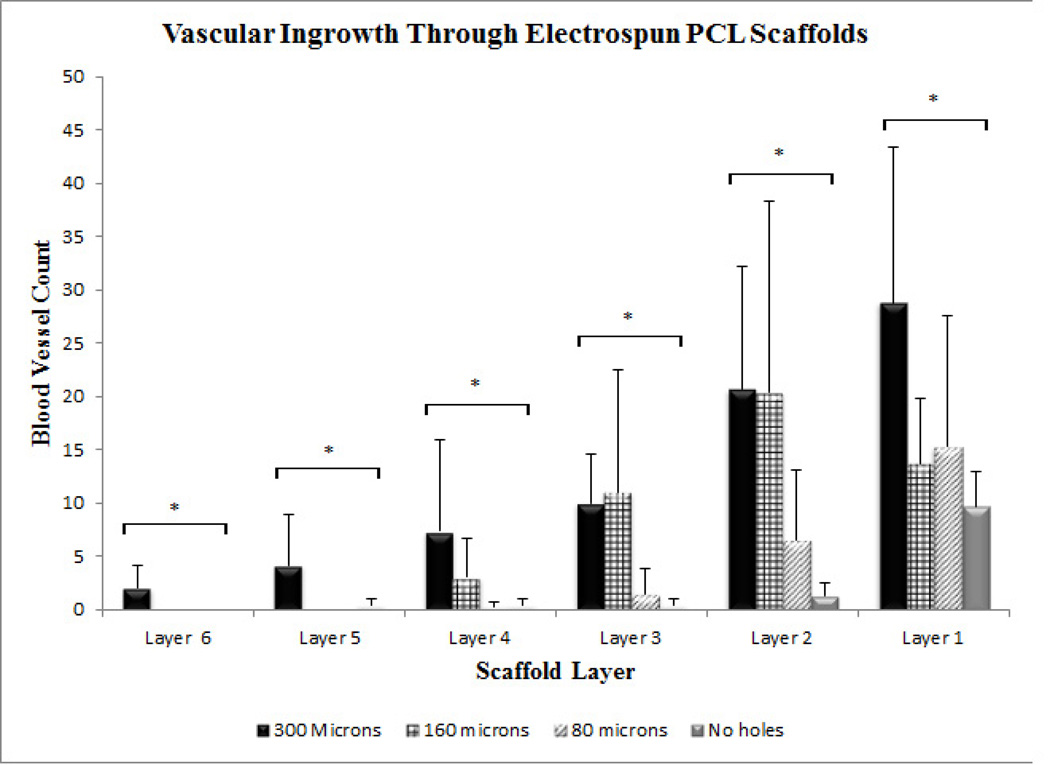
Histologic analysis of 14-d samples showed that scaffolds with laser cut pores had close to 40% more cellular infiltration and increased vascular ingrowth in the innermost layers of the construct compared with the control group. Despite keeping pore area percentage constant between the three groups, the sheets with the largest pore size performed better than those with the smallest pore sizes.
Porosity is the primary factor limiting the extensive use of electrospun scaffolds in tissue engineering. Our method of LASER cutting pores in electrospun fibrous scaffolds ensures uniform pore sizes, easily controllable and customizable pores, and enhances cellular infiltration and vascular ingrowth, demonstrating significant advancement toward utility of electrospun scaffolds in tissue engineering.
支架组织工程中最大的挑战之一仍然是细胞难以有效渗透到支架中,从而生成厚的血管化和细胞组织。静电纺丝已成为一种生产具有高表面积与体积比并类似于细胞外基质的支架的首选方法。然而,由于高纤维密度的静电纺丝支架缺乏大孔连通性,细胞渗透和血管生成仍然不足。在这项研究中,我们报告了一种新颖的两步静电纺丝和激光切割制造方法,以增强静电纺丝支架的大孔性。
将聚己内酯溶解在六氟异丙醇中,在 25 kV 下进行静电纺丝,以创建均匀的 100-120 μm 聚己内酯纤维垫(纤维直径为 1-5 μm),并使用 VERSA LASER CUTTER 2.3 制造出一系列孔阵列。制造了三组纤维垫,具有三种不同的孔径(300、160 和 80 μm,所有孔径的孔隙率均为 15%),并与未激光切割孔的对照组进行了比较。激光切割后,所有的垫子都用胶原蛋白涂层,并手动包裹在导管上六次,形成六个同心层,然后植入到 Lewis 大鼠的大网膜中。在植入后 2 周检查细胞渗透和血管生成。
14 天样本的组织学分析表明,与对照组相比,激光切割孔的支架具有近 40%更多的细胞渗透,并且在构建物的最内层增加了血管生成。尽管三组之间保持相同的孔面积百分比,但具有最大孔径的薄片比具有最小孔径的薄片表现更好。
孔隙率是限制静电纺丝支架在组织工程中广泛应用的主要因素。我们在静电纺丝纤维支架中激光切割孔的方法确保了均匀的孔径、易于控制和可定制的孔以及增强了细胞渗透和血管生成,这表明在组织工程中使用静电纺丝支架取得了重大进展。