University of Minnesota, Department of Psychology, 75 East River Road, Minneapolis, MN 55455-0344, USA.
Neuroimage. 2013 Dec;83:609-15. doi: 10.1016/j.neuroimage.2013.06.014. Epub 2013 Jun 12.
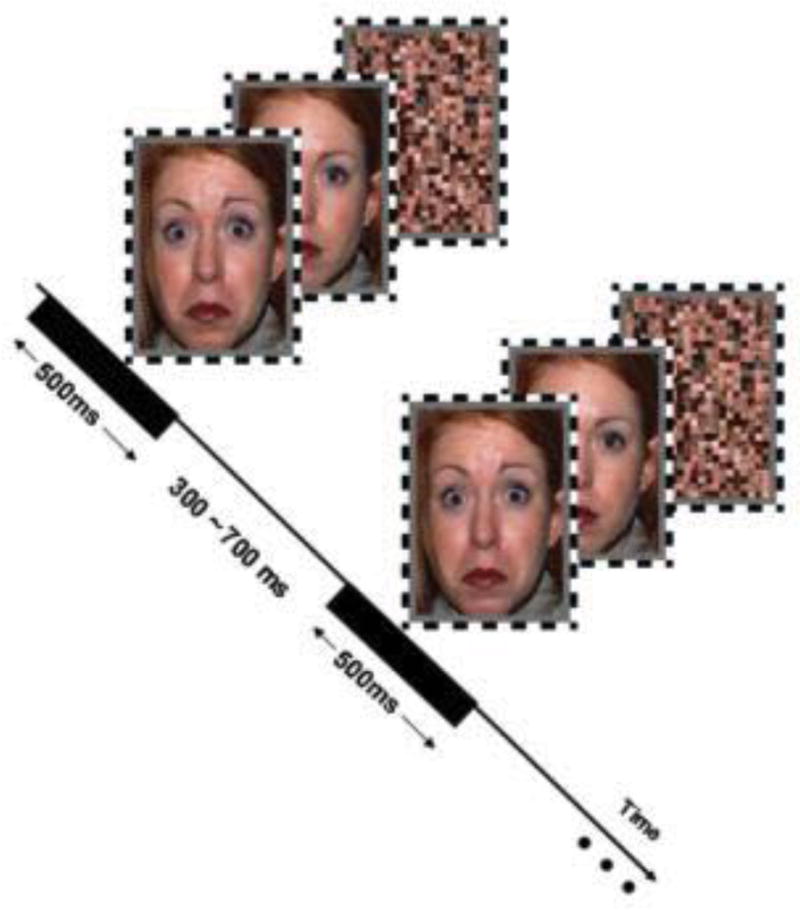
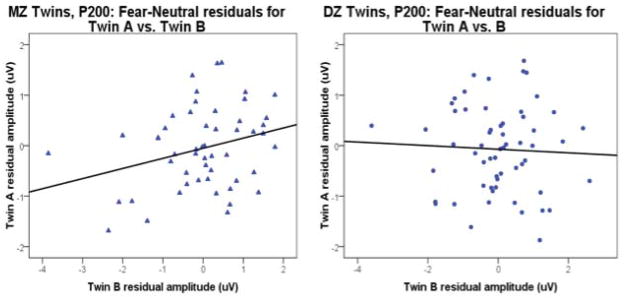
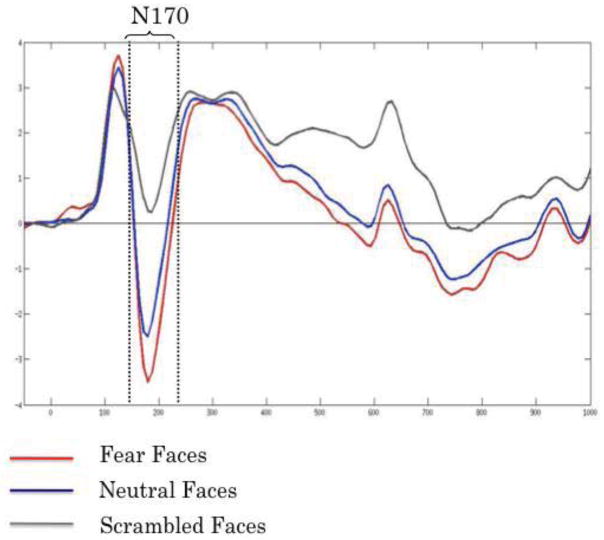
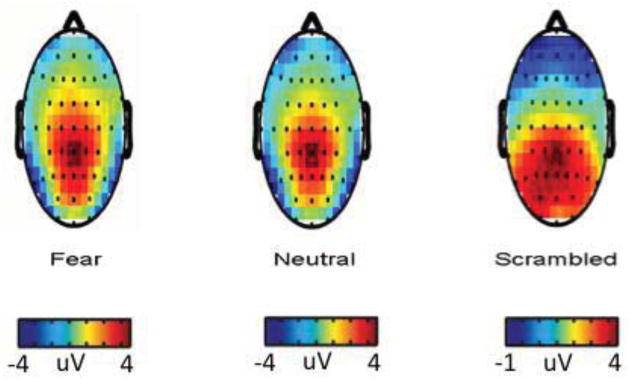
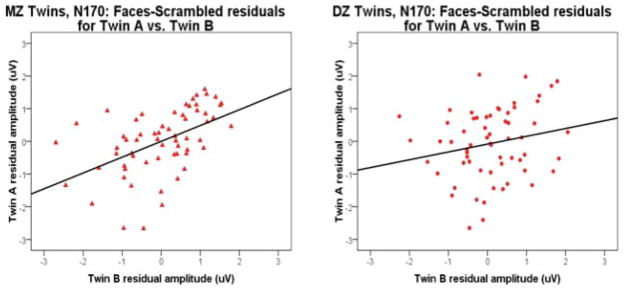
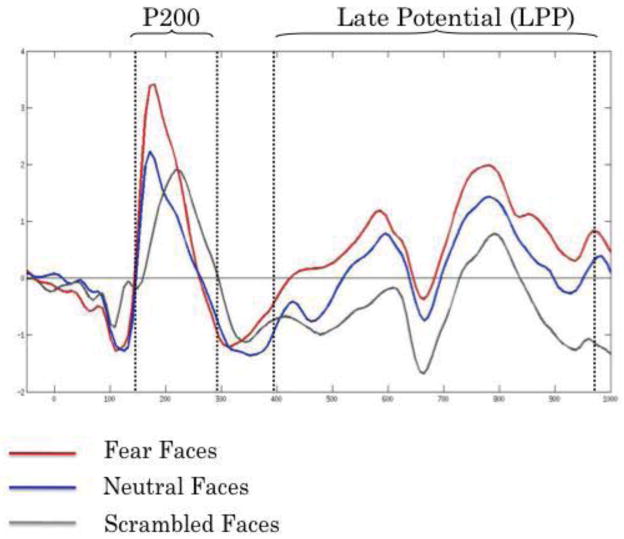
The ability to recognize a variety of different human faces is undoubtedly one of the most important and impressive functions of the human perceptual system. Neuroimaging studies have revealed multiple brain regions (including the FFA, STS, OFA) and electrophysiological studies have identified differing brain event-related potential (ERP) components (e.g., N170, P200) possibly related to distinct types of face information processing. To evaluate the heritability of ERP components associated with face processing, including N170, P200, and LPP, we examined ERP responses to fearful and neutral face stimuli in monozygotic (MZ) and dizygotic (DZ) twins. Concordance levels for early brain response indices of face processing (N170, P200) were found to be stronger for MZ than DZ twins, providing evidence of a heritable basis to each. These findings support the idea that certain key neural mechanisms for face processing are genetically coded. Implications for understanding individual differences in recognition of facial identity and the emotional content of faces are discussed.
识别各种不同人脸的能力无疑是人类感知系统最重要、最令人印象深刻的功能之一。神经影像学研究揭示了多个大脑区域(包括 FFA、STS、OFA),而电生理学研究则确定了不同的与大脑事件相关的潜在成分(例如,N170、P200),这些成分可能与不同类型的面部信息处理有关。为了评估与面部处理相关的 ERP 成分(包括 N170、P200 和 LPP)的遗传性,我们检查了同卵(MZ)和异卵(DZ)双胞胎对恐惧和中性面部刺激的 ERP 反应。发现面部处理(N170、P200)的早期脑反应指标的一致性水平在 MZ 双胞胎中比 DZ 双胞胎更高,这为每个双胞胎提供了遗传基础的证据。这些发现支持了某些面部处理的关键神经机制是遗传编码的观点。讨论了对个体差异对面部身份识别和面部情绪内容的理解的影响。