Uchida Kentaro, Matsushita Osamu, Naruse Kouji, Mima Takehiko, Nishi Nozomu, Hattori Shunji, Ogura Takayuki, Inoue Gen, Tanaka Keisuke, Takaso Masashi
Department of Orthopedic Surgery, Kitasato University School of Medicine, 1-15-1 Minami-ku Kitasato, Kanagawa, Japan.
J Biomed Mater Res A. 2014 Jun;102(6):1737-43. doi: 10.1002/jbm.a.34841. Epub 2013 Jun 24.
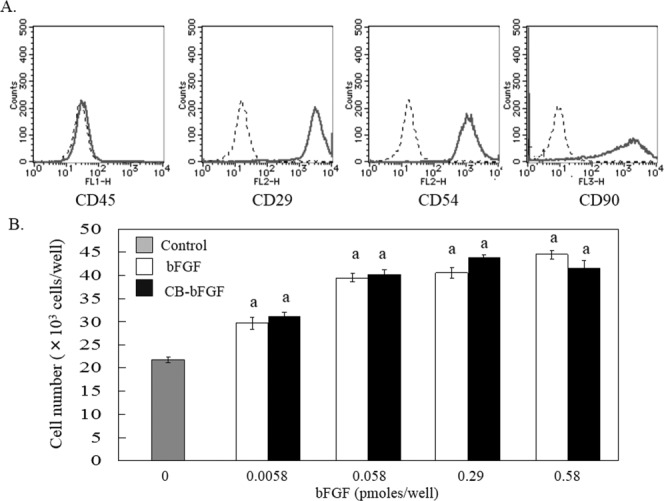
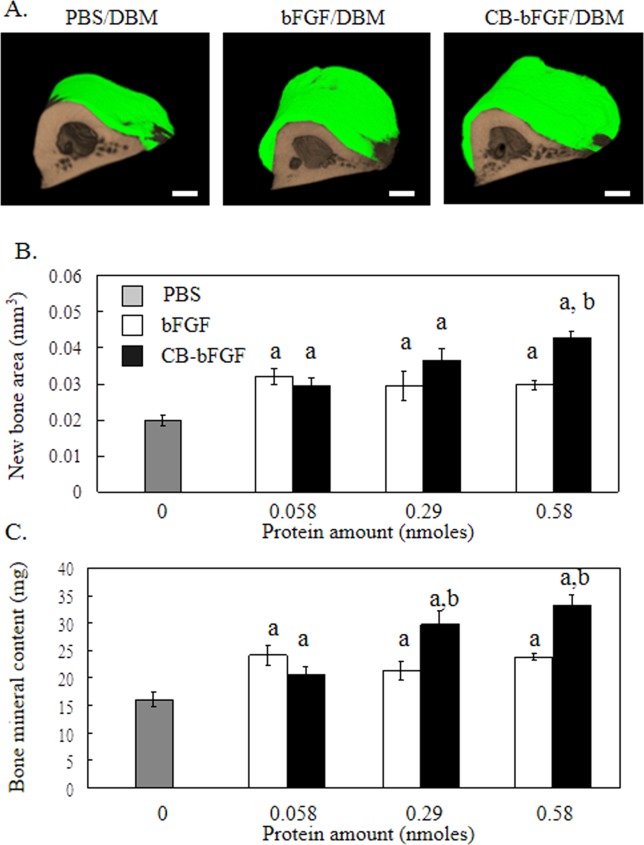
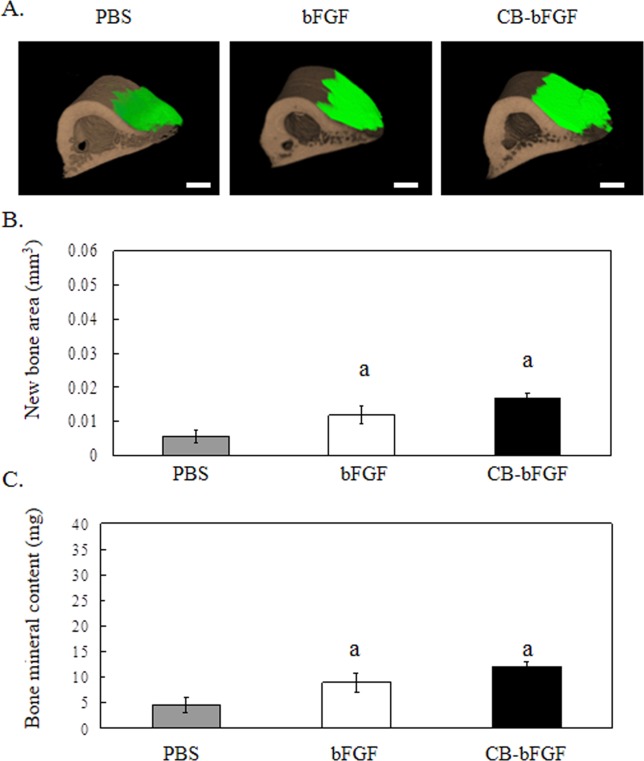
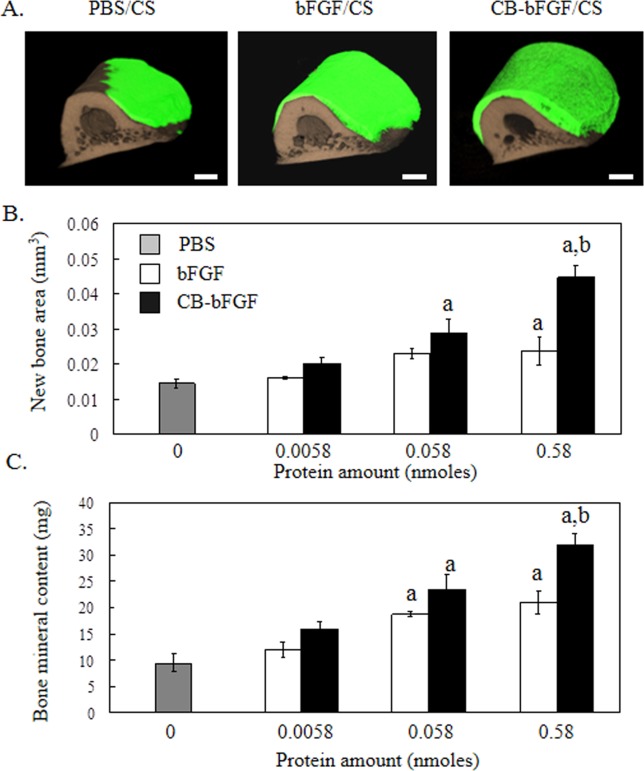
Basic fibroblast growth factor 2 (bFGF) is a potent mitogen for mesenchymal cells, and the local application of recombinant bFGF accelerates bone union and defect repair. However, repeated dosing is required for sustained therapeutic effect as the efficacy of bFGF decreases rapidly following its diffusion from bone defect sites. Here, we attempted to develop a collagen-based bone formation system using a fusion protein (collagen binding-bFGF, CB-bFGF) consisting of bFGF and the collagen-binding domain (CBD) of Clostridium histolyticum collagenase. The addition of the CBD to bFGF did not modify its native biological activity, as shown by the capacity of the fusion protein to promote the in vitro proliferation of periosteal mesenchymal cells. The affinity of the fusion protein towards collagen and demineralized bone matrix (DBM) was also confirmed by collagen-binding assays. Moreover, in vivo periosteal bone formation assays showed that the combination of CB-bFGF with a collagen sheet induced periosteal bone formation at protein concentrations lower than those required for bFGF alone. In addition, grafts of DBM loaded with CB-bFGF accelerated new bone formation in rat femurs compared to the same concentration of bFGF administered alone. Taken together, these properties suggest that the CB-bFGF/collagen composite is a promising material for bone repair in the clinical setting.
碱性成纤维细胞生长因子2(bFGF)是一种对间充质细胞有强大作用的促有丝分裂原,局部应用重组bFGF可加速骨愈合和缺损修复。然而,由于bFGF从骨缺损部位扩散后其疗效迅速降低,因此需要重复给药以维持治疗效果。在此,我们尝试开发一种基于胶原蛋白的骨形成系统,该系统使用一种融合蛋白(胶原蛋白结合 - bFGF,CB - bFGF),它由bFGF和溶组织梭菌胶原酶的胶原蛋白结合域(CBD)组成。如融合蛋白促进骨膜间充质细胞体外增殖的能力所示,将CBD添加到bFGF中并未改变其天然生物学活性。胶原蛋白结合试验也证实了融合蛋白对胶原蛋白和脱矿骨基质(DBM)的亲和力。此外,体内骨膜骨形成试验表明,与单独使用bFGF所需的蛋白浓度相比,CB - bFGF与胶原片的组合在较低蛋白浓度下即可诱导骨膜骨形成。此外,与单独给予相同浓度的bFGF相比,负载CB - bFGF的DBM移植物加速了大鼠股骨的新骨形成。综上所述,这些特性表明CB - bFGF/胶原蛋白复合材料是临床环境中骨修复的一种有前景的材料。