Institute of Cancer Research, Department of Medicine I, Medical University Vienna, Austria; Comprehensive Cancer Center of the Medical University Vienna, Austria; Research and Platform "Translational Cancer Therapy Research" Vienna, Austria.
Eur J Cancer. 2013 Oct;49(15):3366-75. doi: 10.1016/j.ejca.2013.05.018. Epub 2013 Jun 18.
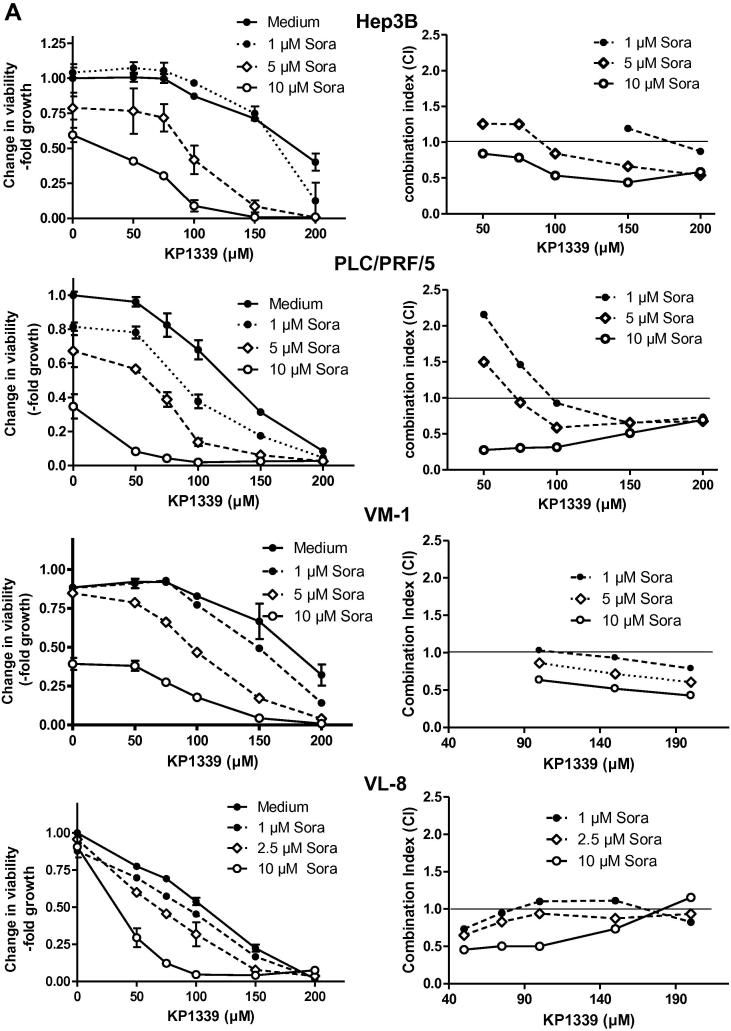
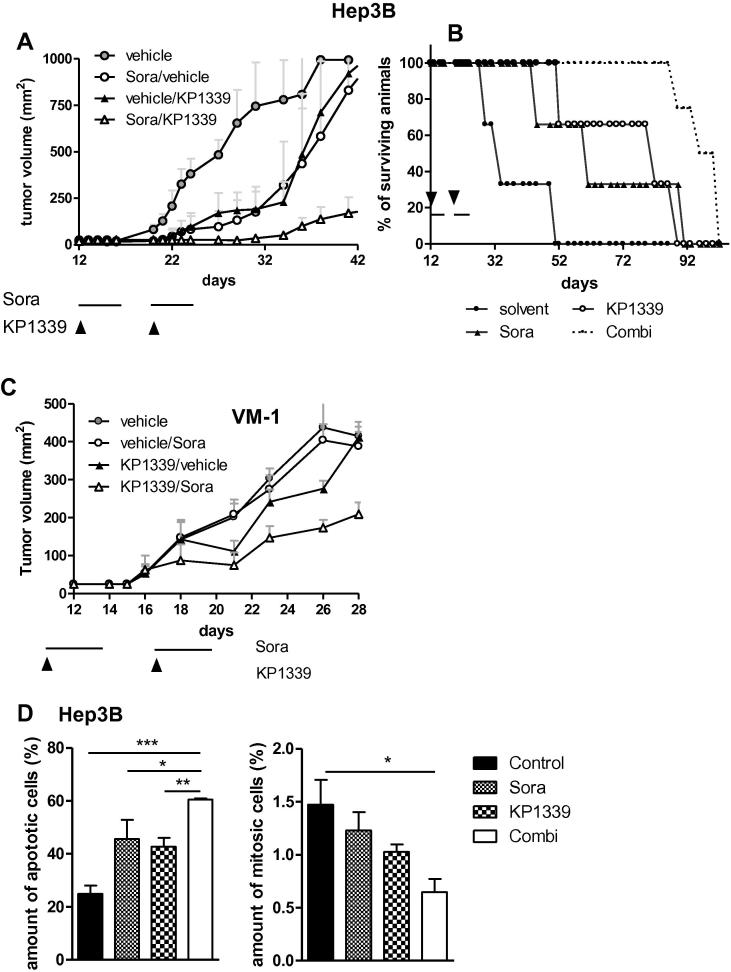
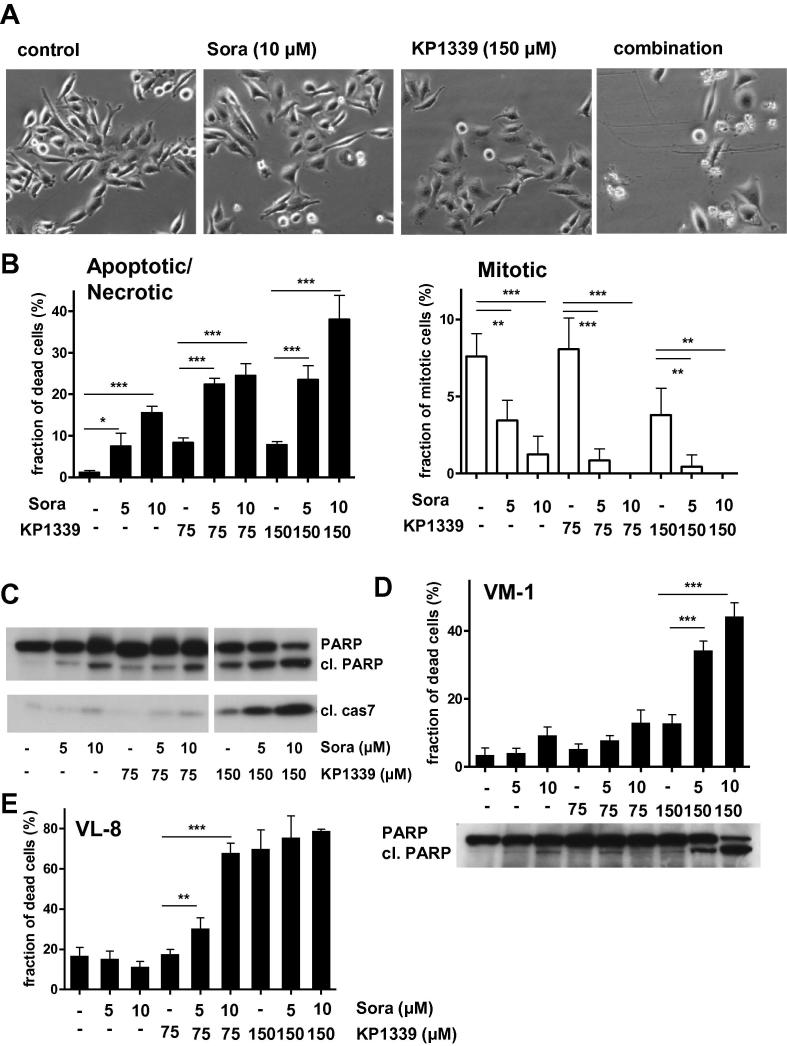
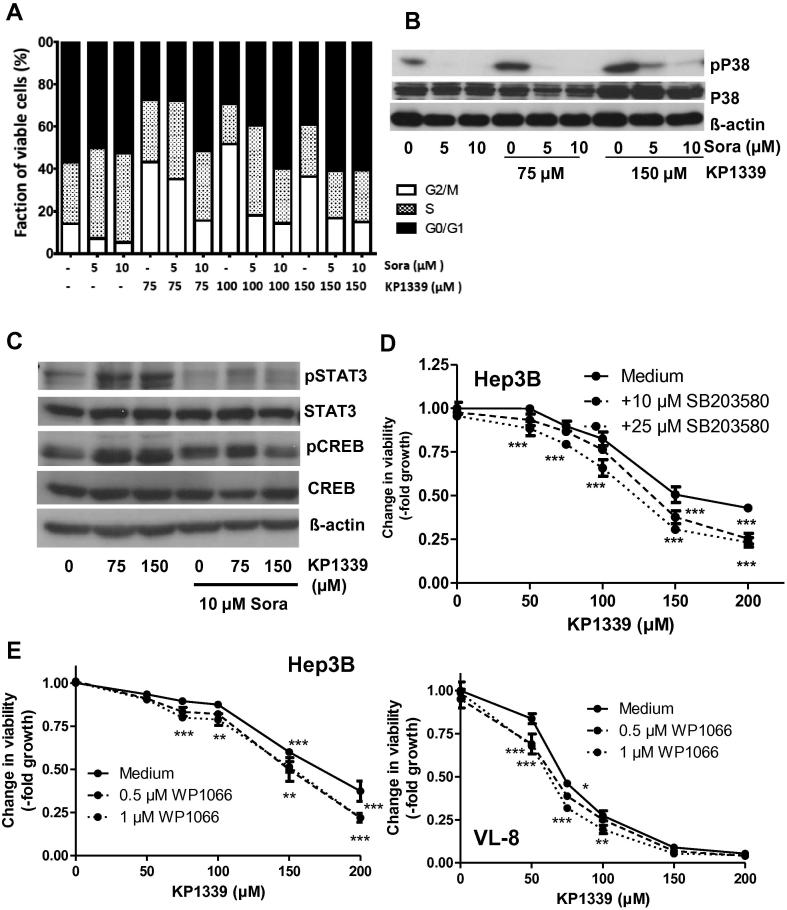
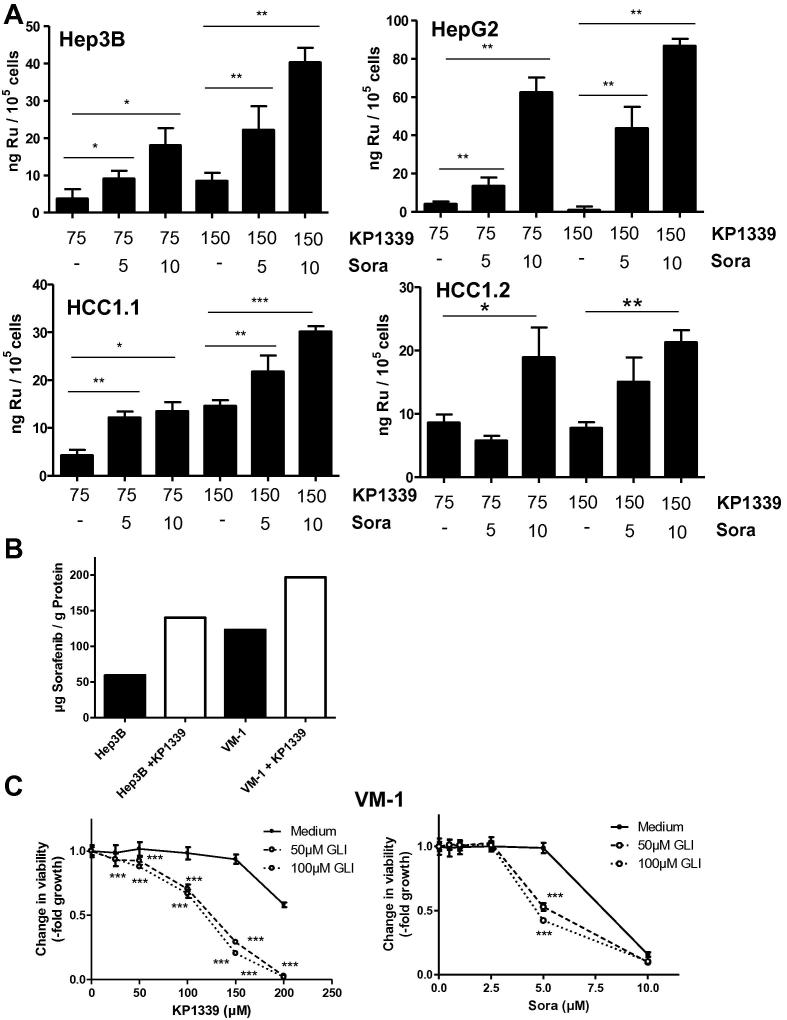
KP1339 is a promising ruthenium-based anticancer compound in early clinical development. This study aimed to test the effects of KP1339 on the in vitro and in vivo activity of the multi-kinase inhibitor sorafenib, the current standard first-line therapy for advanced hepatoma. Anticancer activity of the parental compounds as compared to the drug combination was tested against a panel of cancer cell lines with a focus on hepatoma. Combination of KP1339 with sorafenib induced in the majority of all cases distinctly synergistic effects, comprising both sorafenib-resistant as well as sorafenib-responsive cell models. Several mechanisms were found to underlie these multifaceted synergistic activities. Firstly, co-exposure induced significantly enhanced accumulation levels of both drugs resulting in enhanced apoptosis induction. Secondly, sorafenib blocked KP1339-mediated activation of P38 signalling representing a protective response against the ruthenium drug. In addition, sorafenib treatment also abrogated KP1339-induced G2/M arrest but resulted in check point-independent DNA-synthesis block and a complete loss of the mitotic cell populations. The activity of the KP1339/sorafenib combination was evaluated in the Hep3B hepatoma xenograft. KP1339 monotherapy led to a 2.4-fold increase in life span and, thus, was superior to sorafenib, which induced a 1.9-fold prolonged survival. The combined therapy further enhanced the mean survival by 3.9-fold. Synergistic activity was also observed in the VM-1 melanoma xenograft harbouring an activating braf mutation. Together, our data indicate that the combination of KP1339 with sorafenib displays promising activity in vitro and in vivo especially against human hepatoma models.
KP1339 是一种有前景的钌类抗癌化合物,目前处于临床早期开发阶段。本研究旨在检测 KP1339 对多激酶抑制剂索拉非尼(目前晚期肝癌的标准一线治疗药物)的体外和体内活性的影响。针对一组以肝癌为重点的癌细胞系,测试了母体化合物与药物联合的抗癌活性。在大多数情况下,KP1339 与索拉非尼联合使用会产生明显的协同作用,包括索拉非尼耐药和索拉非尼敏感的细胞模型。研究发现了几种机制来解释这些多方面的协同作用。首先,联合暴露会显著增强两种药物的积累水平,从而增强细胞凋亡诱导。其次,索拉非尼阻断了 KP1339 介导的 P38 信号通路的激活,这是对钌类药物的一种保护反应。此外,索拉非尼治疗还消除了 KP1339 诱导的 G2/M 期阻滞,但导致了无检查点的 DNA 合成阻滞和有丝分裂细胞群的完全丧失。评估了 KP1339/索拉非尼联合用药在 Hep3B 肝癌异种移植模型中的活性。KP1339 单药治疗可使寿命延长 2.4 倍,优于诱导寿命延长 1.9 倍的索拉非尼。联合治疗进一步将平均存活时间提高了 3.9 倍。在携带激活型 BRAF 突变的 VM-1 黑色素瘤异种移植模型中也观察到了协同作用。总之,我们的数据表明,KP1339 与索拉非尼联合用药具有良好的体内外活性,特别是对人肝癌模型具有良好的疗效。