Chemokine Biology Laboratory, School of Molecular and Biomedical Sciences, Discipline of Microbiology and Immunology, University of Adelaide, Adelaide, South Australia 5005, Australia.
J Immunol. 2013 Aug 1;191(3):1110-7. doi: 10.4049/jimmunol.1203089. Epub 2013 Jun 24.
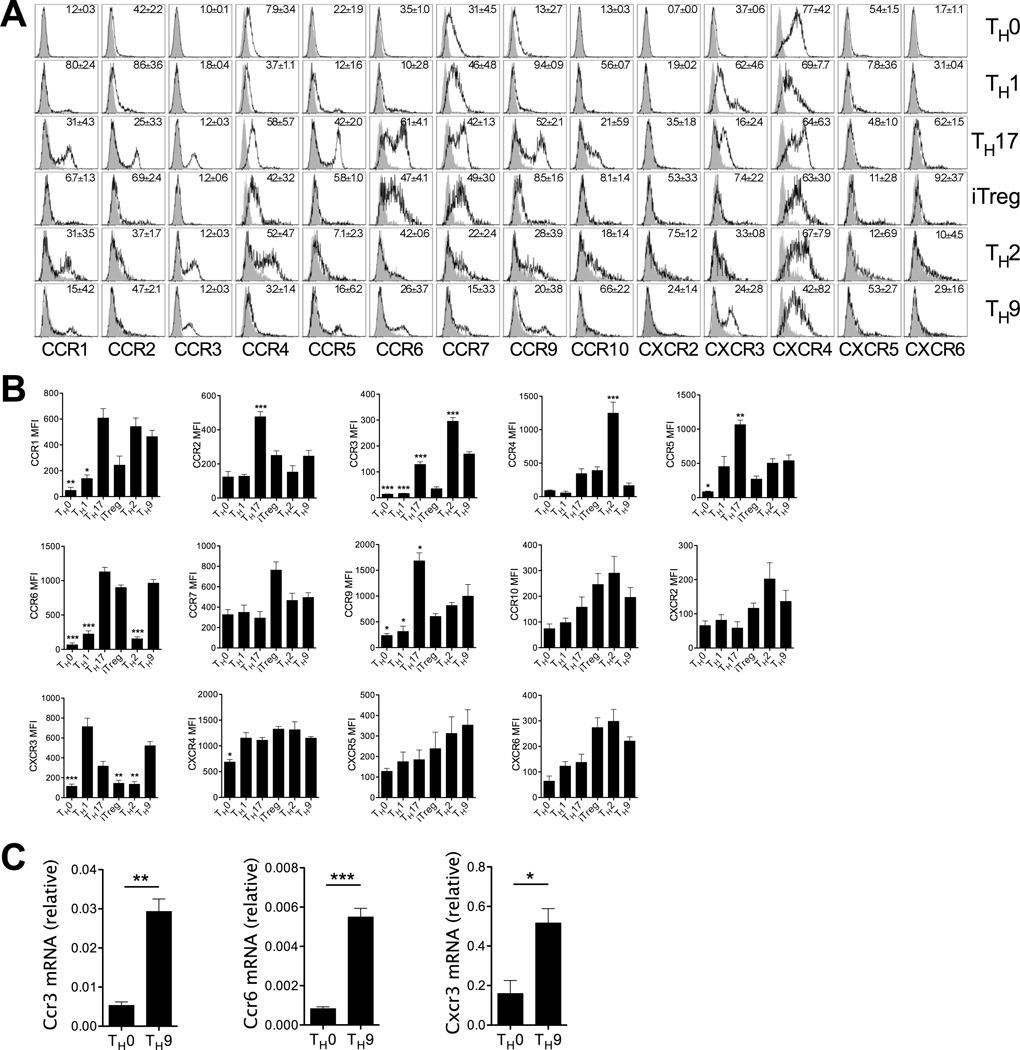
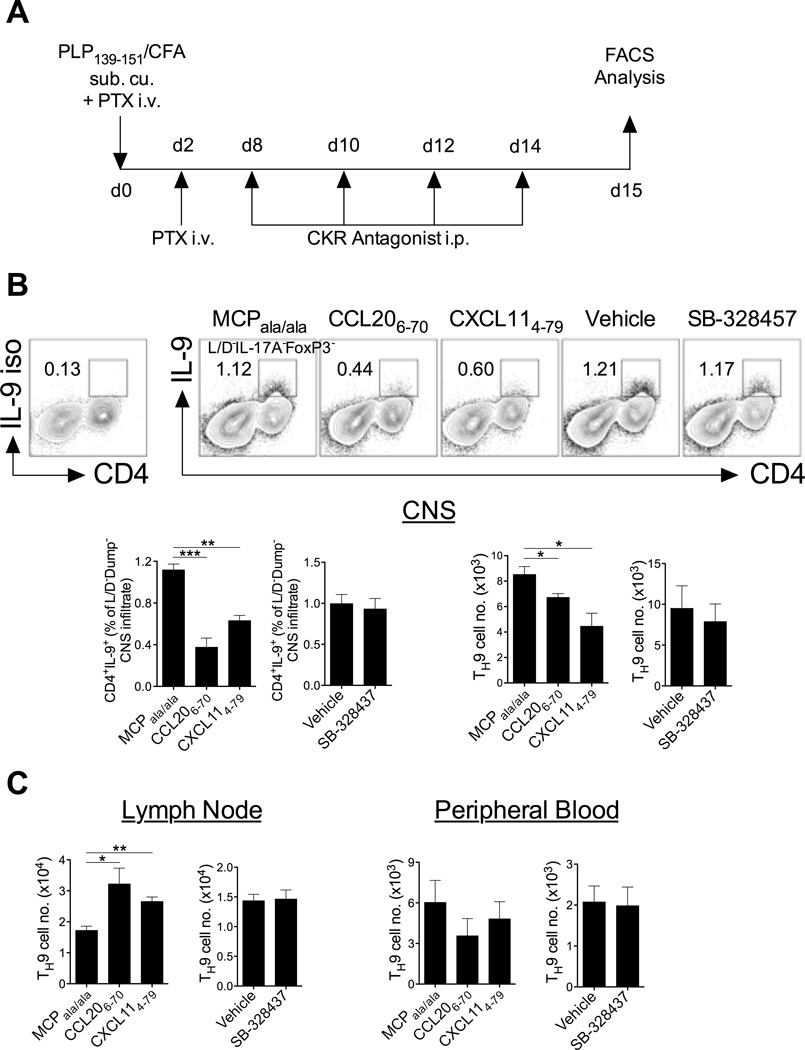
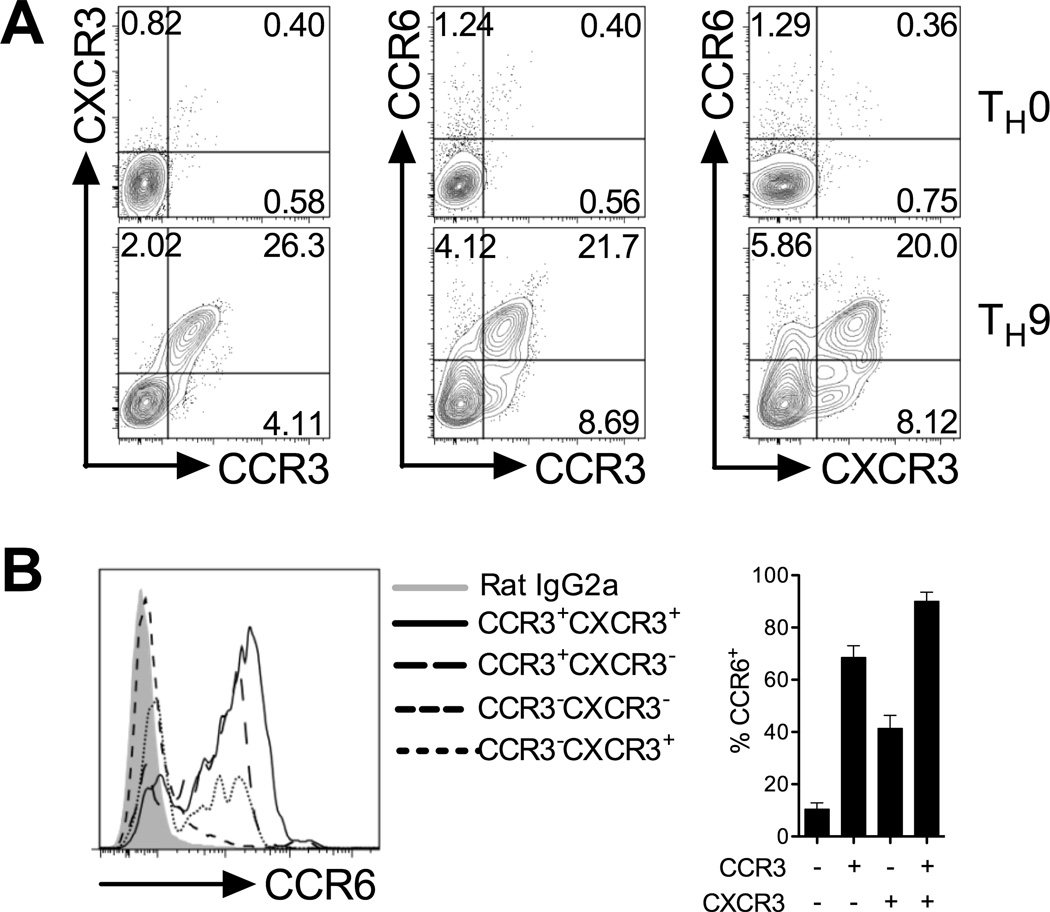
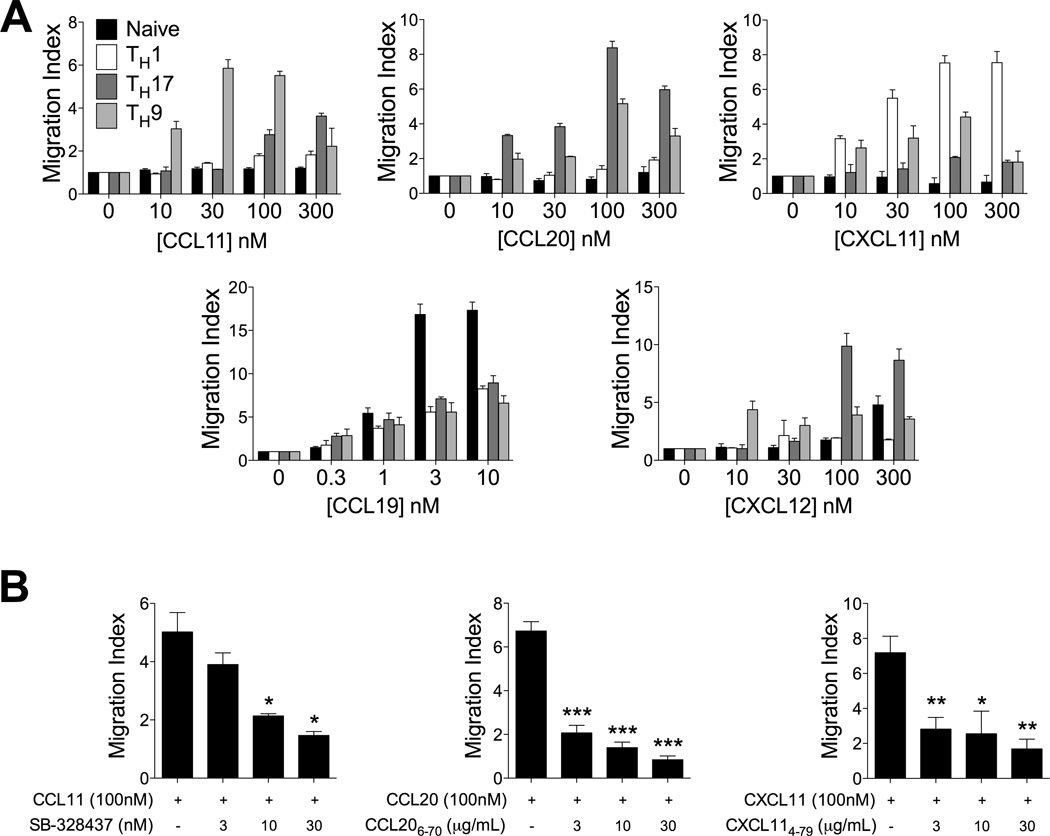
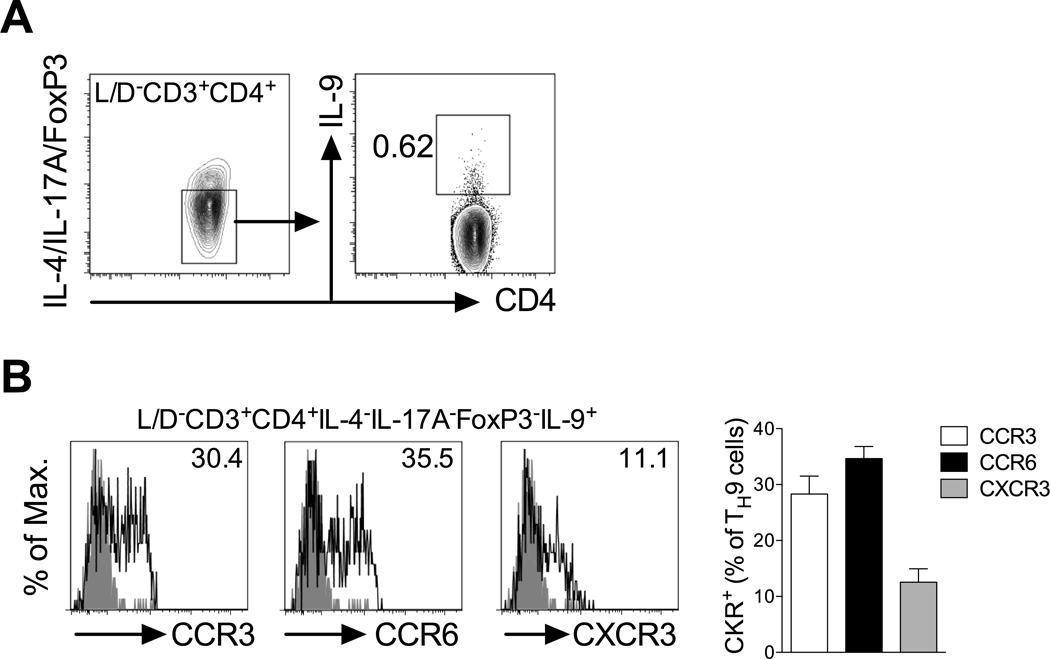
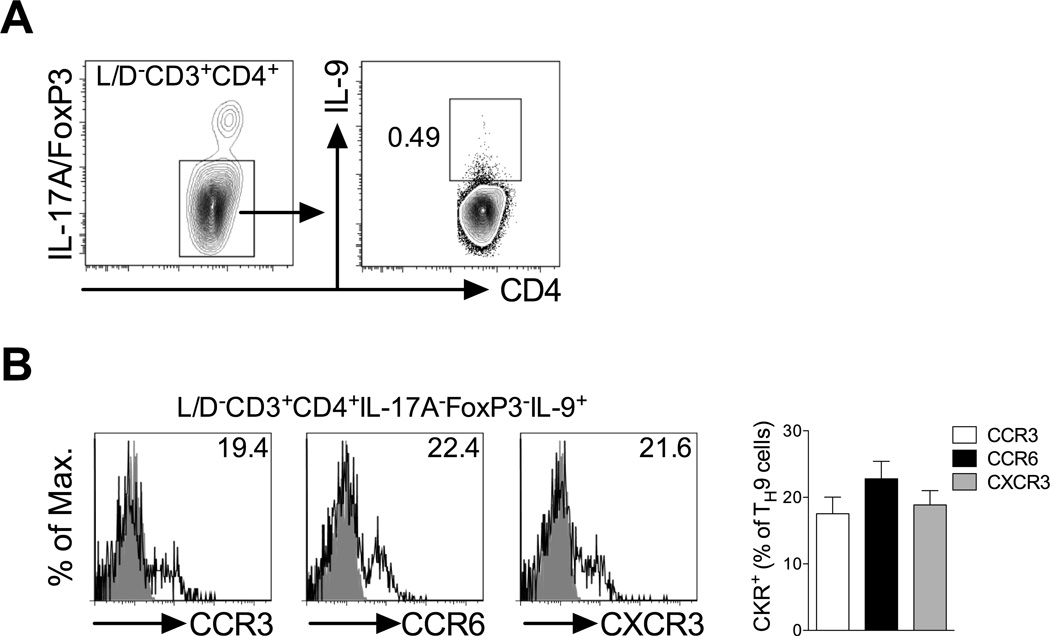
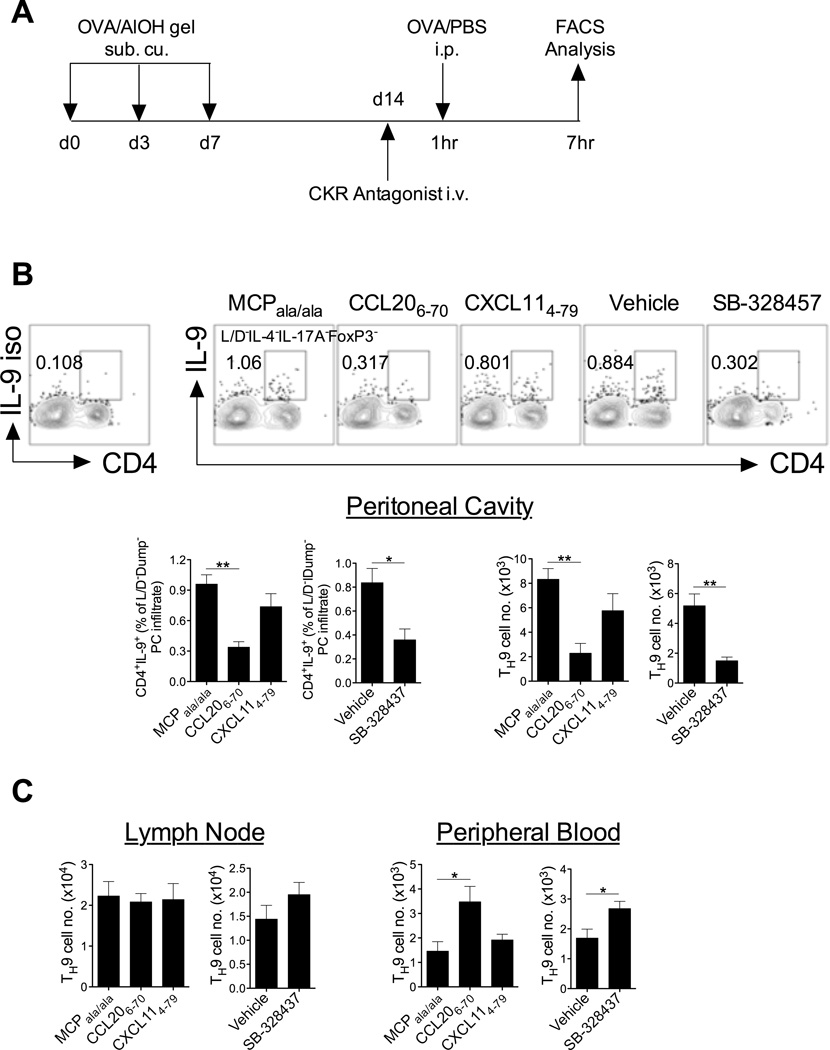
Migration of Th cells to peripheral sites of inflammation is essential for execution of their effector function. The recently described Th9 subset characteristically produces IL-9 and has been implicated in both allergy and autoimmunity. Despite this, the migratory properties of Th9 cells remain enigmatic. In this study, we examined chemokine receptor usage by Th9 cells and demonstrate, in models of allergy and autoimmunity, that these cells express functional CCR3, CCR6, and CXCR3, chemokine receptors commonly associated with other, functionally opposed effector Th subsets. Most Th9 cells that express CCR3 also express CXCR3 and CCR6, and expression of these receptors appears to account for the recruitment of Th9 cells to disparate inflammatory sites. During allergic inflammation, Th9 cells use CCR3 and CCR6, but not CXCR3, to home to the peritoneal cavity, whereas Th9 homing to the CNS during experimental autoimmune encephalomyelitis involves CXCR3 and CCR6 but not CCR3. To our knowledge, these data provide the first insights into regulation of Th9 cell trafficking in allergy and autoimmunity.
Th 细胞向炎症外周部位的迁移对于其效应功能的执行至关重要。最近描述的 Th9 亚群特征性地产生 IL-9,并被牵连到过敏和自身免疫中。尽管如此,Th9 细胞的迁移特性仍然是个谜。在这项研究中,我们研究了 Th9 细胞的趋化因子受体使用情况,并在过敏和自身免疫模型中证明,这些细胞表达功能性 CCR3、CCR6 和 CXCR3,这些趋化因子受体通常与其他功能相反的效应性 Th 细胞亚群相关。大多数表达 CCR3 的 Th9 细胞也表达 CXCR3 和 CCR6,并且这些受体的表达似乎解释了 Th9 细胞向不同炎症部位的募集。在过敏炎症期间,Th9 细胞使用 CCR3 和 CCR6,但不使用 CXCR3,归巢到腹腔,而在实验性自身免疫性脑脊髓炎期间 Th9 归巢到中枢神经系统则涉及 CXCR3 和 CCR6,但不涉及 CCR3。据我们所知,这些数据首次提供了在过敏和自身免疫中调节 Th9 细胞迁移的见解。